Forces come in pairs, one on each object
Years 9–10Stage 5Move it
Newton's third law: forces come in pairs. When one skater pushes the other, the second pushes back on the first. Each force of the pair acts on a different skater.
Demonstration: a simplified modelNot to scale1 · A pushes B
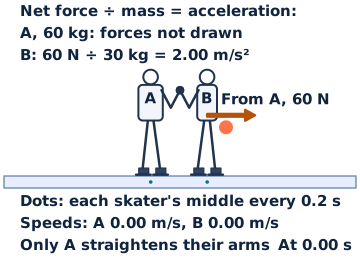
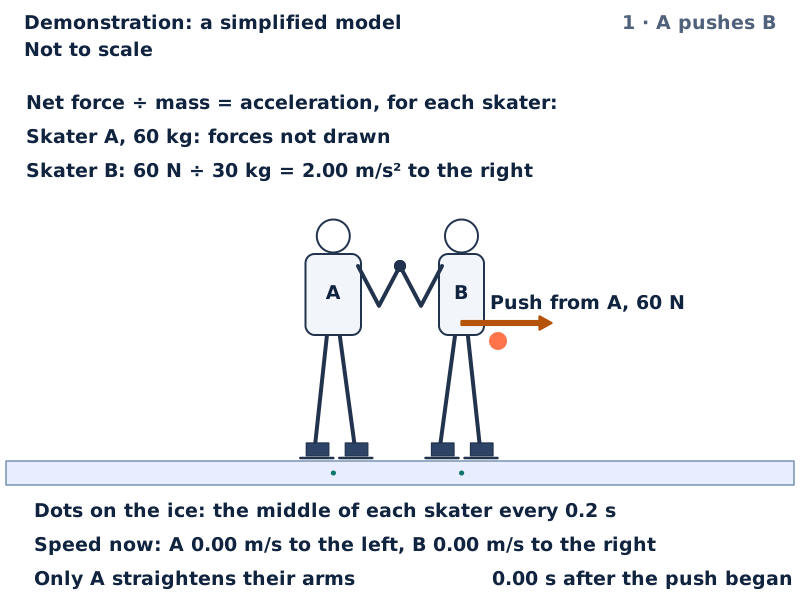
Skater A straightens their arms to push skater B away. Only the forces on B are drawn: the push from A, to the right.
Key Amber arrows: pushes, each drawn on the skater it acts on, all to one scale. Teal dots: the middle of each skater at equal steps of time. Wider gaps mean faster.
The model could not start here. The figure, the steps and the table on this page still show the idea; reload the page to try again.
The idea, step by step
Not to scale
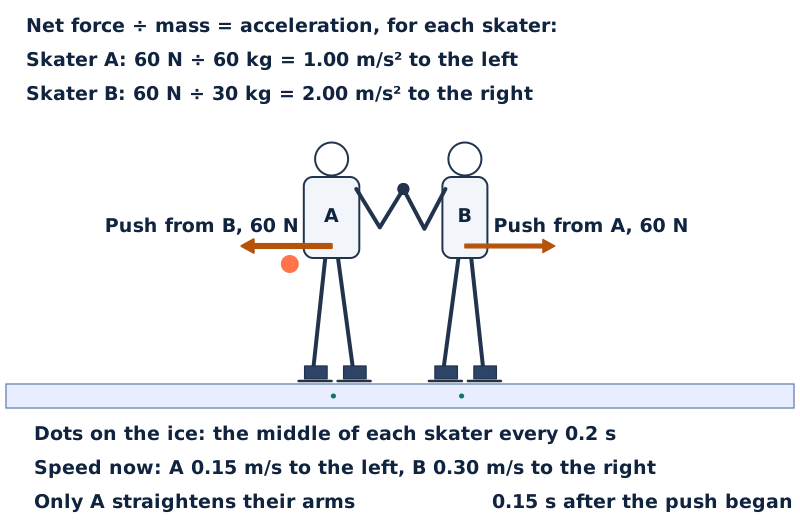
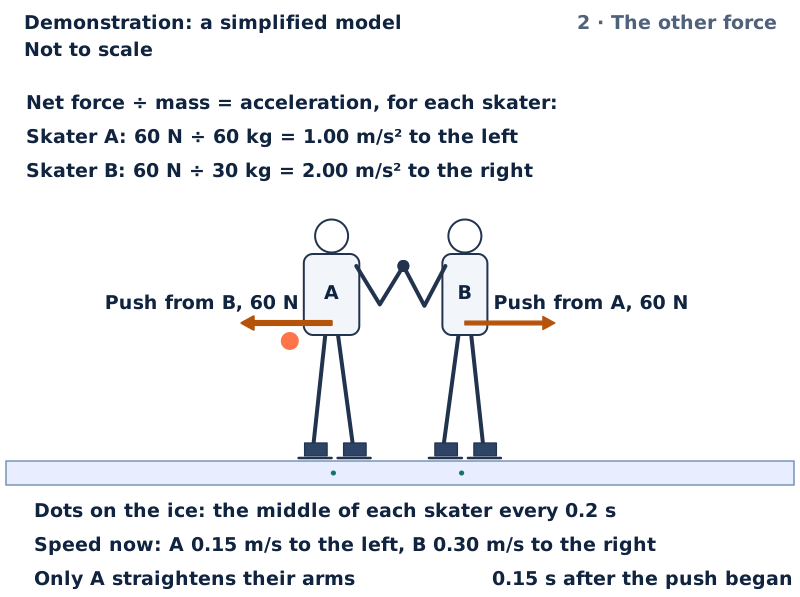
2 · The other forceDraw the forces on both skaters. B pushes back on A just as hard, to the left: the two pushes are a pair. 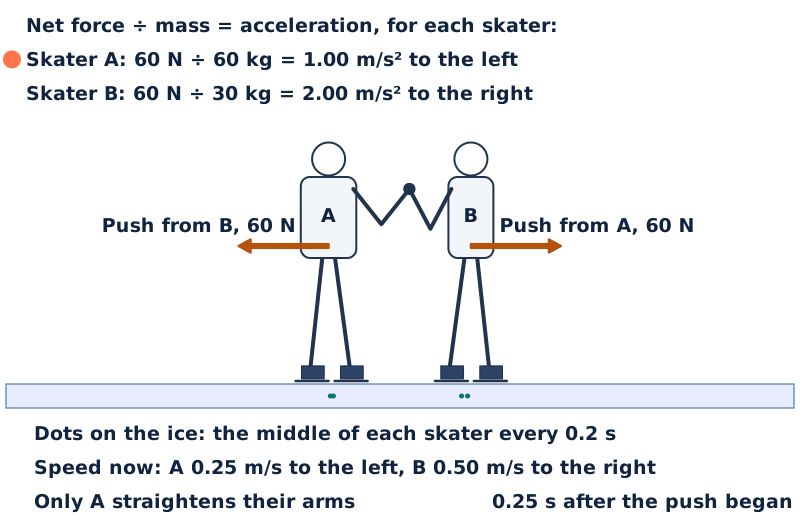
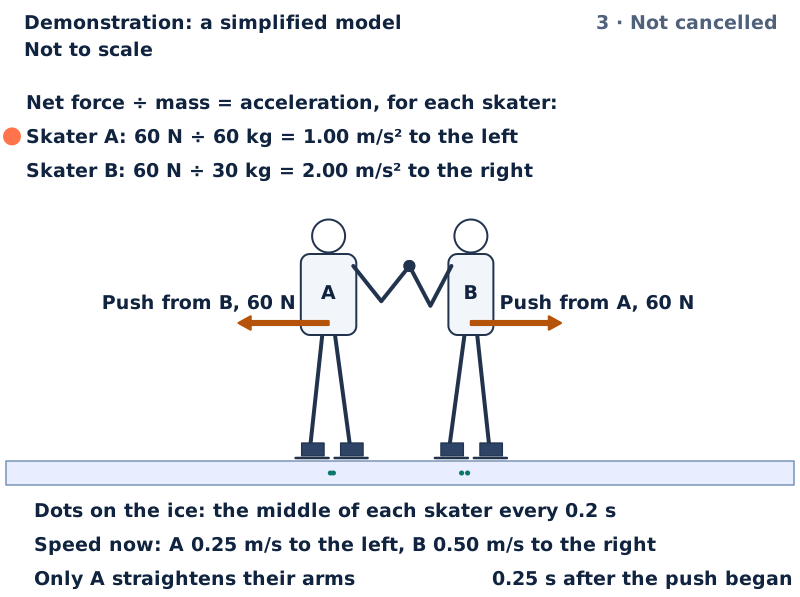
3 · Not cancelledThe two pushes act on different skaters, so they cannot cancel. Each skater has one force along the ice, and speeds up. 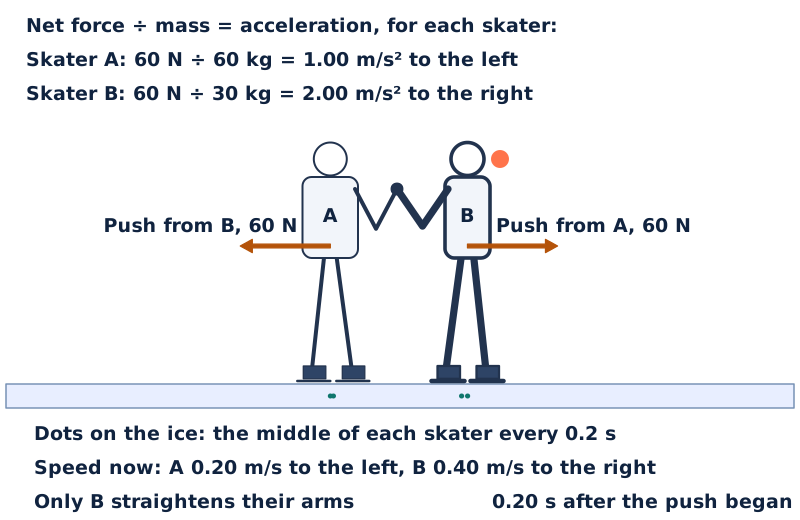
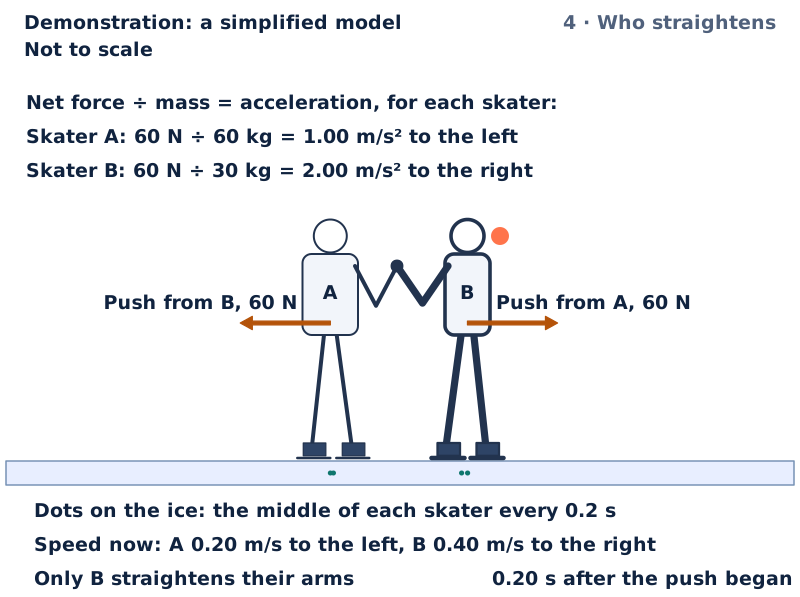
4 · Who straightensNow only B straightens their arms, and A's arms stay bent. The pushes are unchanged: still a pair, the same size. 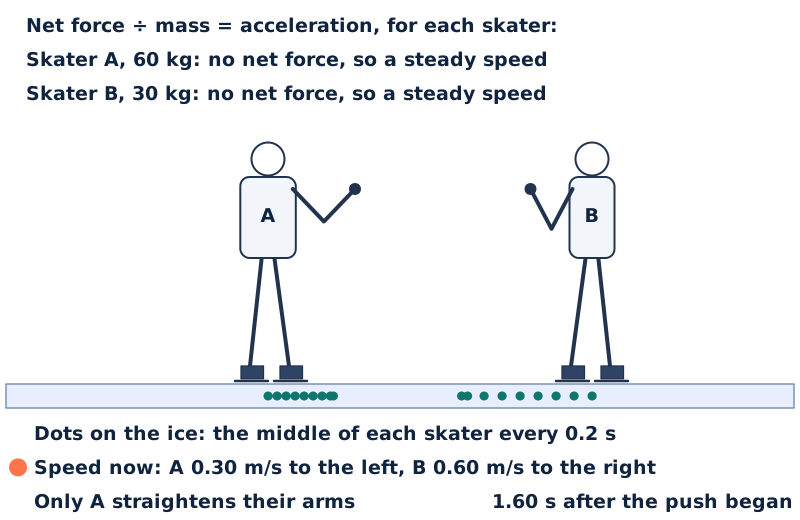
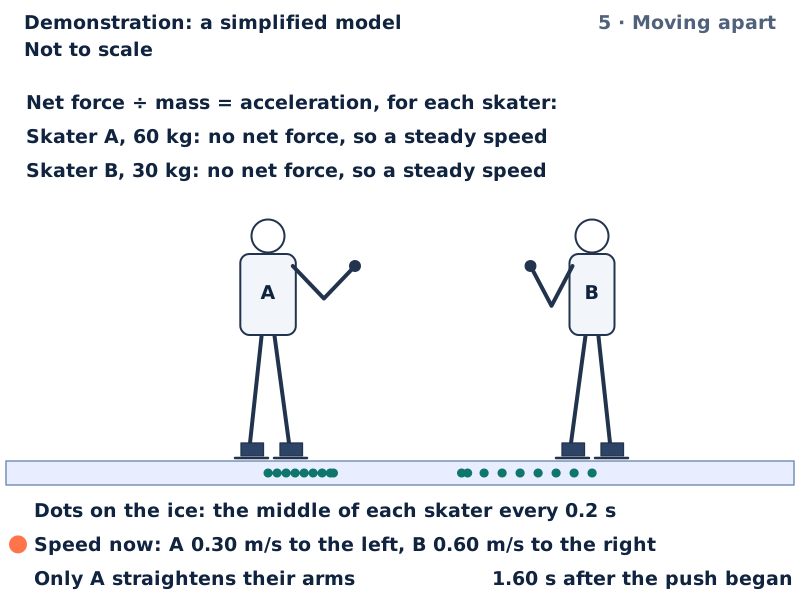
5 · Moving apartOnce the palms part, no force acts along the ice: both glide steadily, A too. B, with half the mass, is twice as fast. 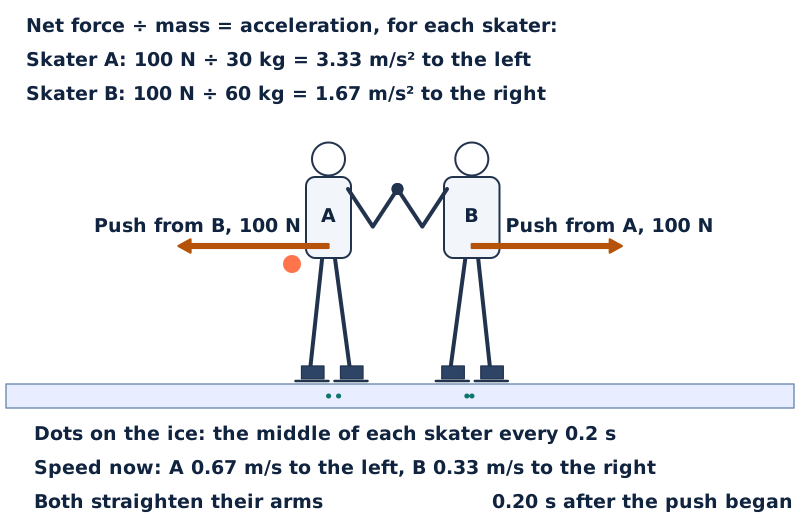
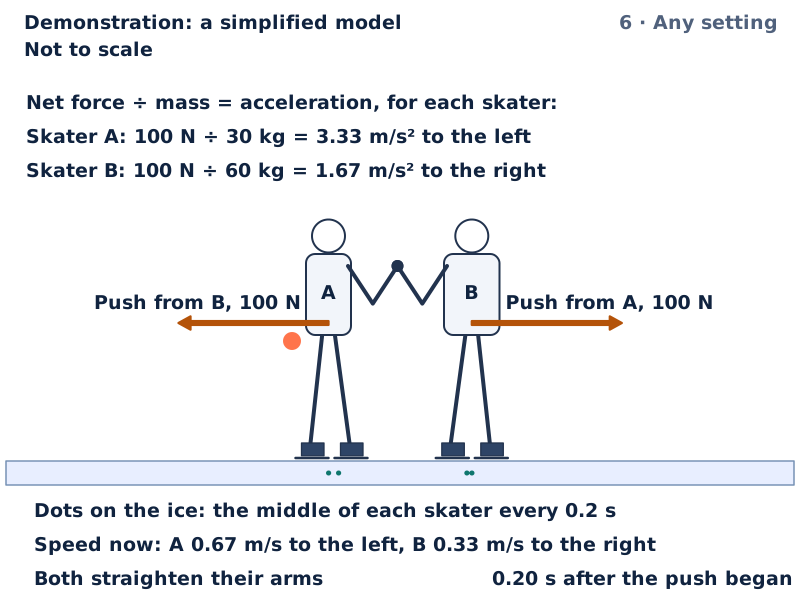
6 · Any settingSwap the masses and push harder: the two pushes still match in size and point opposite ways, one on each skater.


Both skaters at equal steps of time: one row for each dot on the ice, then the latest time if it falls between dots
| Time since the push began (s) | Push on A, to the left (N) | A's speed, to the left (m/s) | Push on B, to the right (N) | B's speed, to the right (m/s) |
|---|---|---|---|---|
| 0.00 | 60 | 0.00 | 60 | 0.00 |
| 0.20 | 60 | 0.20 | 60 | 0.40 |
| 0.40 | 0 | 0.30 | 0 | 0.60 |
| 0.60 | 0 | 0.30 | 0 | 0.60 |
| 0.80 | 0 | 0.30 | 0 | 0.60 |
| 1.00 | 0 | 0.30 | 0 | 0.60 |
| 1.20 | 0 | 0.30 | 0 | 0.60 |
| 1.40 | 0 | 0.30 | 0 | 0.60 |
| 1.60 | 0 | 0.30 | 0 | 0.60 |
| 1.80 | 0 | 0.30 | 0 | 0.60 |
| 2.00 | 0 | 0.30 | 0 | 0.60 |
Try it in the Lab
Practicals with real materials, each with its safety card.
- Newton's third law: balloon rocket, paired newton meters and trolleys pushing apartYear 10Bench practicalMedium riskSchool laboratory, not for home
- Momentum in one- and two-dimensional collisions (syllabus practical)Year 11Bench practicalLow risk
With a learner
Three questions to ask
- While the palms touch, which force acts on skater A, and which acts on skater B?
- Why do the two pushes not cancel each other out?
- Which skater glides away faster, and why?
What to expect
Many learners expect the heavier skater, or the one who straightens their arms, to push harder, and expect the pair of pushes to cancel.
What to try next
Open a practical in Try it in the Lab, above, to read two newton meters hooked together and pulled apart, or to push two trolleys apart.
About this model
What is simplified
- The ice is smooth and level: friction and air resistance are left out, so once the palms part each skater glides at a steady speed.
- Each skater's weight and the ice's push up on the skates balance, so they are not drawn. Only the forces along the ice are drawn.
- The push is steady and lasts 0.30 s, whoever straightens their arms and however hard the push. A real push rises and falls.
- Each push acts where the palms touch. It is drawn from the middle of the skater it acts on, and both pushes are drawn to one scale.
- The skaters are one simple figure whatever their mass; a heavier skater is drawn with a wider body. Distances, arms and figures share one scale.
- The run is shown in real time, and the clock stops at the end of the time slider.
Review
Demonstration: a simplified model. Checked against its written sources, 26 September 2026. Not reviewed by a qualified teacher.
Curriculum references
SC5-WAM-02AC9S10U05
Reference, not a verified alignment.