Acceleration is net force divided by mass
Years 9–12Stage 5 to Stage 6Run it
Newton's second law: double the net force on the same mass and the acceleration doubles; double the mass and it halves.
Demonstration: a simplified modelNot to scale1 · Release
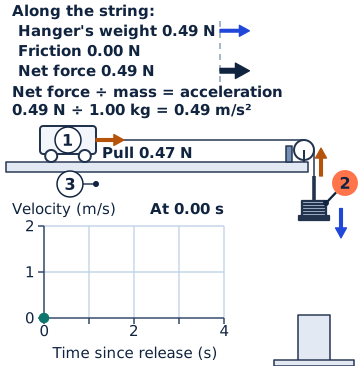
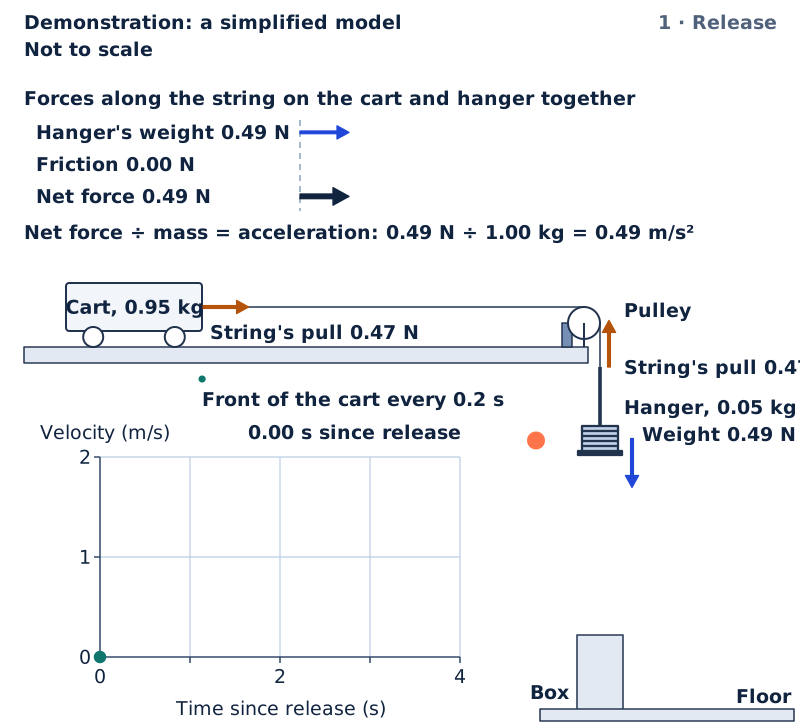
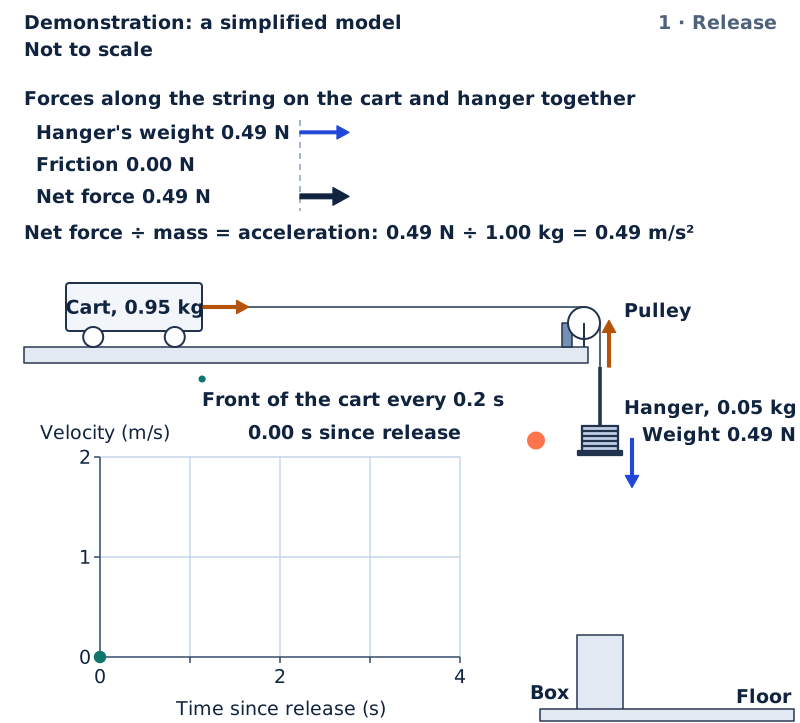
The hanger's weight pulls the cart and the hanger along together, so both masses are being accelerated.
- Cart
- Hanger
- Front of the cart every 0.2 s
Key Arrows are forces, to one scale: the string's pull forward and up (amber), weight down (blue), friction back (red). Dashed: the starting run, or a slack string.
The model could not start here. The figure, the steps and the table on this page still show the idea; reload the page to try again.
The idea, step by step
Not to scale
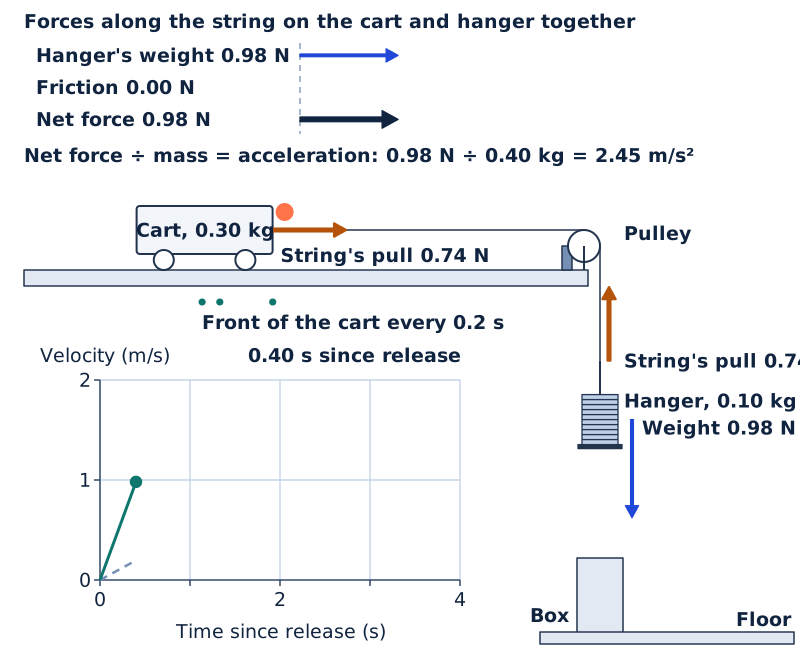
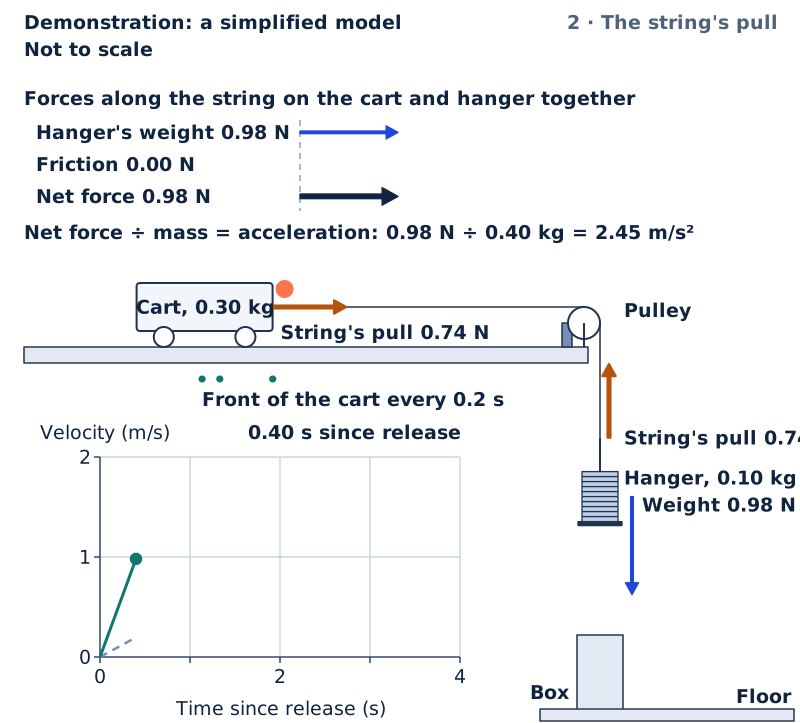
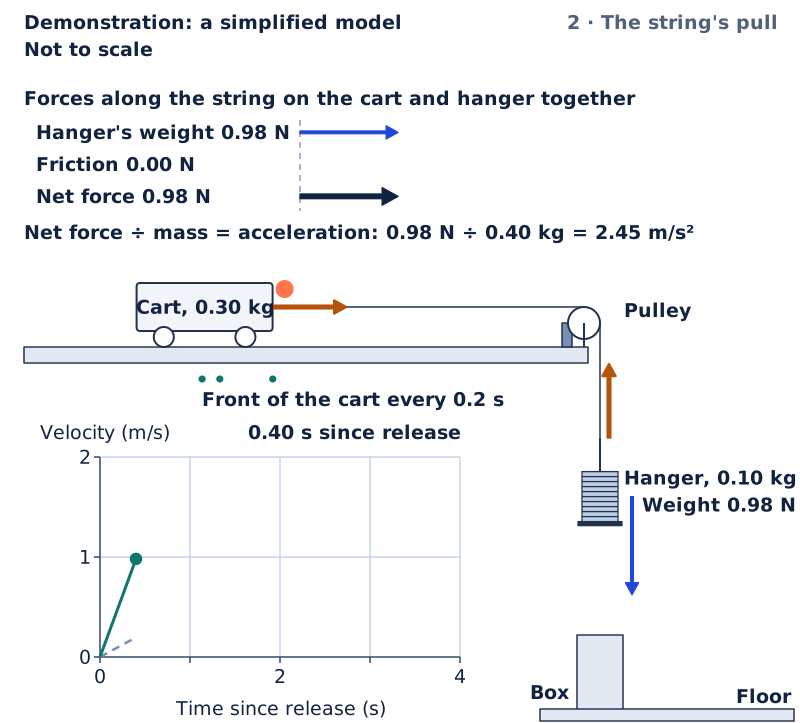
2 · The string's pullHeavy hanger, light cart: the string pulls the cart less hard than the hanger's weight, because the weight also speeds up the hanger.1 Cart · 2 Hanger · 3 Front of the cart every 0.2 s 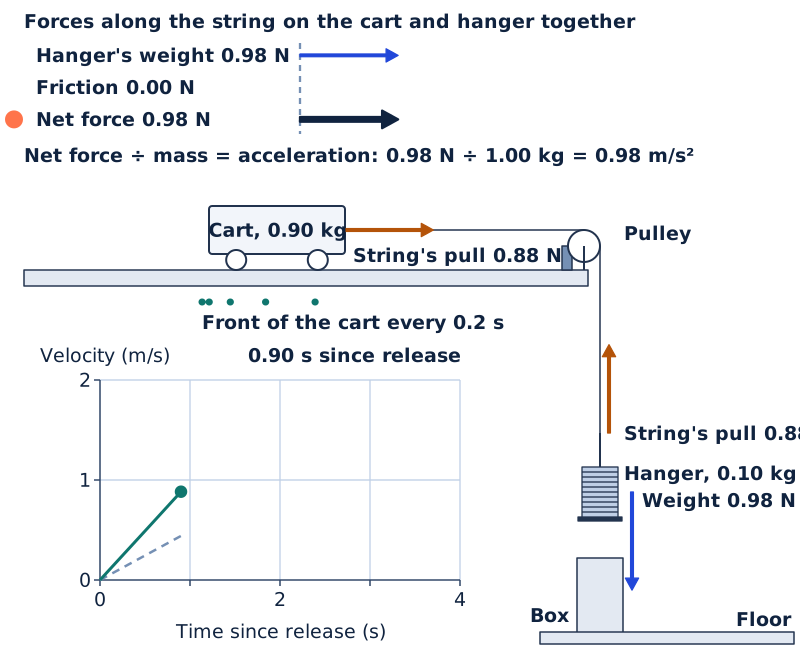
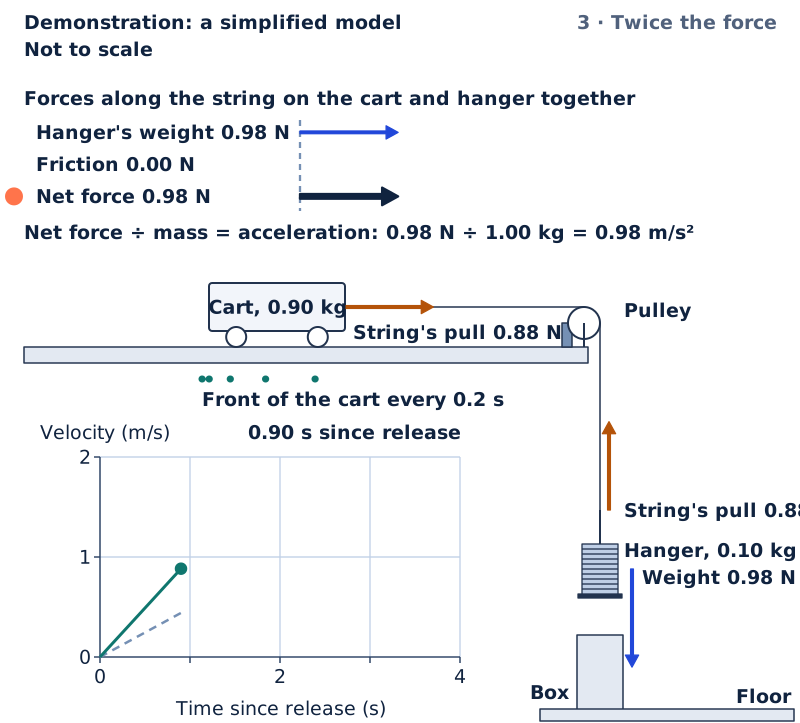
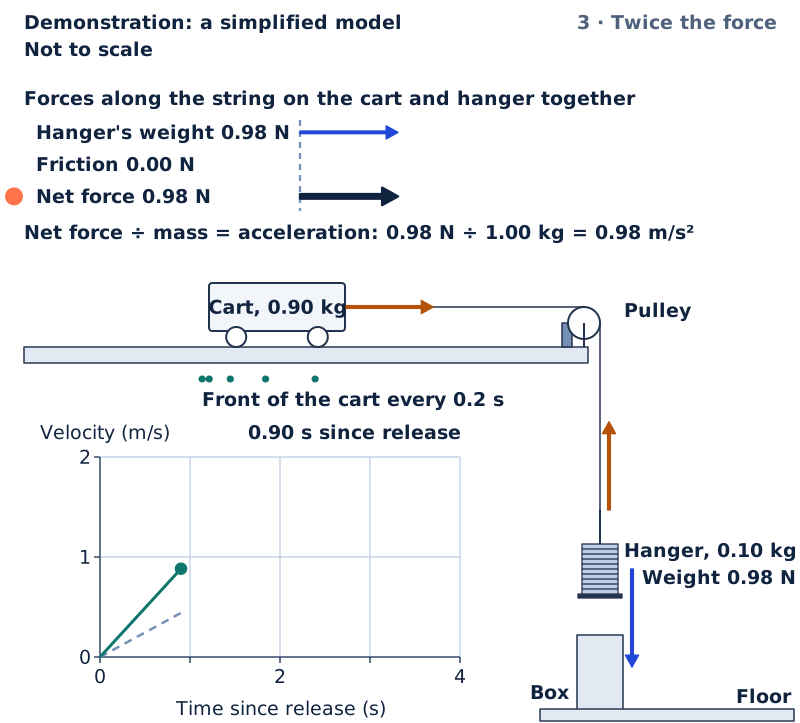
3 · Twice the forceFrom the start (dashed), move 0.05 kg from the cart to the hanger: twice the net force, the same total mass, twice the acceleration.1 Cart · 2 Hanger · 3 Front of the cart every 0.2 s 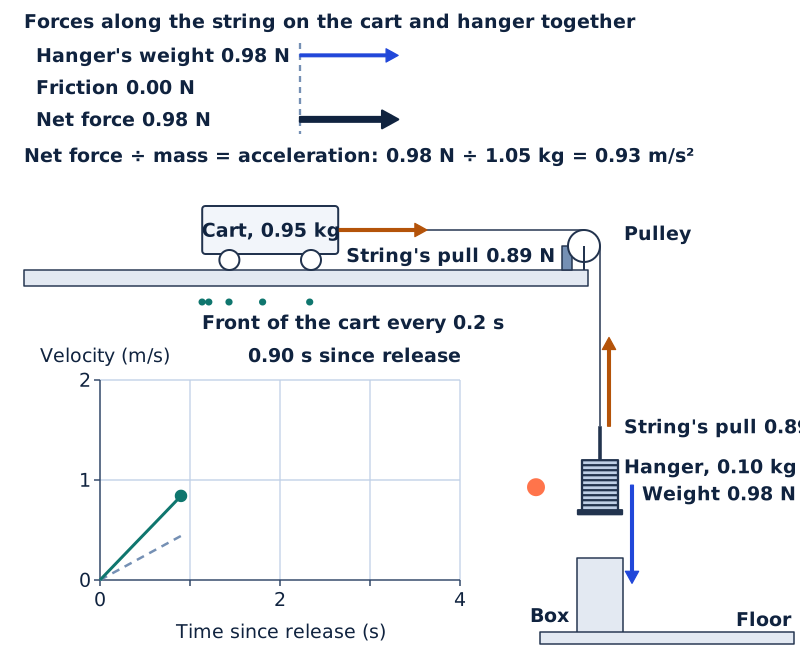
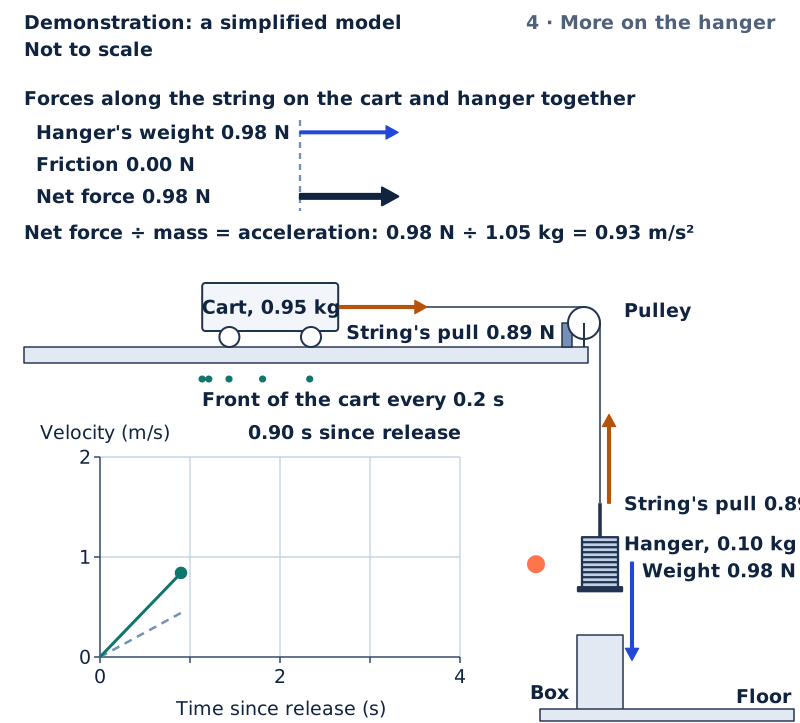
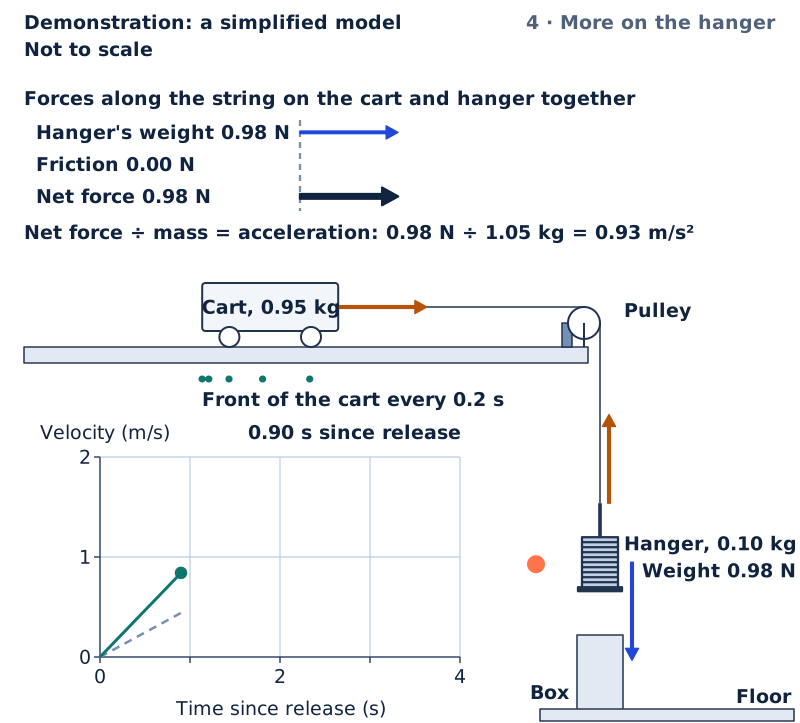
4 · More on the hangerFrom the start (dashed), double the hanging mass: twice the net force, but the added mass speeds up too: 0.93 m/s², less than twice 0.49.1 Cart · 2 Hanger · 3 Front of the cart every 0.2 s 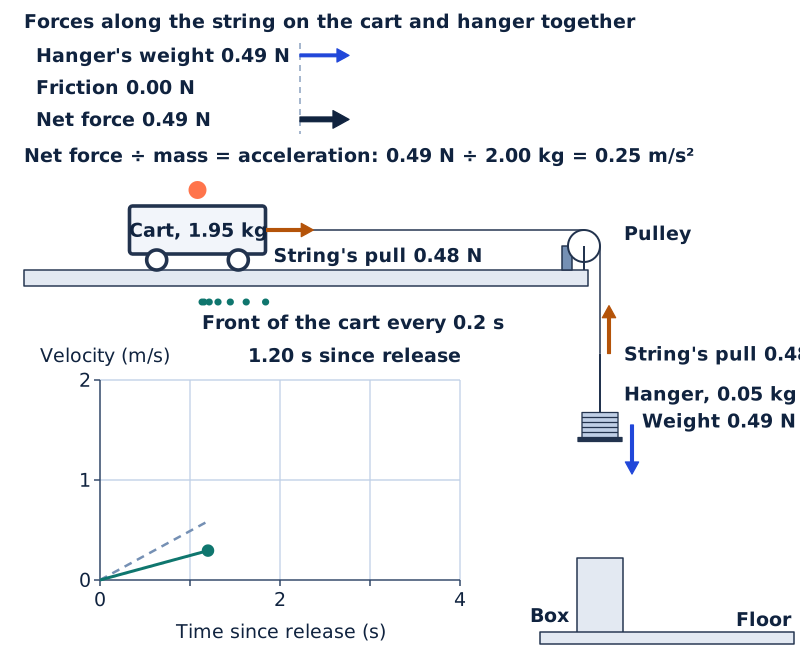
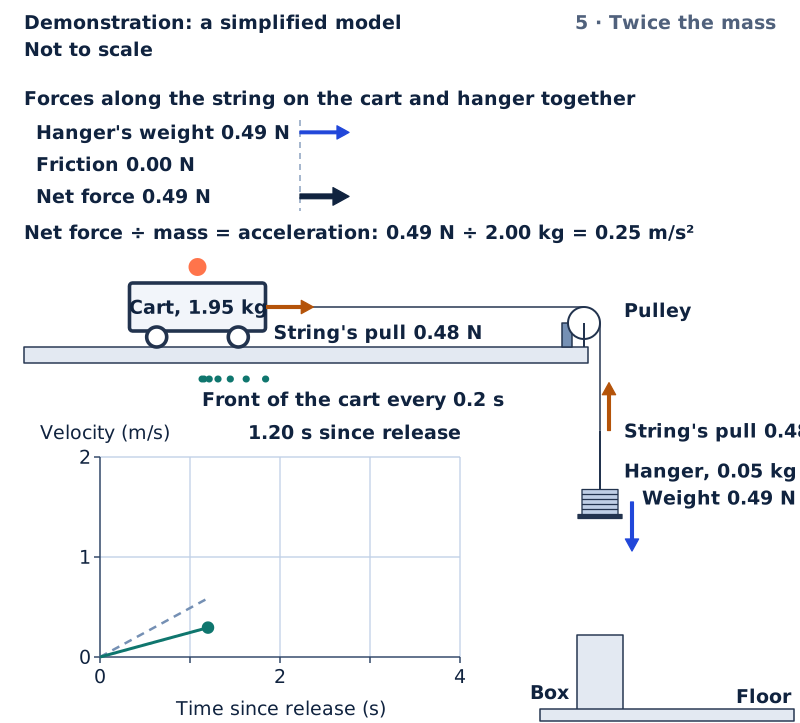
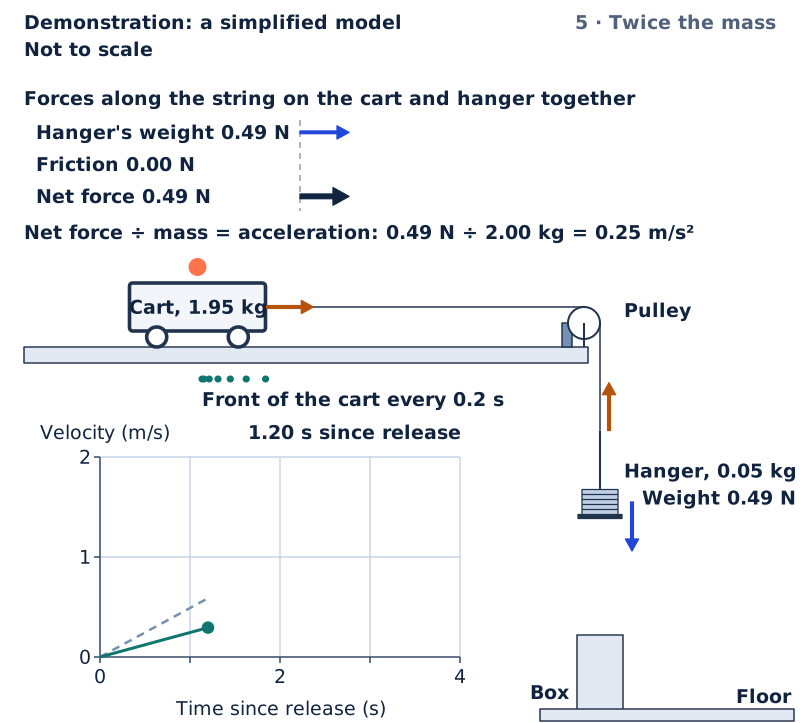
5 · Twice the massLoad the cart until the total mass doubles: the same net force now gives half the acceleration.1 Cart · 2 Hanger · 3 Front of the cart every 0.2 s 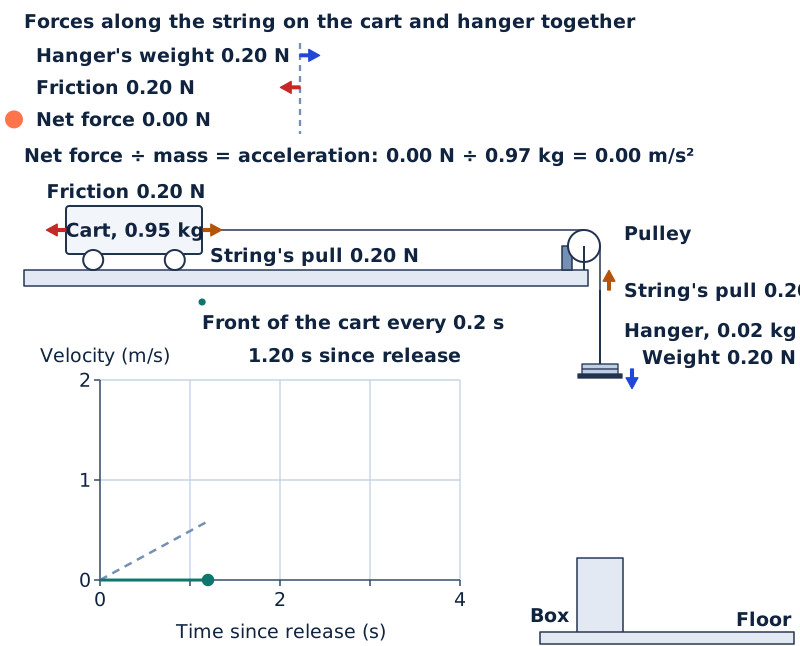
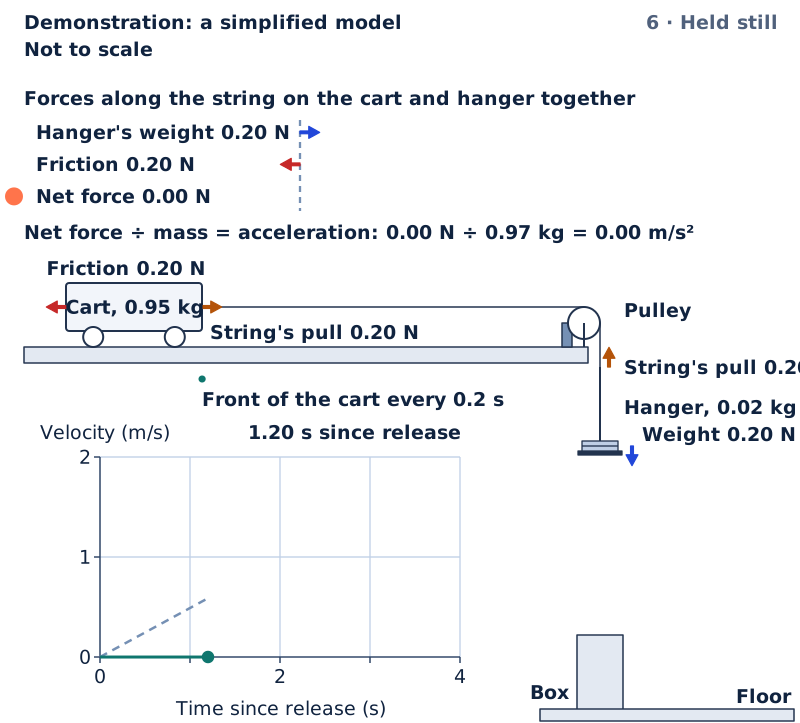
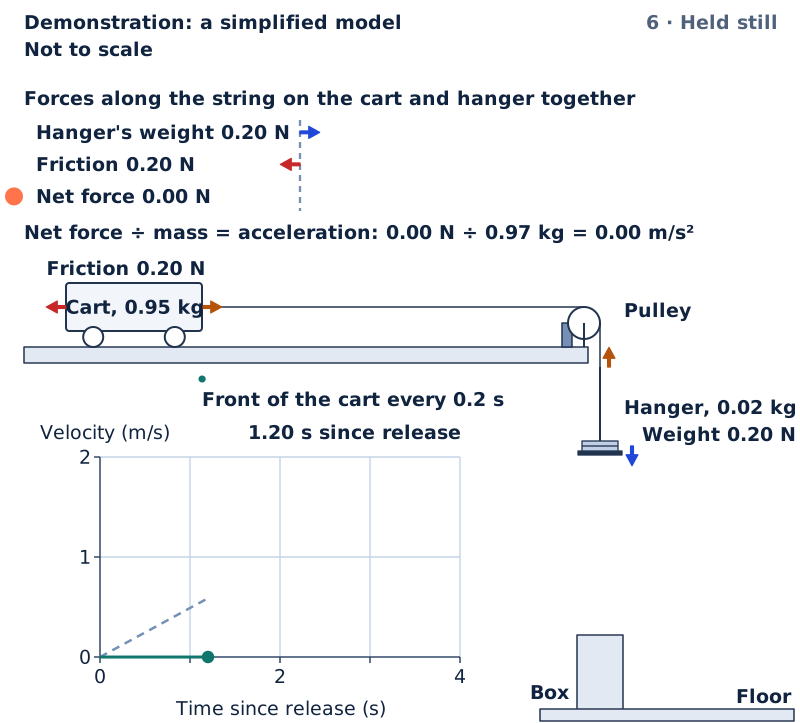
6 · Held stillFriction can hold the hanger's weight, so on each body the two forces are equal and opposite: no net force, no motion.1 Cart · 2 Hanger · 3 Front of the cart every 0.2 s 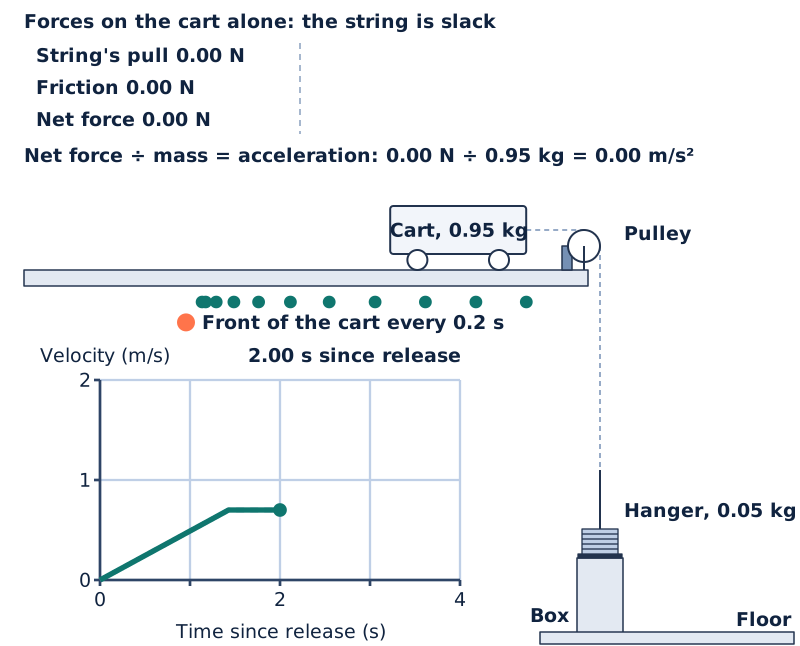
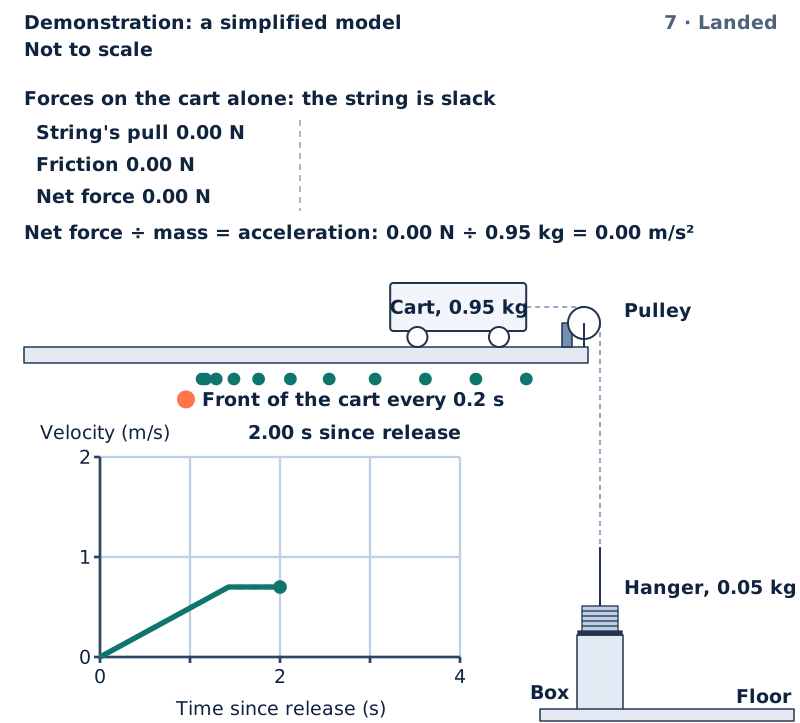
7 · LandedWhile the hanger pulls, a steady net force: the line rises straight, the dots spread. After landing, no net force: a flat line, even dots.1 Cart · 2 Hanger · 3 Front of the cart every 0.2 s


The cart's motion at equal steps of time: one row for each dot on the track, then the latest time if it falls between dots
| Time since release (s) | Distance moved (m) | Velocity (m/s) | Velocity gained since the row above (m/s) |
|---|---|---|---|
| 0.00 | 0.000 | 0.00 | |
| 0.20 | 0.010 | 0.10 | 0.10 |
| 0.40 | 0.039 | 0.20 | 0.10 |
| 0.60 | 0.088 | 0.29 | 0.10 |
| 0.80 | 0.157 | 0.39 | 0.10 |
| 1.00 | 0.245 | 0.49 | 0.10 |
| 1.20 | 0.353 | 0.59 | 0.10 |
| 1.40 | 0.481 | 0.69 | 0.10 |
| 1.60 | 0.620 | 0.70 | 0.01 |
| 1.80 | 0.760 | 0.70 | 0.00 |
| 2.00 | 0.900 | 0.70 | 0.00 |
| 2.15 | 1.000 | 0.00 |
Try it in the Lab
Practicals with real materials, each with its safety card.
- Newton's second law: accelerating a trolley with hanging massesYear 10Bench practicalLow risk
- Newton's second law: constant net force on a cart with hanging massesYear 11Bench practicalLow risk
- Ticker-tape analysis: velocity-time graph of a trolley rolling down a rampYear 10Bench practicalLow risk
- Average and instantaneous velocity from a ticker-timer tape (syllabus practical)Year 11Bench practicalLow risk
With a learner
Three questions to ask
- What pulls the cart along, and what holds it back?
- Why does the cart speed up faster when a mass moves from the cart to the hanger?
- What does the cart do after the hanger lands, and why?
What to expect
Many learners expect the cart to settle at a steady speed while the hanger is still pulling.
What to try next
Open a practical in Try it in the Lab, above, to time a real trolley with light gates or a ticker timer.
About this model
What is simplified
- The string and pulley are light and the pulley turns freely, so the string only turns the hanger's pull round the corner.
- Friction holds a still cart with whatever force it needs, up to the limit you choose; on a rolling cart it is that limit. A real cart's friction changes a little with speed and load.
- The cart's weight and the track's push up on it balance, so they are not drawn. The forces along the track and the string are drawn on the body they act on, all to one scale; the cart's are drawn along its middle.
- The hanger lands on a box on the floor. Once it rests there, the box holds it up and the forces on it are not drawn.
- Distances along the track and the hanger's drop are drawn to one scale. The cart, wheels, pulley and masses are drawn larger so they can be seen.
- Each disc on the hanger stands for one step of the hanging-mass slider, the hanger's own mass included.
- Air resistance is left out. The run is shown in real time, and the clock stops at the end of the time slider even if the cart is still rolling.
Numbers and their sources
- 9.80665 m/s² Standard acceleration of gravity, exact by definition, used for the hanger's weight. The same value as the cart-pulley experiment specification: one value for a constant across every demonstration. Source: NIST, CODATA 2022 recommended values: standard acceleration of gravity, read 24 September 2026.
Review
Demonstration: a simplified model. Checked against its written sources, 26 September 2026. Not reviewed by a qualified teacher.
Curriculum references
SC5-WAM-02PH11-9PY-11-01AC9S10U05
Reference, not a verified alignment.