Only a net force changes motion
Years 7–10Stage 4 to Stage 5Run it
Newton's first law: an object's motion changes only while the forces on it are unbalanced. Friction is one of those forces: it acts against a push or a slide.
Demonstration: a simplified modelNot to scale1 · Held by friction
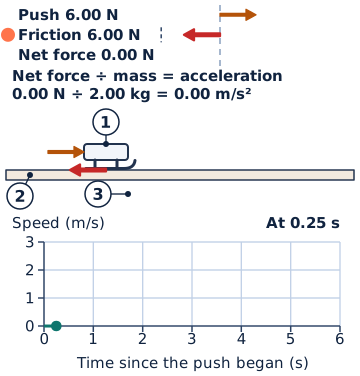
Push 6 N on wood: friction matches it, up to a 9.81 N limit. Net force zero: the sled stays still.
- Sled
- Wood floor
- Front of the sled every 0.5 s
Key Arrows are forces along the floor, to one scale: the push forward (amber), friction backwards (red), and the net force, the two added together (dark blue). Dashed tick: the friction limit, the most friction can give on this surface.
The model could not start here. The figure, the steps and the table on this page still show the idea; reload the page to try again.
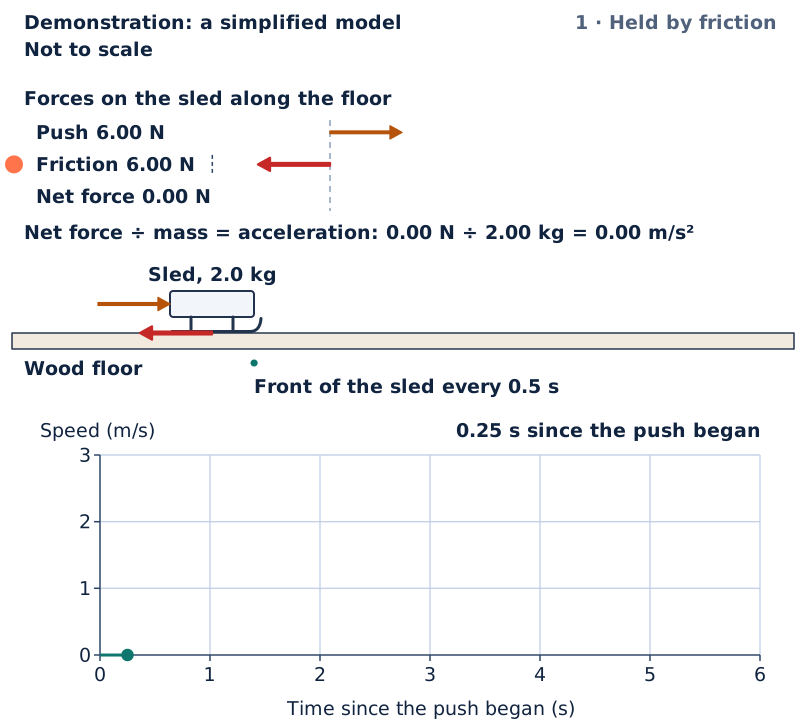
The idea, step by step
Not to scale
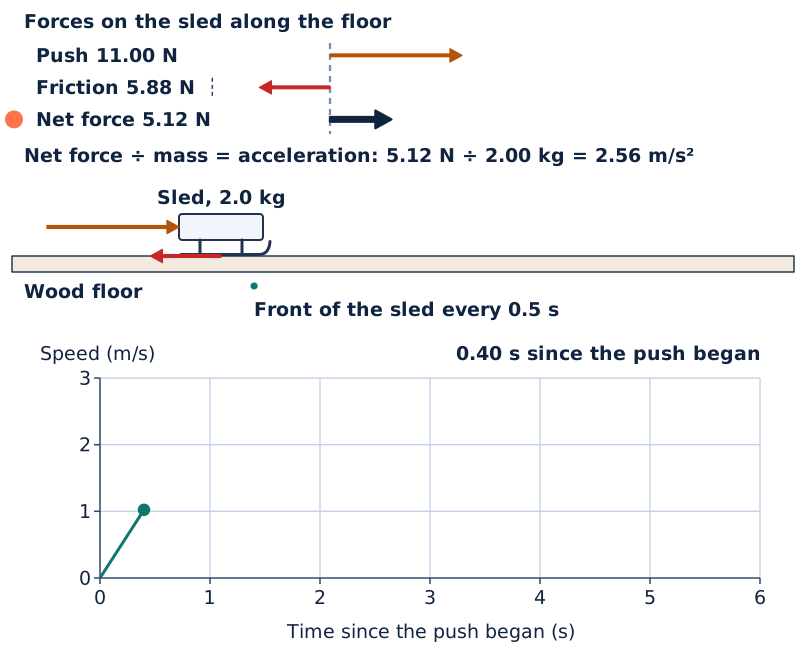
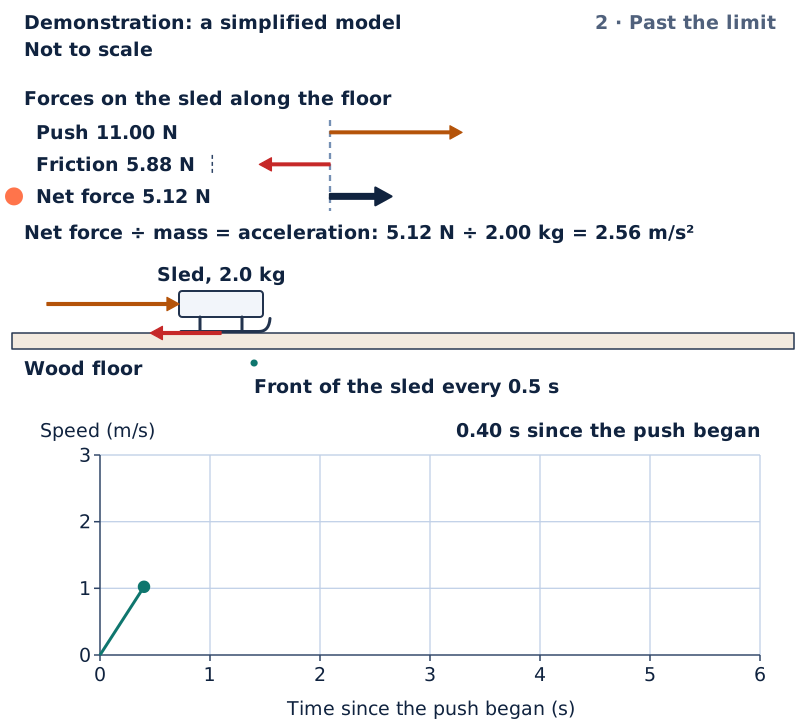
2 · Past the limitPush 11 N, past the limit: it slides. Friction drops to 5.88 N; a net force of 5.12 N speeds it up.1 Sled · 2 Wood floor · 3 Front of the sled every 0.5 s 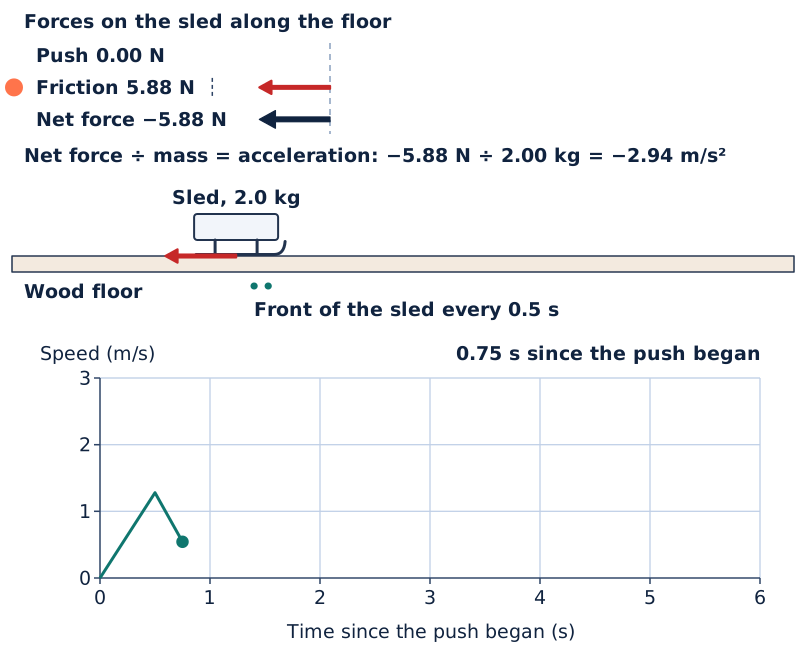
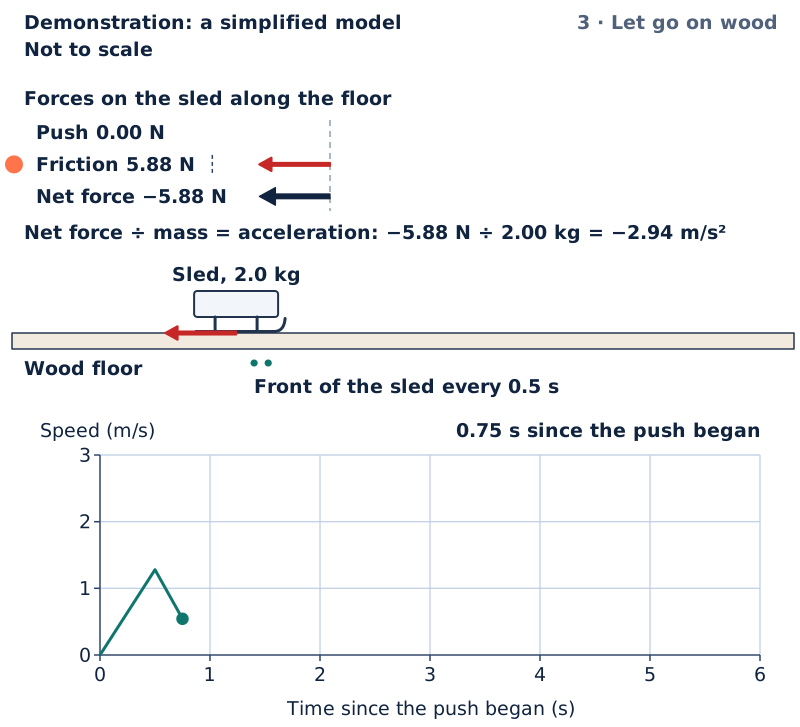
3 · Let go on woodThe push stops. Friction alone now acts, backwards, and slows the sled until it stops.1 Sled · 2 Wood floor · 3 Front of the sled every 0.5 s 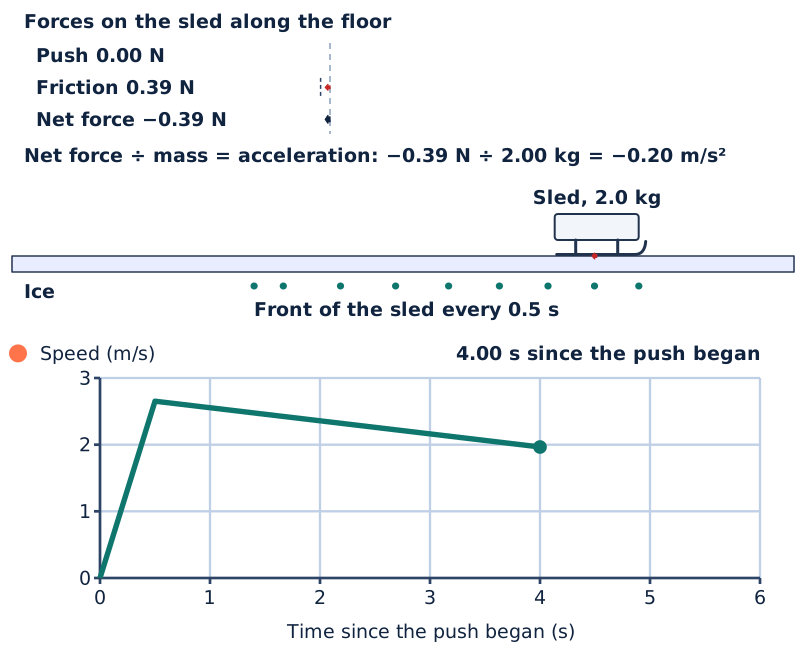
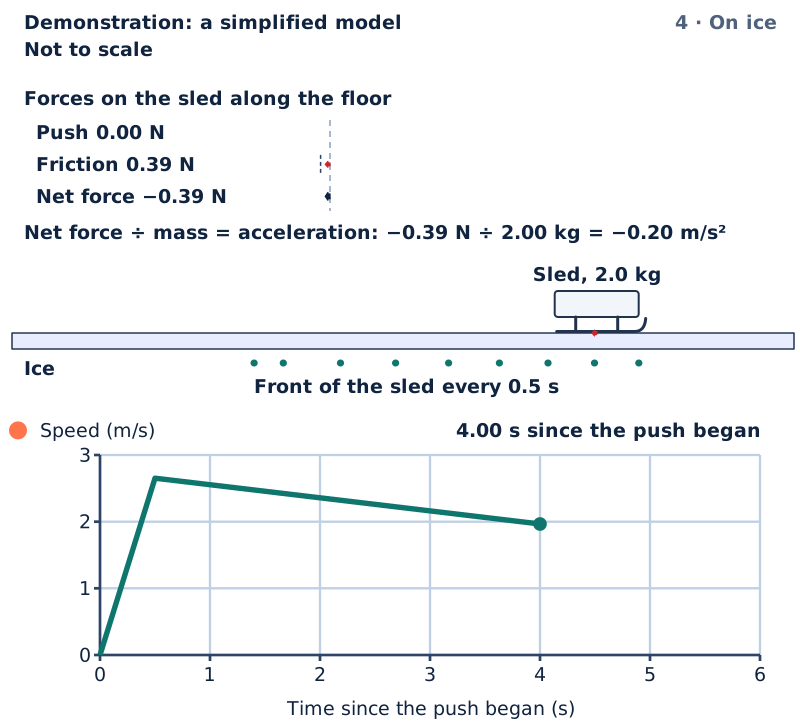
4 · On iceThe same push on ice: friction is only 0.39 N, so the sled slows only a little.1 Sled · 2 Ice · 3 Front of the sled every 0.5 s 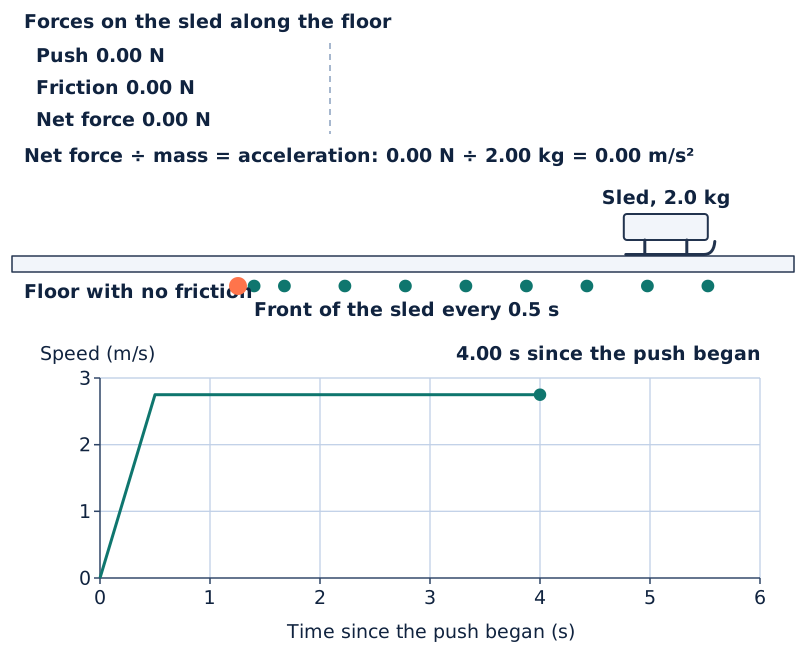
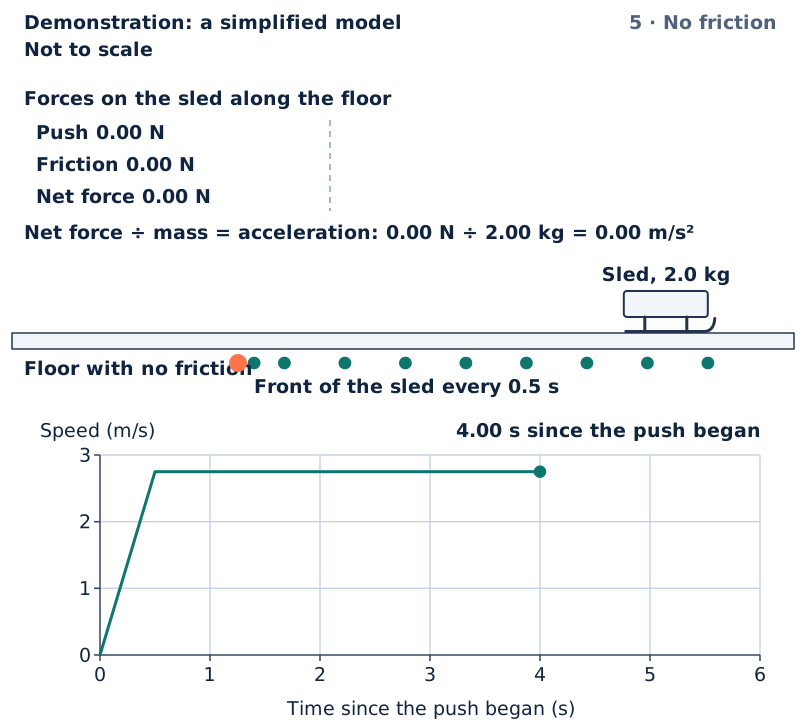
5 · No frictionNo friction: after the push, no force acts along the floor, so nothing changes the speed.1 Sled · 2 Floor with no friction · 3 Front of the sled every 0.5 s 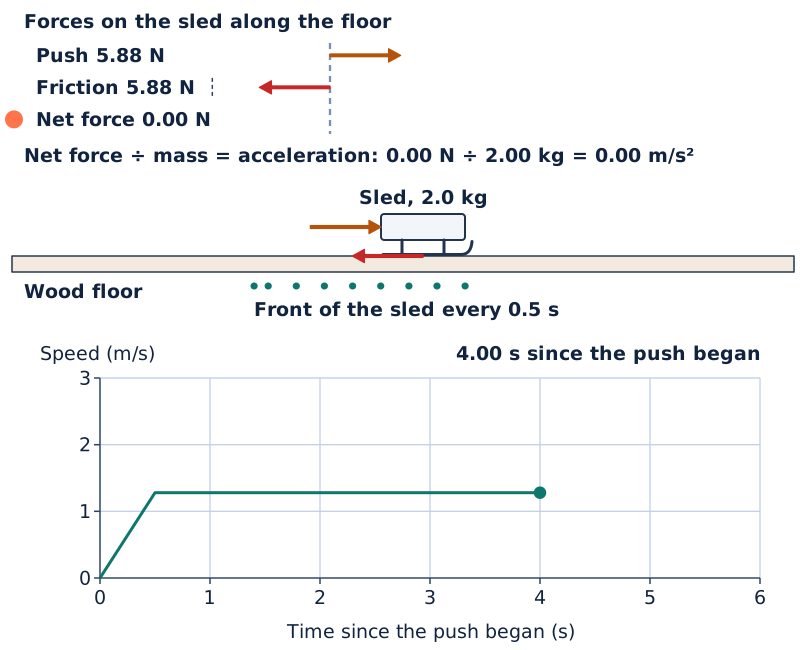
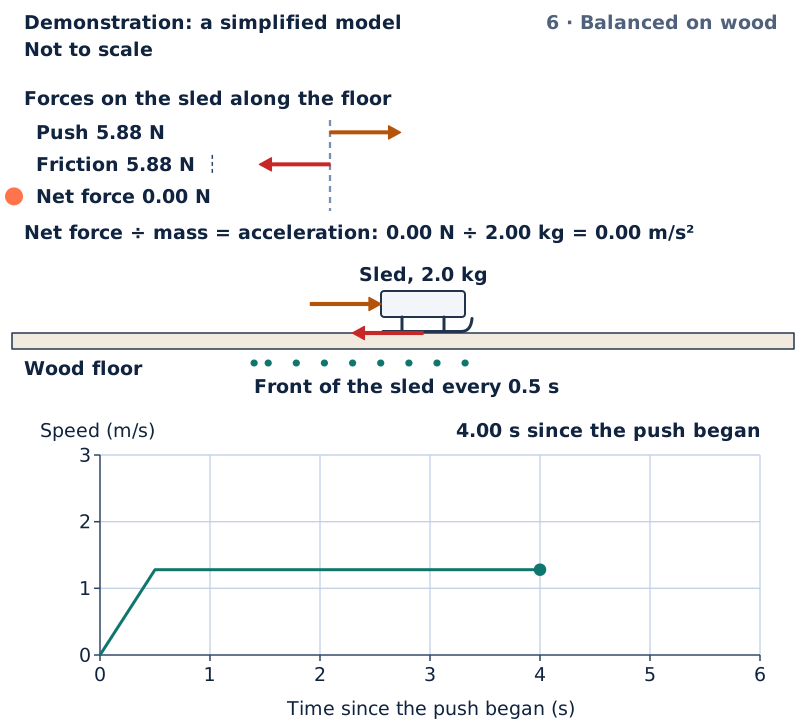
6 · Balanced on woodOn wood, push just as hard as friction, 5.88 N: net force zero, so the speed stays the same.1 Sled · 2 Wood floor · 3 Front of the sled every 0.5 s


The sled's motion every half second: one row for each dot on the floor, then the latest time if it falls between dots
| Time since the push began (s) | Distance slid (m) | Speed (m/s) | Change in speed since the row above (m/s) | In the first figure |
|---|---|---|---|---|
| 0.00 | 0.00 | 0.00 | ||
| 0.25 | 0.00 | 0.00 | Shown |
Try it in the Lab
Practicals with real materials, each with its safety card.
- Newton's first law: coin and card, glass on paper, and a passenger on a stopping trolleyYear 10Bench practicalLow risk
- Balanced and unbalanced forces: two newton meters pulling a trolleyYear 7Bench practicalLow risk
- Friction: force needed to slide a loaded wooden slider on different surfacesYear 7Bench practicalLow risk
- Toy car on a ramp: which surface stops it soonest?Year 4Bench practicalLow risk
- Rolling resistance of a toy car from its stopping distanceYear 11Bench practicalLow risk
- Dragging a shoe with a spring balance: measuring friction in newtonsYear 4Bench practicalLow risk
- Coefficient of kinetic friction with a spring balanceYear 11Bench practicalLow risk
With a learner
Three questions to ask
- What forces act on the sled along the floor while it slides after the push?
- Why does the sled slide further on ice than on wood?
- On wood, what must you do to keep the sled sliding at a steady speed, and why?
What to expect
Many learners expect the sled to slow down and stop on every surface once the push ends, even with no friction.
What to try next
Open a practical in Try it in the Lab, above, to feel friction hold a slider still, then pull it across different surfaces.
About this model
What is simplified
- The sled's weight and the floor's push up on it balance, so they are not drawn. Only the forces along the floor are drawn, all to one scale.
- Friction holds a still sled with whatever force it needs, up to its limit; a sliding sled feels a smaller, steady friction. The values are typical ones for steel runners on wood and on ice, and real surfaces vary.
- No friction is an ideal. An air track or an air hockey table comes close, but a real glider still slows a little.
- The push is steady and lasts half a second. Air resistance is left out.
- The sled is drawn larger than to scale, so it can be seen; the distances it slides and the dots are to one scale.
- A run goes on to the end of the time slider, so a sled at rest is seen staying at rest, unless the front of the sled reaches the end of the floor shown first.
Numbers and their sources
- 9.80665 m/s² Standard acceleration of gravity, exact by definition, used for the sled's weight, which sets how hard it presses on the floor. The same value as in Newton's second law: one value for a constant across every demonstration. Source: NIST, CODATA 2022 recommended values: standard acceleration of gravity, read 24 September 2026.
- 0.5 Friction limit for the sled's steel runners on wood, as a fraction of the sled's weight: a typical value for metal on wood. Source: OpenStax, University Physics Volume 1, section 6.2 Friction, Table 6.1: metal on wood, static, read 26 September 2026.
- 0.3 Sliding friction for steel runners on wood, as a fraction of the sled's weight: a typical value for metal on wood. Source: OpenStax, University Physics Volume 1, section 6.2 Friction, Table 6.1: metal on wood, kinetic, read 26 September 2026.
- 0.04 Friction limit for steel runners on ice, as a fraction of the sled's weight: a typical value for steel on ice. Source: OpenStax, University Physics Volume 1, section 6.2 Friction, Table 6.1: steel on ice, static, read 26 September 2026.
- 0.02 Sliding friction for steel runners on ice, as a fraction of the sled's weight: a typical value for steel on ice. Source: OpenStax, University Physics Volume 1, section 6.2 Friction, Table 6.1: steel on ice, kinetic, read 26 September 2026.
Review
Demonstration: a simplified model. Checked against its written sources, 26 September 2026. Not reviewed by a qualified teacher.
Curriculum references
SC4-FOR-01SC5-WAM-02AC9S7U04AC9S10U05
Reference, not a verified alignment.