Sides and angles give a shape its names
Kindergarten to Year 8Early Stage 1 to Stage 4Move it
A shape is named by its sides and angles. Move a corner, slide a side, turn it: which names fit?
Demonstration: a simplified model1 · A square
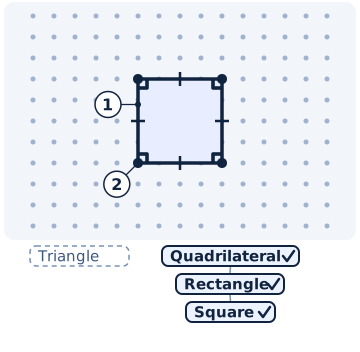
Four sides the same length and four square corners: a square.
- Side
- Corner
Key Small marks across sides: sides with the same marks are the same length. Small square in a corner: a square corner. Solid box with a tick: a name that fits the shape. Dashed box: a name that does not fit.
The model could not start here. The figure, the steps and the table on this page still show the idea; reload the page to try again.
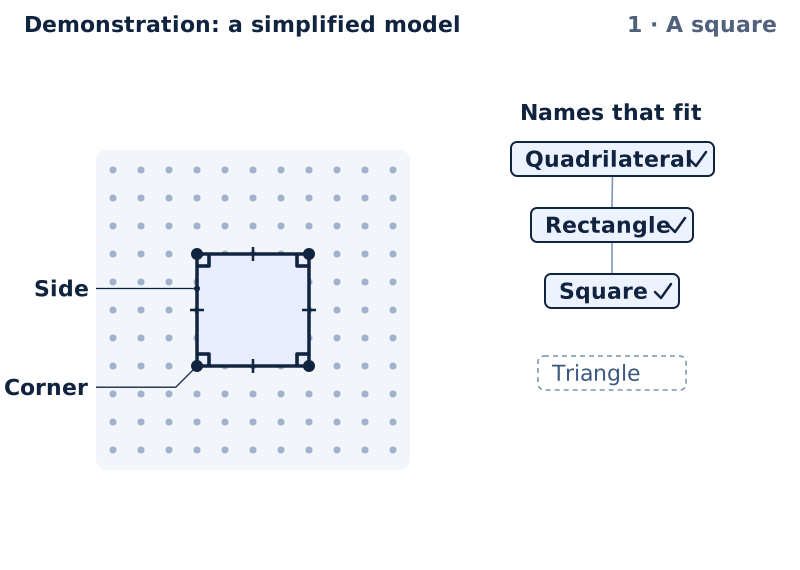
The idea, step by step
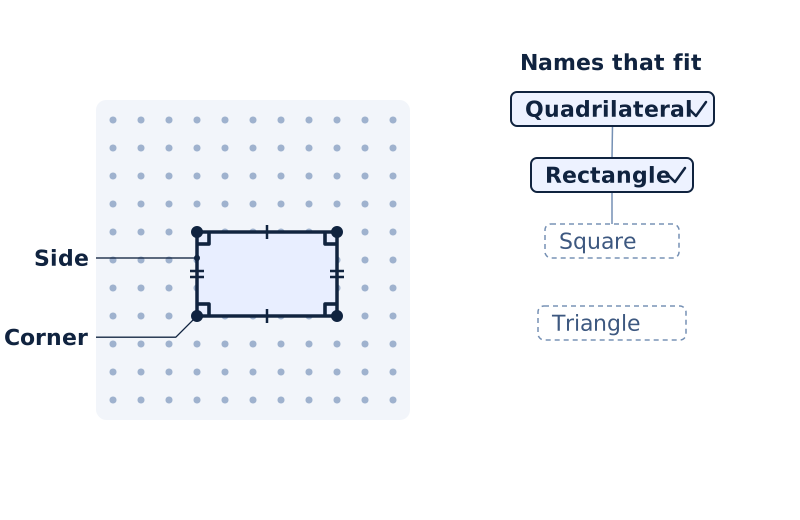
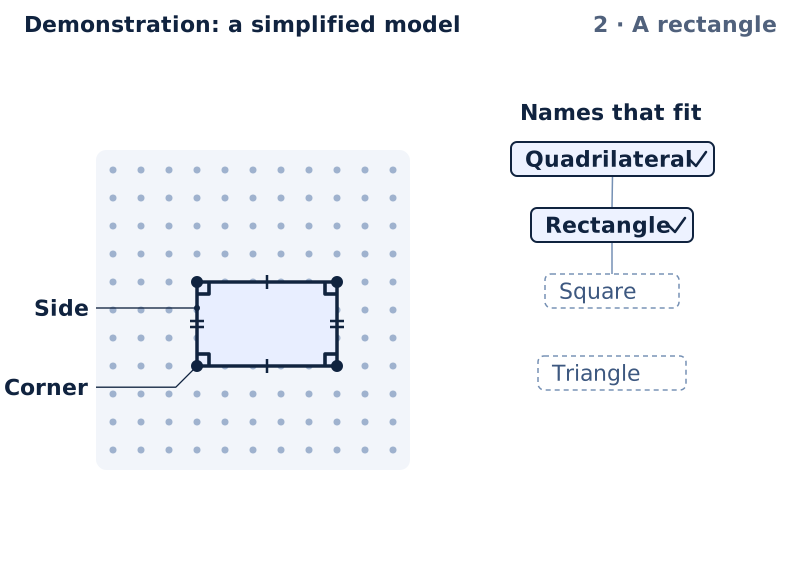
2 · A rectangleFour square corners, but not all sides the same: a rectangle.1 Side · 2 Corner 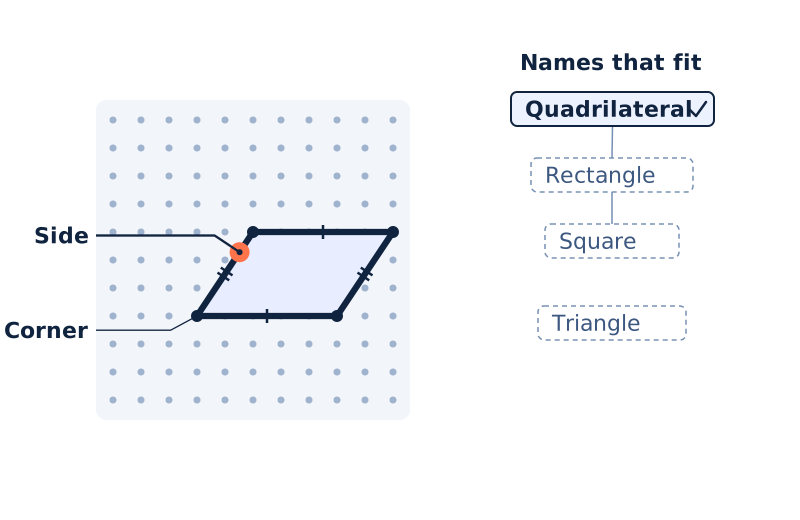
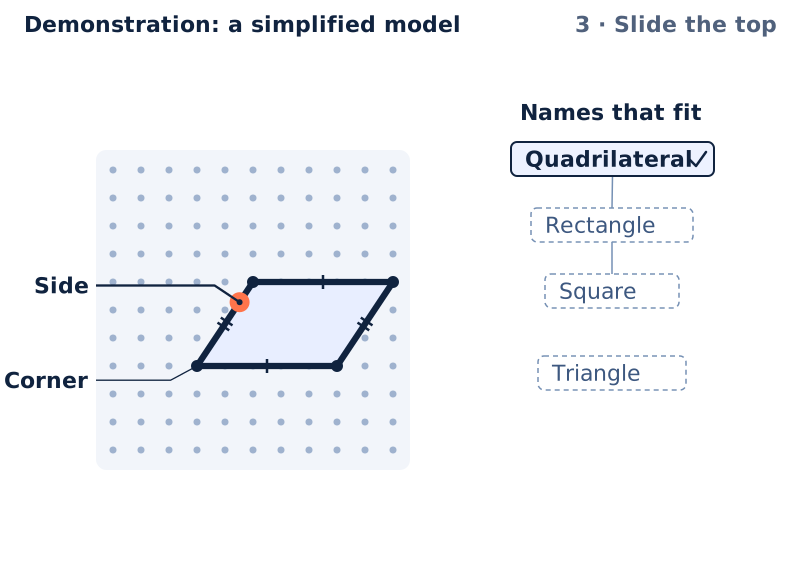
3 · Slide the topSlide the top side along: now there are no square corners.1 Side · 2 Corner 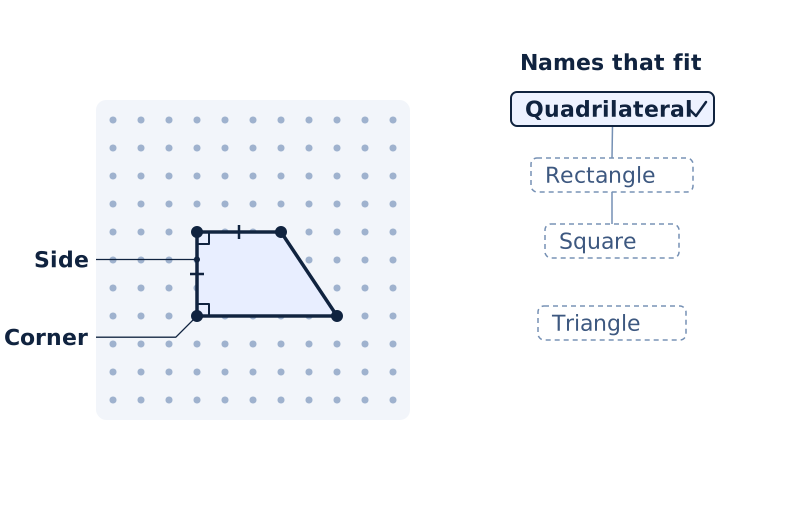
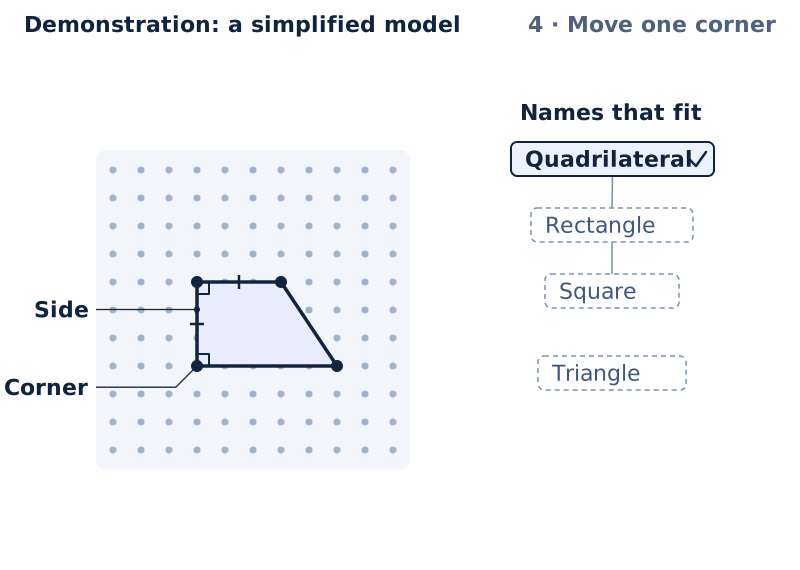
4 · Move one cornerMove one top corner: the top side is now shorter.1 Side · 2 Corner 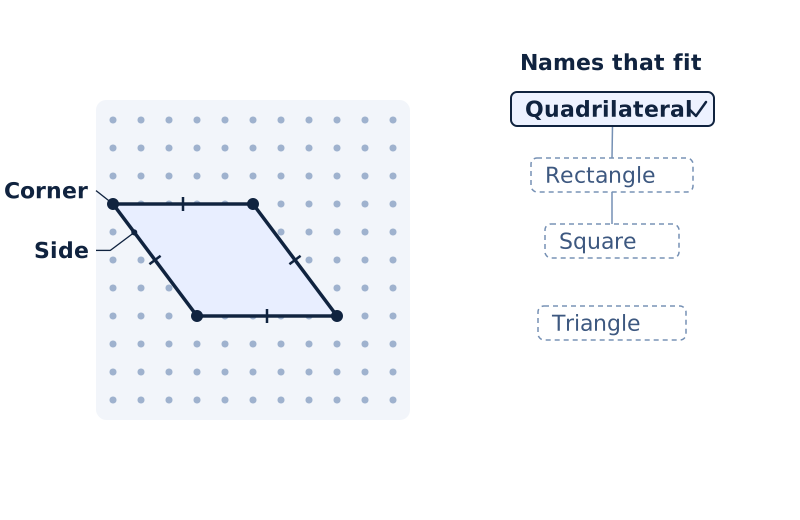
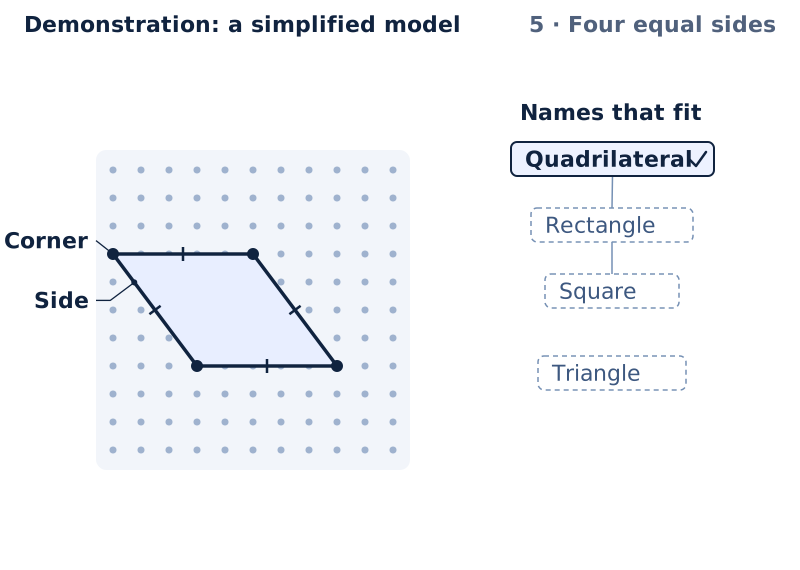
5 · Four equal sidesAll four sides the same length, but no square corners.1 Side · 2 Corner 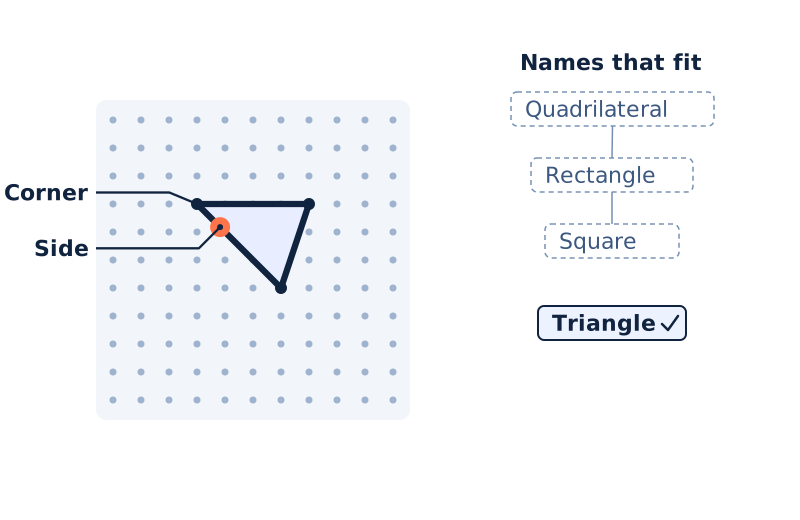
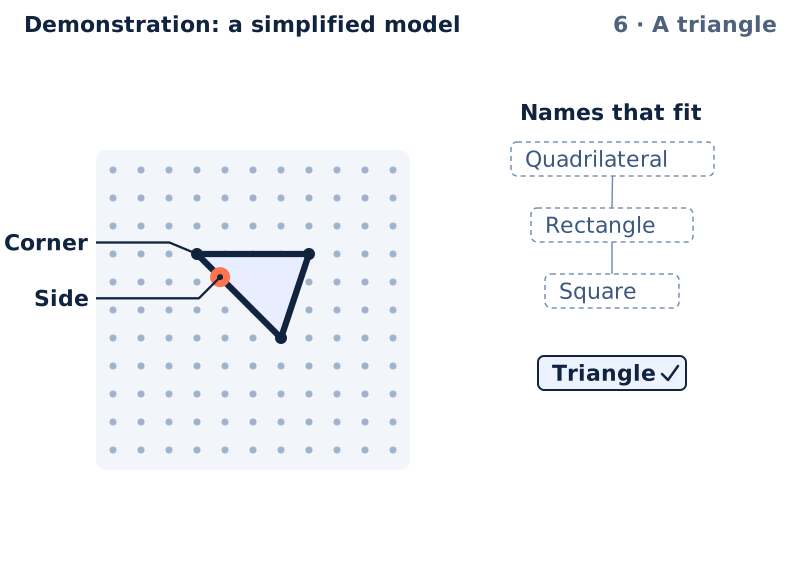
6 · A triangleThree sides and three corners: a triangle, even upside down.1 Side · 2 Corner 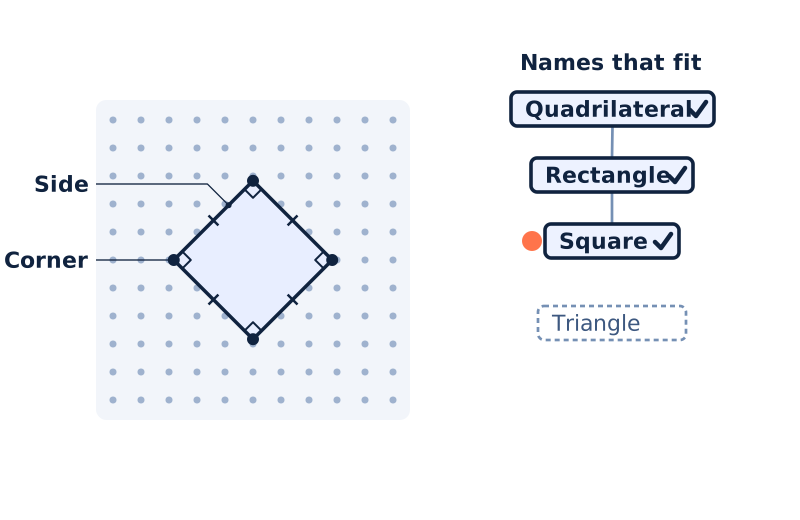
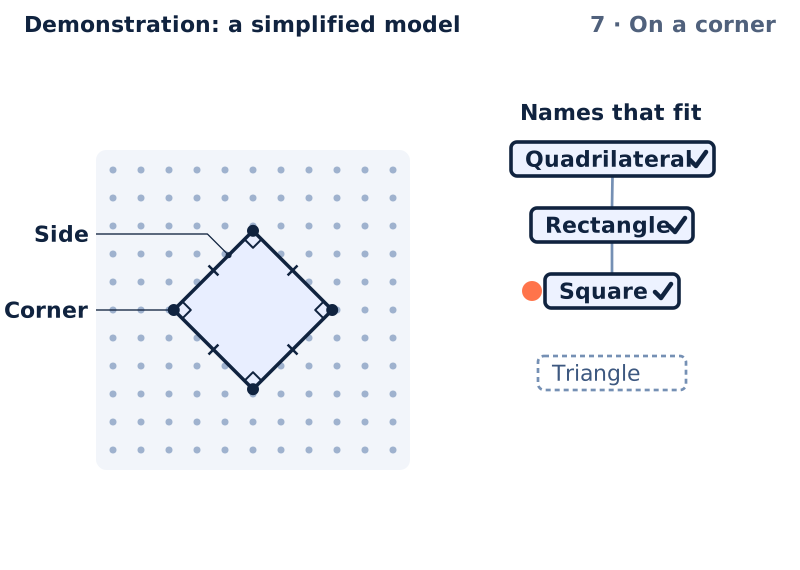
7 · On a cornerTurned onto a corner, it is still a square.1 Side · 2 Corner


Each name, what it needs, and whether it fits the shape now. Now marks the shape's most special name.
| Name | What it needs | Fits the shape now | In the first figure |
|---|---|---|---|
| Quadrilateral | Four straight sides | Yes | |
| Trapezium | Four sides, with exactly one pair of parallel sides | No | |
| Parallelogram | Four sides, with two pairs of parallel sides | Yes | |
| Rectangle | Four right angles (square corners) | Yes | |
| Rhombus | Four equal sides | Yes | |
| Kite | Two pairs of equal sides, each pair side by side | Yes | |
| Square | Four equal sides and four right angles | Yes | Shown |
| Triangle | Three straight sides | No |
Try it in the Lab
Practicals with real materials, each with its safety card.
- Feel and name: sorting 2D shapes by their featuresKindergartenHands-on mathematicsLow risk
- Geoboard shapes: sides, corners and parallel sidesYears 1–2Hands-on mathematicsLow risk
- One straight cut: splitting a trapezium into new shapesYears 3–4Hands-on mathematicsLow risk
- Two strips and a split pin: quadrilaterals from their diagonalsYears 5–6Hands-on mathematicsLow risk
Learn it in a lesson
- Sorts and names circles, squares, triangles and rectanglesEarly Stage 1Find the lesson
- Classifies triangles and quadrilaterals using their side, angle and symmetry propertiesStage 4Find the lesson
With a learner
Three questions to ask
- Turn the square onto a corner. What is it now, and how can you tell?
- Which names fit a square, and how many are there?
- Make a triangle and turn it upside down. Is it still a triangle?
What to expect
Many learners name a shape by the way it sits on the page. Ask them to count its sides and check its corners instead.
What to try next
Open a practical in Try it in the Lab, above, to make these shapes on a geoboard with rubber bands.
About this model
What is simplified
- The top side always stays parallel to the bottom side, so the model makes squares, rectangles, rhombuses, parallelograms, trapeziums and triangles. It never makes a four-sided shape with no parallel sides, or a kite that is not a rhombus: make those on a geoboard or with the strips in the Lab, above.
- The names follow these meanings: a trapezium has exactly one pair of parallel sides, so a parallelogram is not called a trapezium here; a kite has two pairs of sides the same length, each pair side by side, so every rhombus is a kite, and so is every square. Some books use other meanings.
- The corners sit on dots one space apart until the shape is turned. The dots stay still and the shape turns over them.
- A corner stops at the edge of the board, so a long top side can only slide so far, and a slid top side can only grow so long.
- Lengths are counted in spaces between dots, not measured in centimetres.
Review
Demonstration: a simplified model. Checked against its written sources, 26 September 2026. Not reviewed by a qualified teacher.
Curriculum references
MAE-2DS-01MA1-2DS-01MA2-2DS-01MA3-2DS-01MA4-GEO-C-01MAO-WM-01AC9MFSP01AC9M1SP01AC9M2SP01AC9M5SP03AC9M7SP02
Reference, not a verified alignment.