A picture hides some faces, edges and vertices
Years 3–8Stage 2 to Stage 4Move it
Faces meet at edges, and edges at vertices. Turn a solid to count them all, then open its faces out flat into a net.
Demonstration: a simplified model1 · Faces, edges, vertices
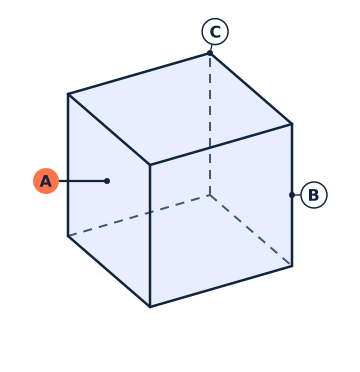
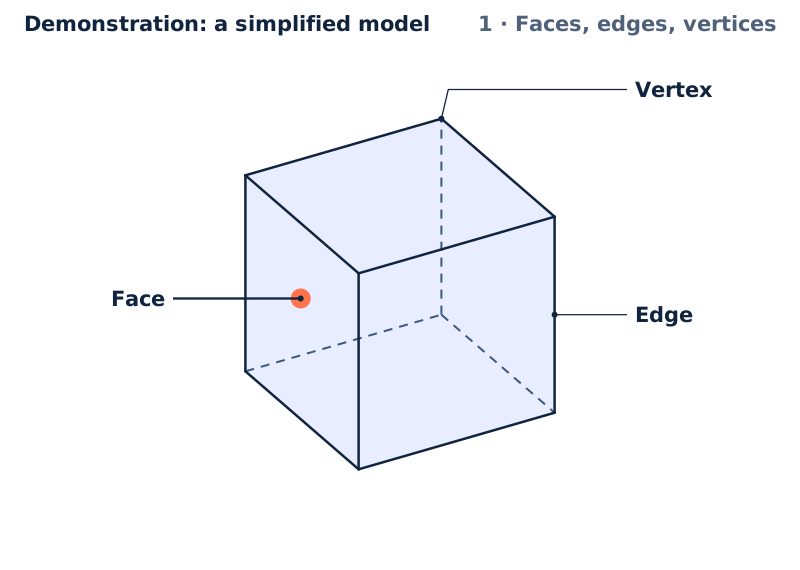
Each face of this cube is a flat square. The labels point to one face, one edge and one vertex.
- Face
- Edge
- Vertex
Key Dark lines: edges, dashed where hidden. Teal lines: curved solids' outlines and boundaries, not edges; dashed where hidden. Numbers: counted so far. Dashed ring or hollow dot: on the hidden side. Light tint: flat surfaces. Darker tint: curved surfaces. Filled coral circle: what the step is about.
The model could not start here. The figure, the steps and the table on this page still show the idea; reload the page to try again.
The idea, step by step
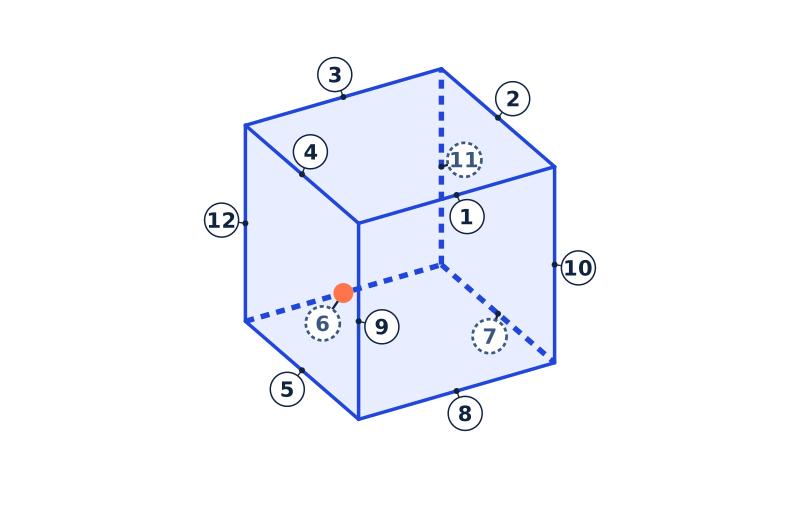
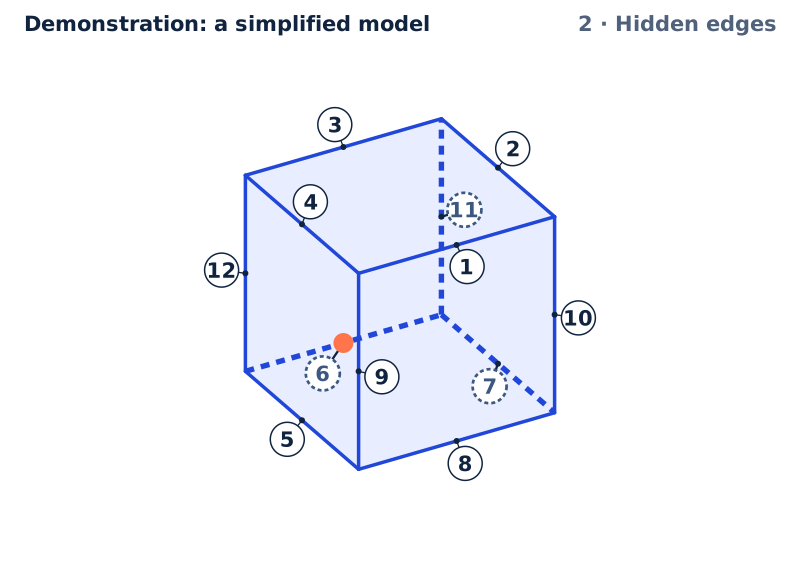
2 · Hidden edgesFrom this side you see 9 edges. The dashed ones are hidden: the cube has 12 in all. 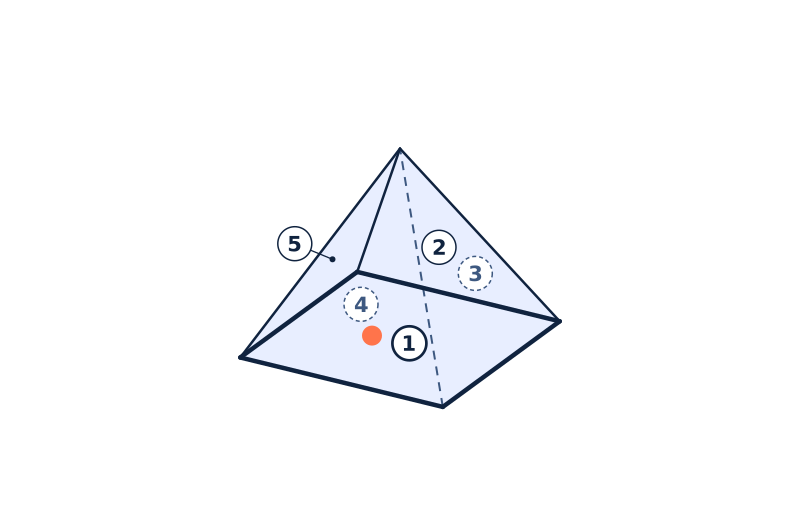
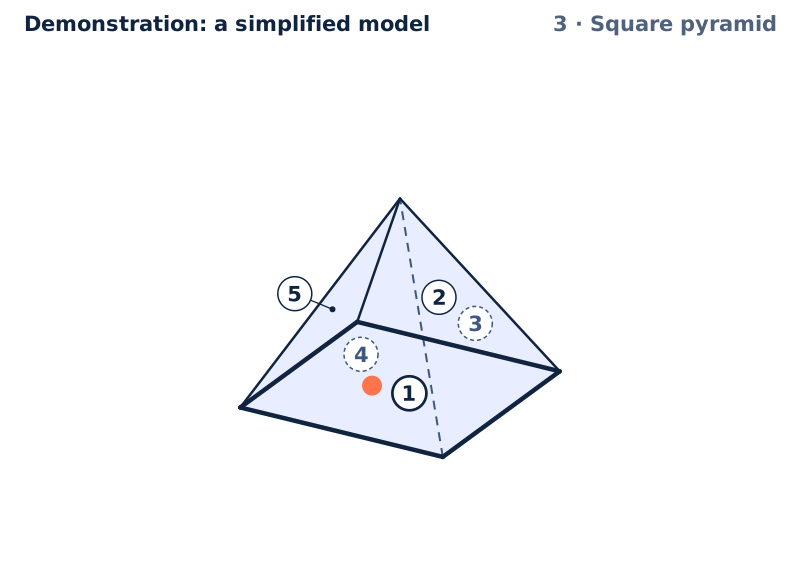
3 · Square pyramidSeen from below, the base is a square. The other 4 faces are triangles. 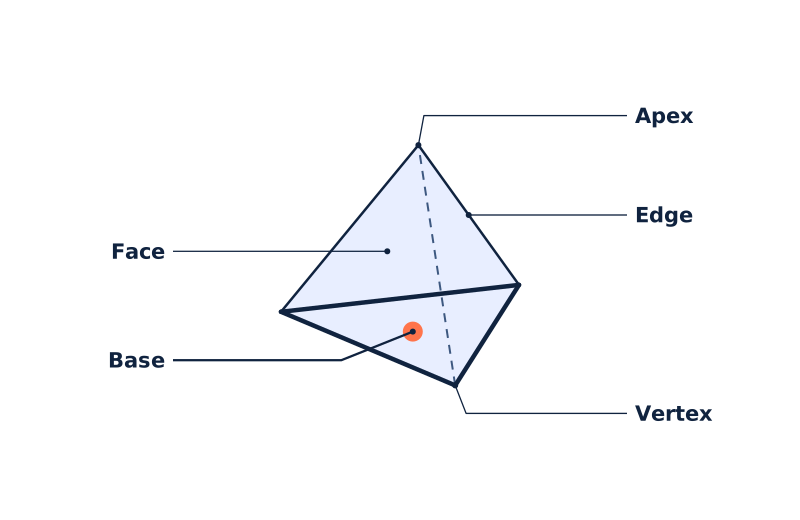
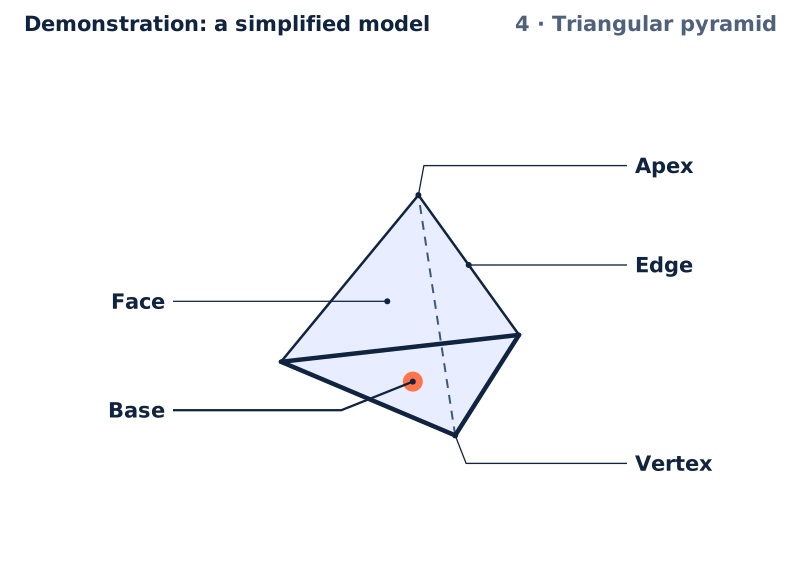
4 · Triangular pyramidSeen from below, this pyramid's base is a triangle, not a square. Its other faces are triangles too.A Face · B Edge · C Vertex · D Apex · E Base 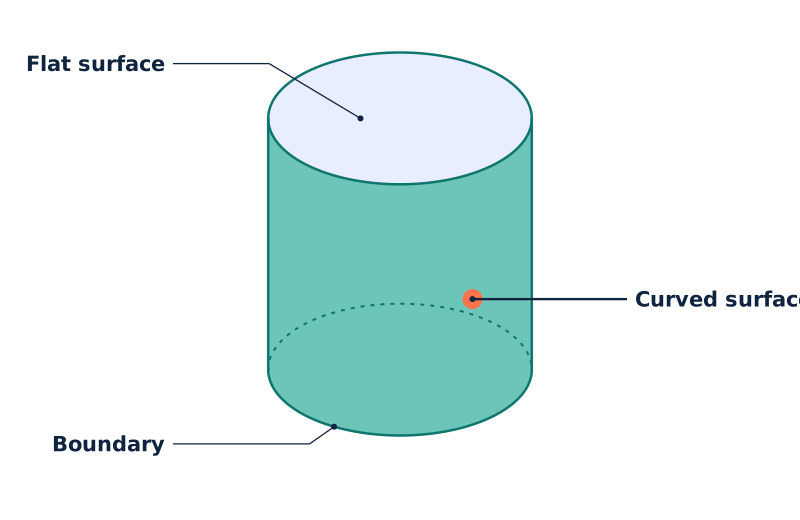
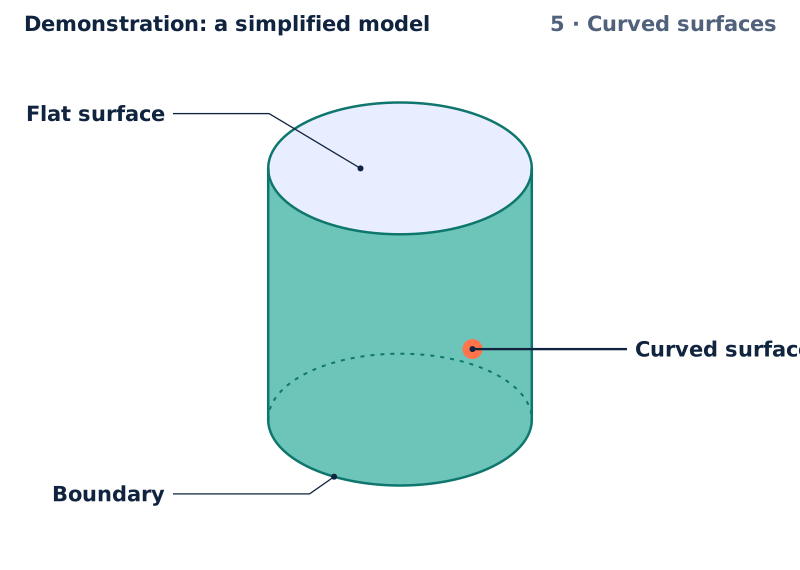
5 · Curved surfacesA cylinder has 2 flat surfaces and 1 curved surface. Where they meet are boundaries, not edges.A Flat surface · B Boundary · C Curved surface 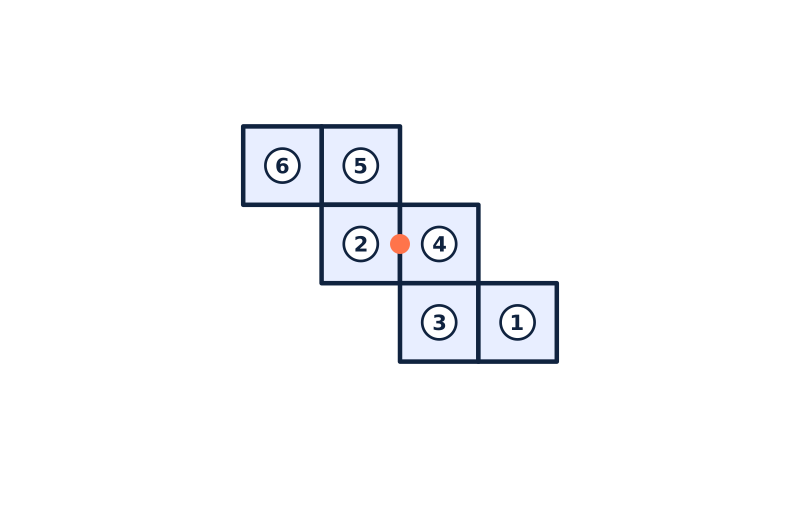
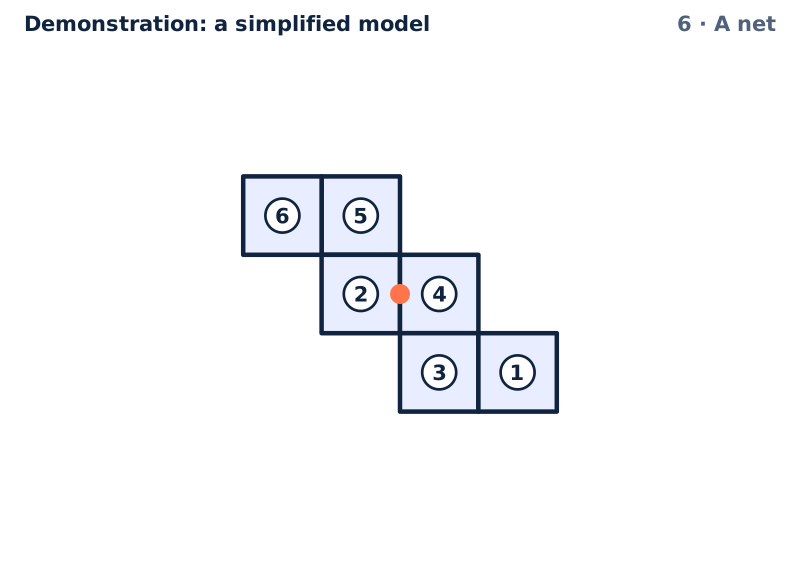
6 · A netOpened out flat, the cube's 6 faces make a net that is not a cross. Fold it up to check it makes the cube. 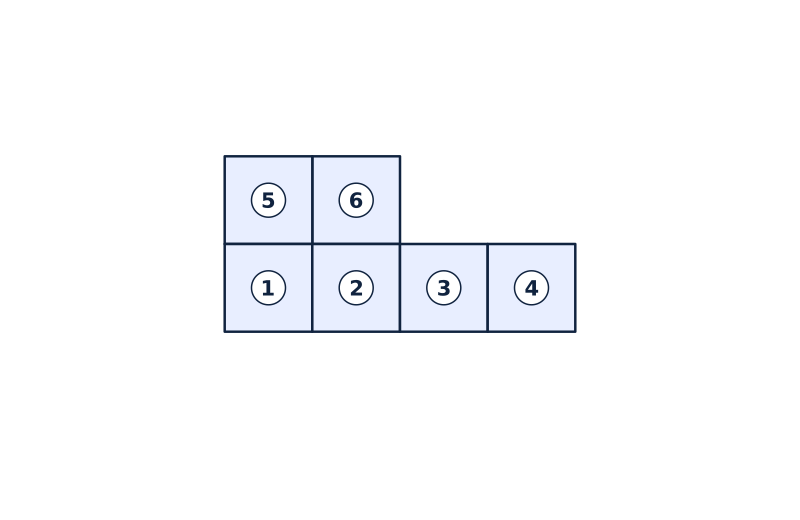
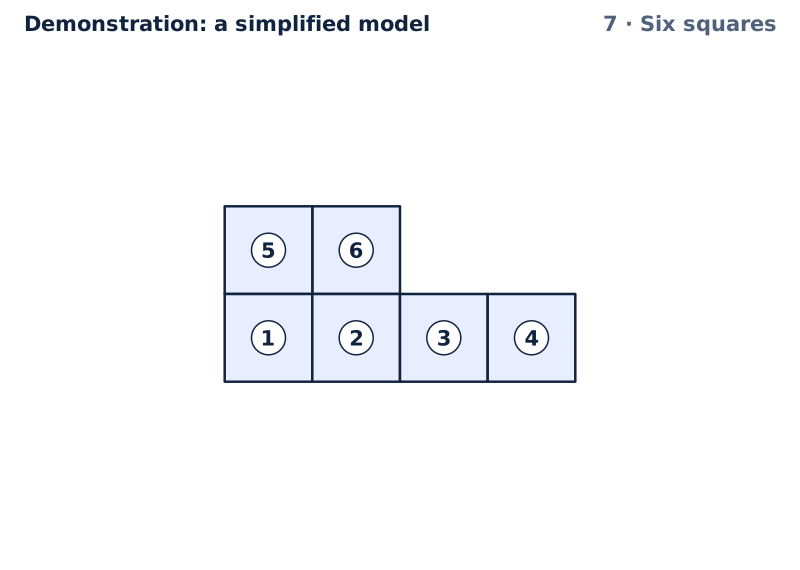
7 · Six squaresSix squares, as in the prediction. Fold them up in your mind, or with Open out the faces: do they make a cube?


Faces, edges and vertices are counted on polyhedra only, so a blank means not a polyhedron.
| Solid | Faces | Edges | Vertices | Flat surfaces | Curved surfaces | In the first figure |
|---|---|---|---|---|---|---|
| Cube | 6 | 12 | 8 | 6 | 0 | Shown |
| Rectangular prism | 6 | 12 | 8 | 6 | 0 | |
| Triangular prism | 5 | 9 | 6 | 5 | 0 | |
| Square pyramid | 5 | 8 | 5 | 5 | 0 | |
| Triangular pyramid | 4 | 6 | 4 | 4 | 0 | |
| Cylinder | 2 | 1 | ||||
| Cone | 1 | 1 | ||||
| Sphere | 0 | 1 |
Try it in the Lab
Practicals with real materials, each with its safety card.
- Skeleton models: faces, edges and verticesYears 3–4Hands-on mathematicsLow risk
- Roll, stack or slide: sorting 3D objects by what they can doYears 1–2Hands-on mathematicsLow risk
- Which nets fold into a cubeYears 5–6Hands-on mathematicsLow risk
- Packaging sort: objects that stack, roll or do bothKindergartenHands-on mathematicsLow risk
Learn it in a lesson
- Calculates the surface area of prisms and cylindersA later lesson in this strand: Stage 5Find the lesson
- Finds the surface area of right pyramids and right conesA later lesson in this strand: Stage 5Find the lesson
- Identifies planar graphs and applies Euler's formulaA later lesson in this strand: Stage 5Find the lesson
With a learner
Three questions to ask
- How many faces can you see from here, and how many are there in all?
- On the triangular prism, how can you count every edge exactly once?
- Will these squares fold into a cube, and what goes wrong if they do not?
What to expect
Many learners count only the faces they can see from one side of a cube, and stop there.
What to try next
Open a practical in Try it in the Lab, above, to build skeleton models or fold nets with real materials, and count again.
About this model
What is simplified
- The solids are drawn in parallel projection: parts further away are not drawn smaller, as in a textbook drawing.
- Faces are drawn solid and in one tint, and hidden edges are drawn dashed over them, the usual way of drawing a solid.
- A sphere is drawn with two thin lines across it, round its middle and over its top, so that it reads as a ball and not a flat circle. They are not boundaries.
- Unfold it opens every face at the same rate and swings the view round to look straight down, so the net is seen flat. The swing of the view is presentation, not part of the net.
- Only the cube offers more than one net, and one arrangement of six squares that is not a net.
- A cylinder, cone or sphere is not a polyhedron. Following the NSW syllabus words, it is described by its flat and curved surfaces, the boundaries where they meet and a cone's apex, and it has no net.
- Faces plus vertices minus edges appears only at the Look for a pattern level, and only for polyhedra. The NSW syllabus meets Euler's formula later, for networks, and the later lessons, in Learn it in a lesson above, go further.
Review
Demonstration: a simplified model. Checked against its written sources, 26 September 2026. Not reviewed by a qualified teacher.
Curriculum references
MA2-3DS-01MA3-3DS-01MAO-WM-01MA4-VOL-C-01AC9M3SP01AC9M5SP01AC9M7SP01
Reference, not a verified alignment.