Volume of pyramids and cones
Years 9–10Stage 5Step through it
Pour the pyramid into the prism that shares its base and height, and count the pours. Then lean the apex, resize and try a cone.
Demonstration: a simplified model1 · Same base, same height
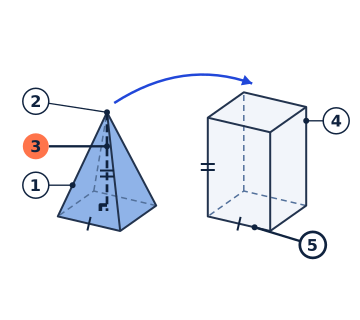
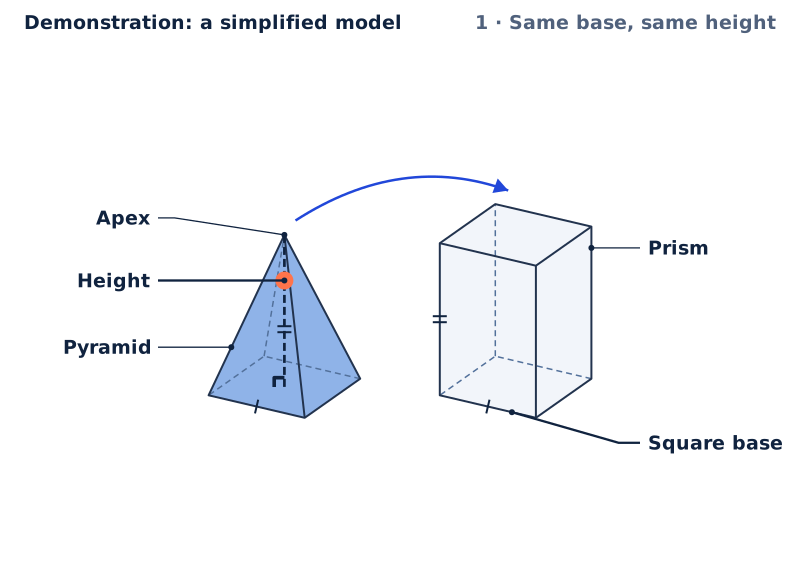
The pyramid and the prism stand on equal square bases and reach the same height. Matching ticks mark the equal lengths.
- Pyramid
- Apex
- Height
- Prism
- Square base
Key Solid lines: edges in front. Dashed lines: edges behind, and lines drawn to measure. Blue: water. Short dashes beside the container: the level after each pour. Curved arrow: a pour. Matching ticks: equal lengths. Small square: a right angle. In the cube: pale faces are the cuts; fine dashes show where the whole cube or box was.
The model could not start here. The figure, the steps and the table on this page still show the idea; reload the page to try again.
The idea, step by step
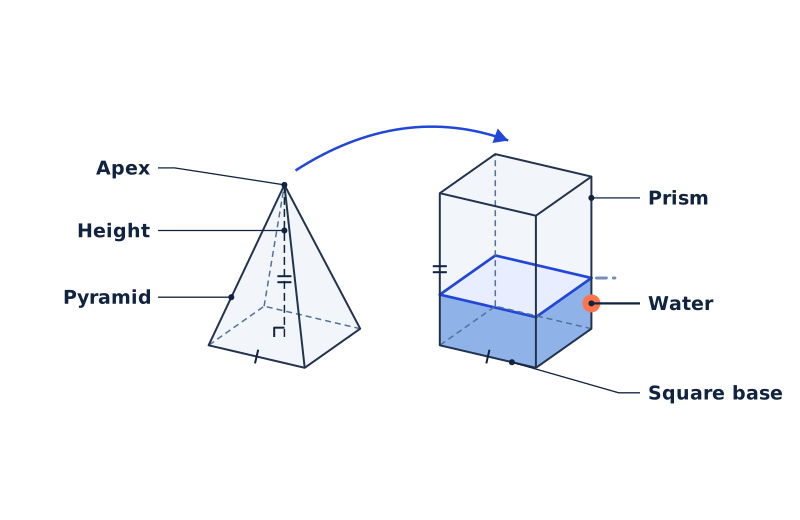
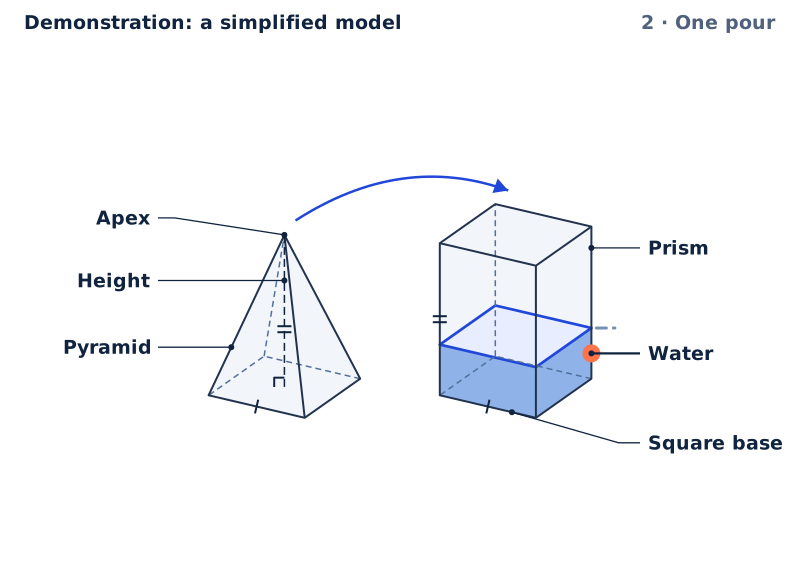
2 · One pourOne pyramidful of water fills the prism to one third of its height: 3 cm of the 9 cm.1 Pyramid · 2 Apex · 3 Height · 4 Prism · 5 Square base · 6 Water 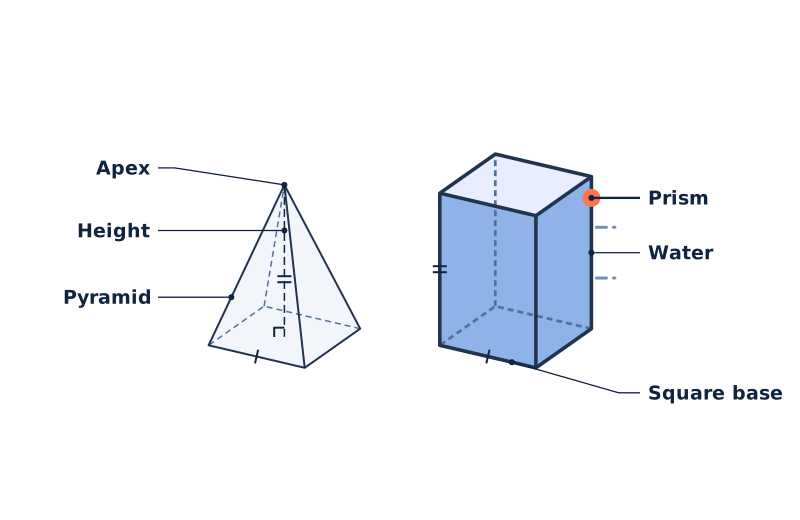
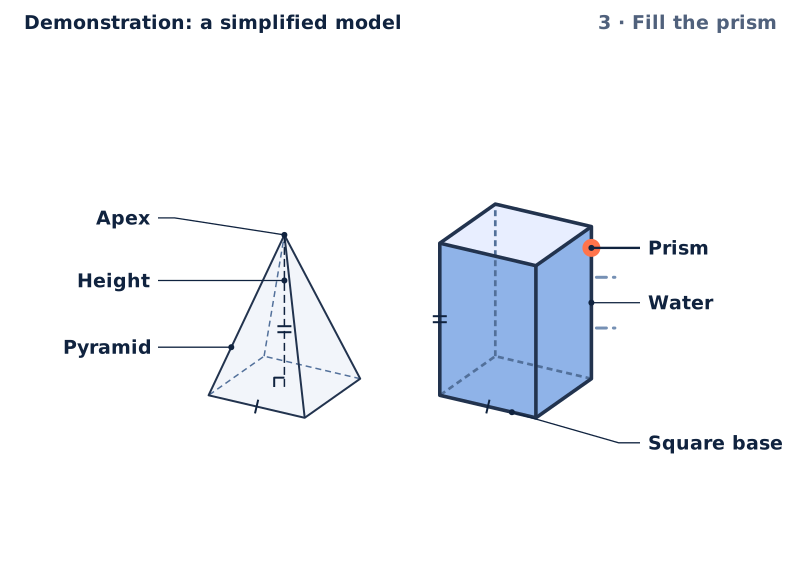
3 · Fill the prismThree pyramidfuls of 108 cm³ fill the prism's 324 cm³ exactly. The pyramid holds one third of the prism.1 Pyramid · 2 Apex · 3 Height · 4 Prism · 5 Square base · 6 Water 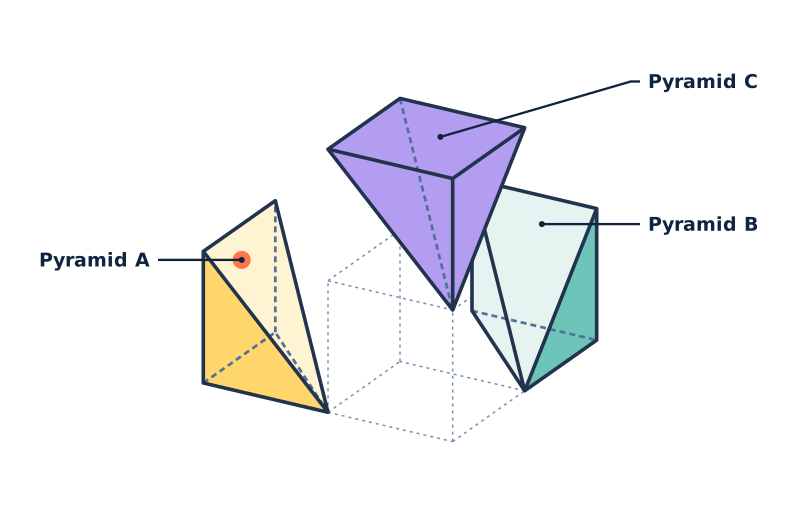
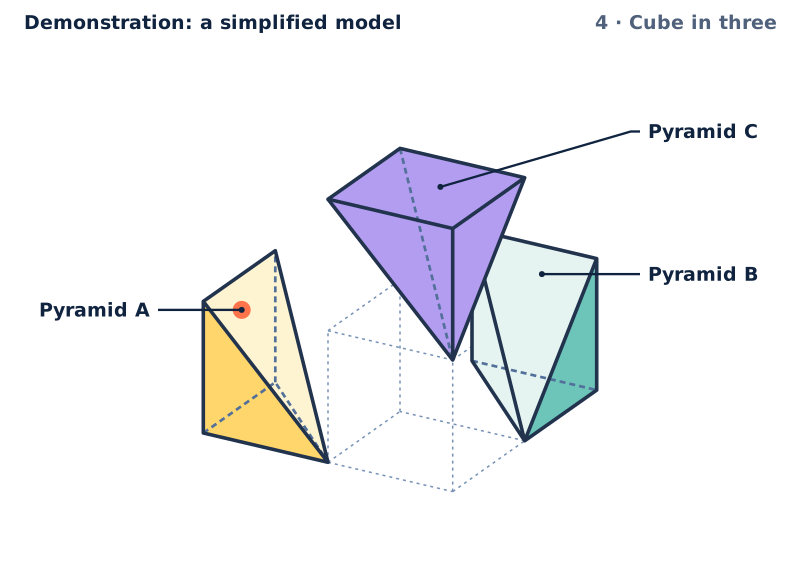
4 · Cube in threeA cube comes apart into three identical pyramids that fit together with no gap. Each holds 72 cm³ of the cube's 216 cm³.1 Pyramid A · 2 Pyramid B · 3 Pyramid C 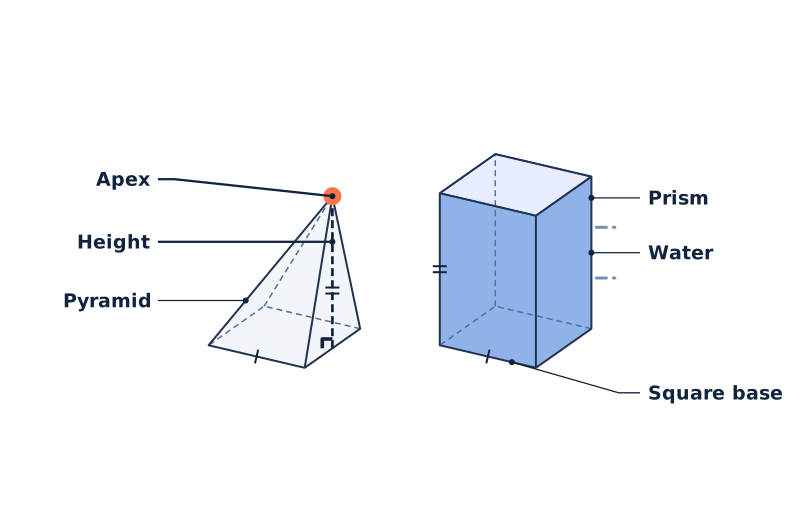
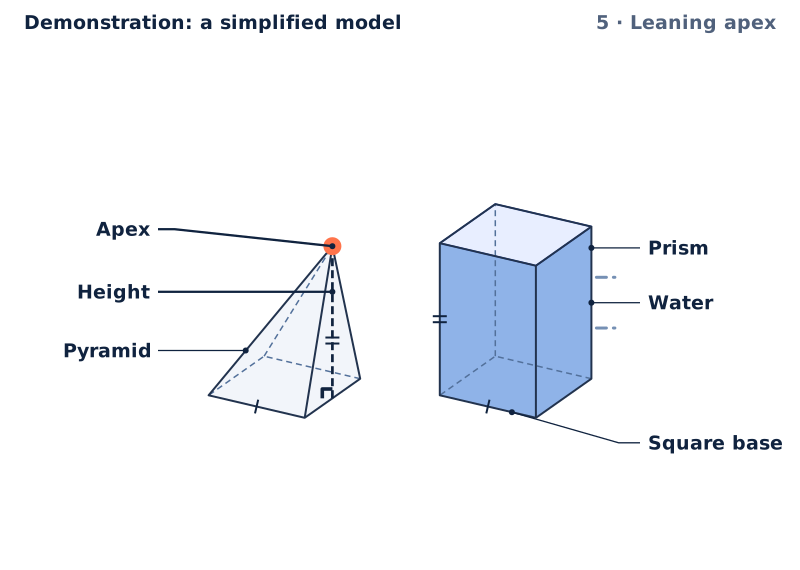
5 · Leaning apexLean the apex: the height is still measured straight down, and three pours still fill the prism.1 Pyramid · 2 Apex · 3 Height · 4 Prism · 5 Square base · 6 Water 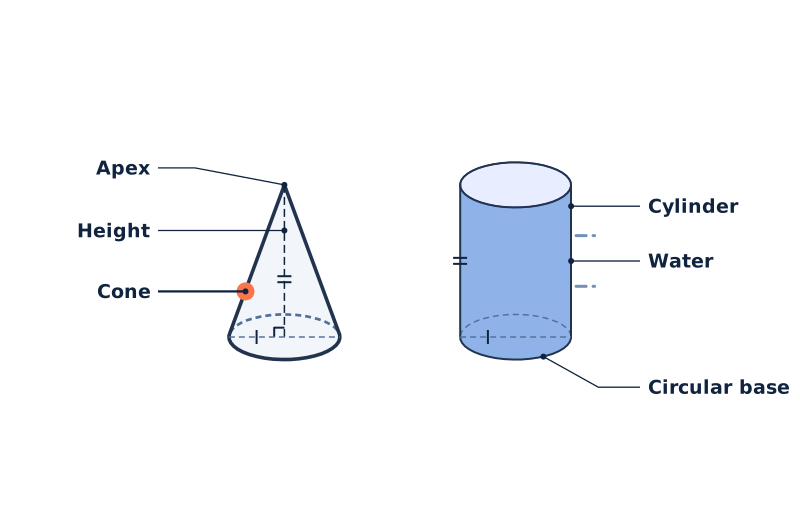
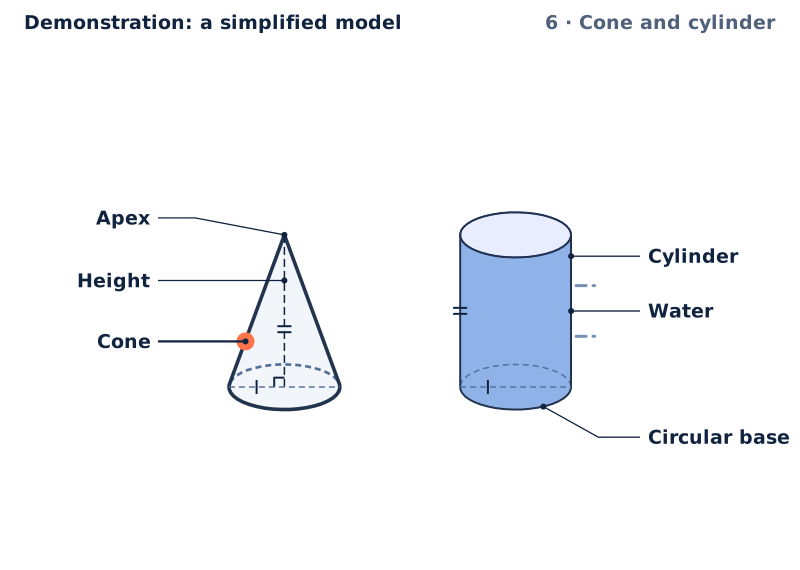
6 · Cone and cylinderA cone and a cylinder with the same base and height: three conefuls fill the cylinder too.1 Cone · 2 Apex · 3 Height · 4 Cylinder · 5 Circular base · 6 Water 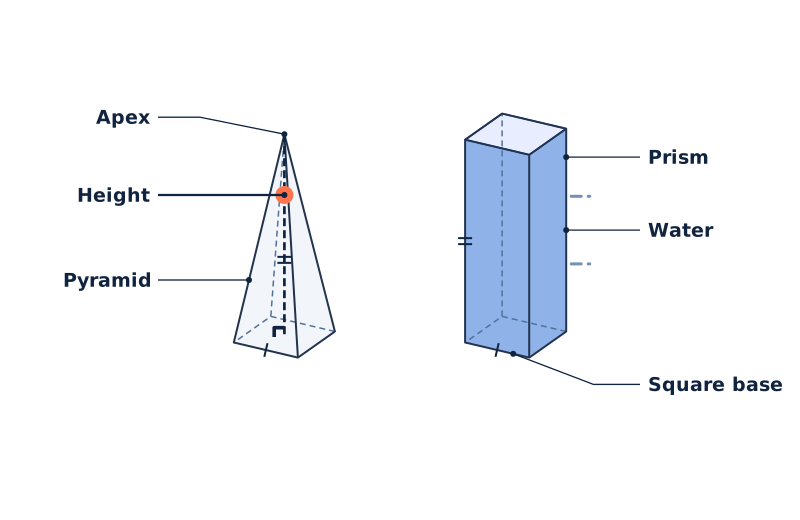
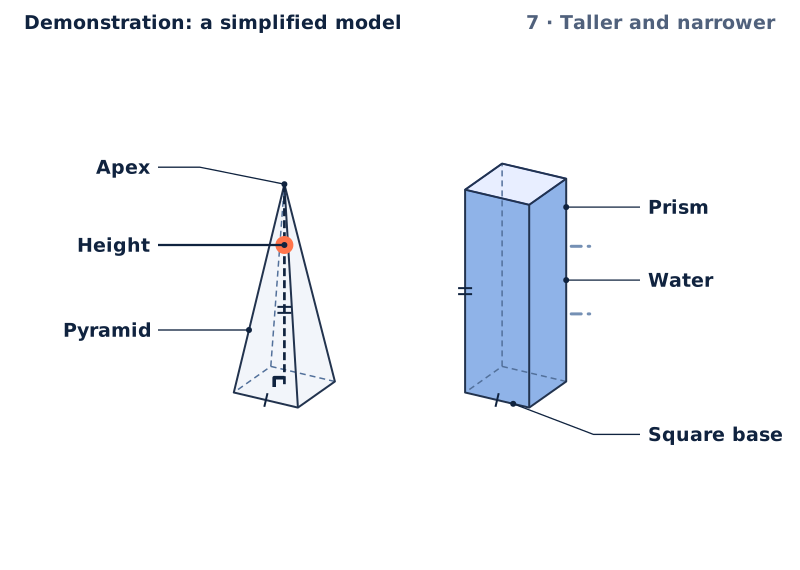
7 · Taller and narrowerBase 4 cm, height 12 cm: still exactly three pours. The pyramid's volume is one third of base area × height.1 Pyramid · 2 Apex · 3 Height · 4 Prism · 5 Square base · 6 Water


The water in the prism or cylinder after each pour
| Pours | Water (cm³) | Depth (cm) | Height filled | In the first figure |
|---|---|---|---|---|
| None | 0.0 | 0.0 | Empty | Shown |
| One | 108.0 | 3.0 | One third | |
| Two | 216.0 | 6.0 | Two thirds | |
| Three | 324.0 | 9.0 | Full |
Try it in the Lab
Practicals with real materials, each with its safety card.
- Cone and cylinder of equal base and height: three poursYear 10Hands-on mathematicsLow risk
- Volume of a rotated solid checked with water: a cone and a curved glassYear 12Hands-on mathematicsLow risk
Learn it in a lesson
- Finds the volume of right pyramids and right conesStage 5Find the lesson
- Finds the surface area of right pyramids and right conesStage 5Find the lesson
With a learner
Three questions to ask
- How many pyramidfuls do you think will fill the prism, and why?
- If the pyramid leans, is its volume bigger, the same, or smaller?
- Make the pyramid taller. Does it still take three pours?
What to expect
Many learners first predict two pours. It takes three, whatever the base, the height or the lean.
What to try next
Open the three-pours practical in Try it in the Lab, above, to pour with real containers, safety card first. The first lesson in Learn it in a lesson, above, cuts a cube into six identical pyramids from its centre; this page cuts it into three from one corner. Both show the one third.
About this model
What is simplified
- The pour moves one pyramidful, or one coneful, of water into the prism or cylinder. How the water gets out of the pyramid is not shown, and the pyramid is filled again before each pour.
- The glass has no thickness, nothing spills, and the water surface is flat, so each pour raises the water by the same depth.
- The solids are drawn in parallel projection, seen from the front right and a little above: lengths along one direction share one scale, and there is no perspective.
- Round bases are drawn as smooth ellipses in the tilted view. The model works out their area from the true circle.
- The cube view is fitted to the stage for each size of cube or box, so its scale can differ from the pour view's, and it zooms out while the pyramids turn to stand side by side. The numbers beside the model give the true sizes.
- The model works out every volume by adding up slices (the prismatoid formula) and, for the cube's pyramids, from their corners. It never uses one third, so the three pours are a result, not an assumption.
- Pour plays at a steady rate so you can watch the water rise. No time is shown, and none is taught.
Review
Demonstration: a simplified model. Checked against its written sources, 26 September 2026. Not reviewed by a qualified teacher.
Curriculum references
MA5-VOL-P-01
Reference, not a verified alignment.