Volume of a prism, layer by layer
Years 5–8Stage 3 to Stage 4Move it
Build a prism from centimetre cubes, one layer at a time. Count the cubes in a layer, and the layers.
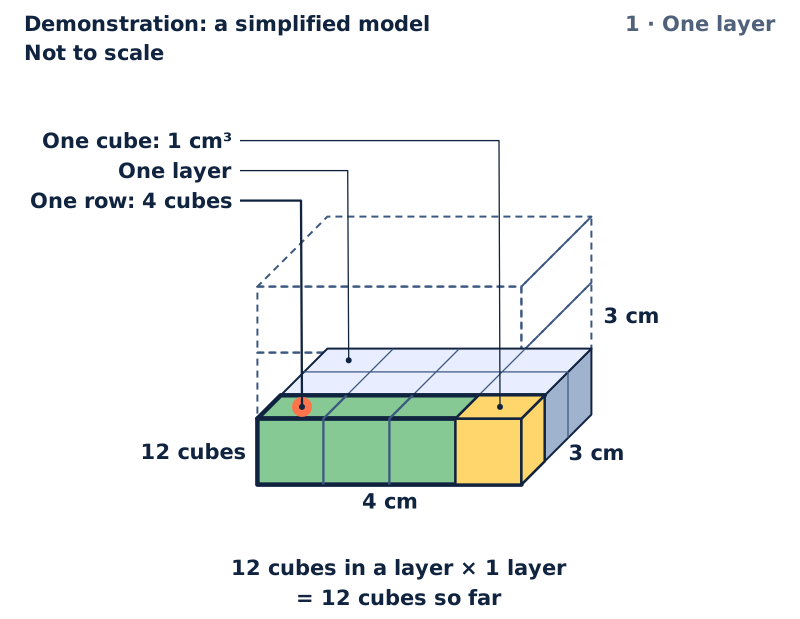
Demonstration: a simplified modelNot to scale1 · One layer
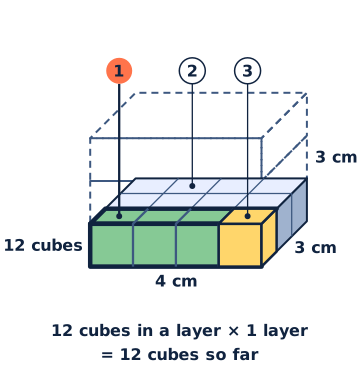
Each cube is 1 cm³. 3 equal rows of 4 cubes make one layer: 12 cubes.
- One row: 4 cubes
- One layer
- One cube: 1 cm³
Key Dashed outline: a layer still to stack. A dot: a cube hidden inside when the layers are stacked. Teal: half a cube, cut by the sloping side. Short dashes: the square that the triangle is half of.
The model could not start here. The figure, the steps and the table on this page still show the idea; reload the page to try again.
The idea, step by step
Not to scale
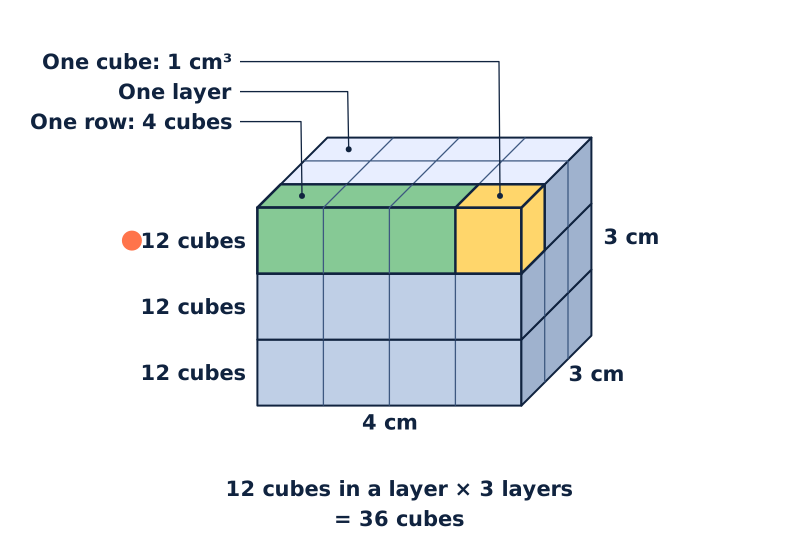
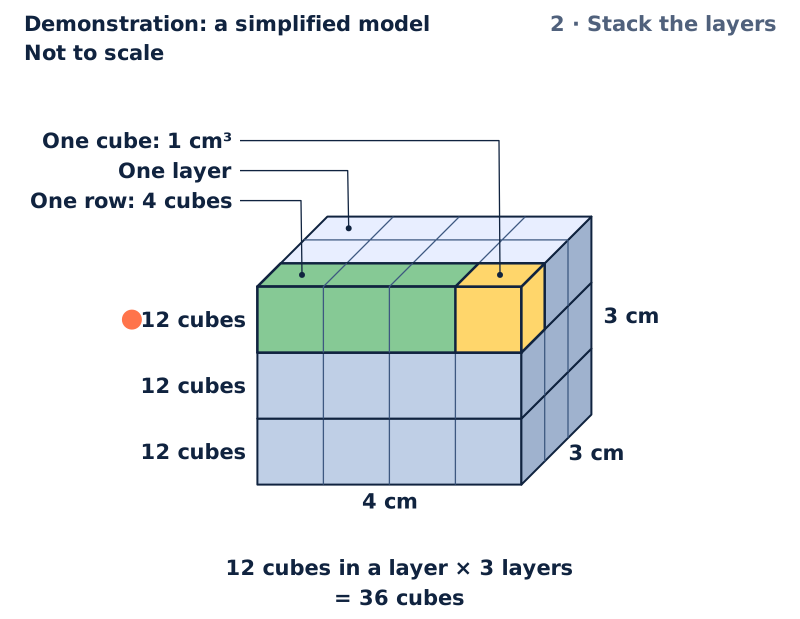
2 · Stack the layers3 equal layers of 12 cubes: 12 × 3 = 36 cubes. The box's volume is 36 cm³.1 One row: 4 cubes · 2 One layer · 3 One cube: 1 cm³ 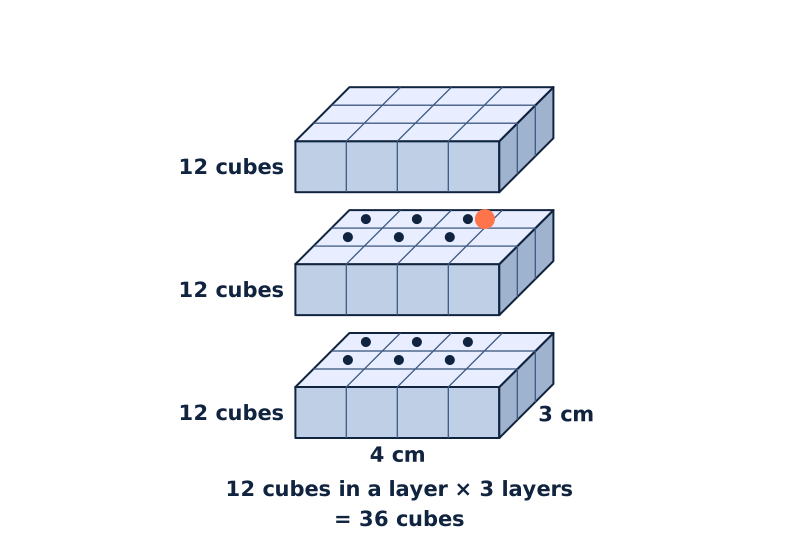
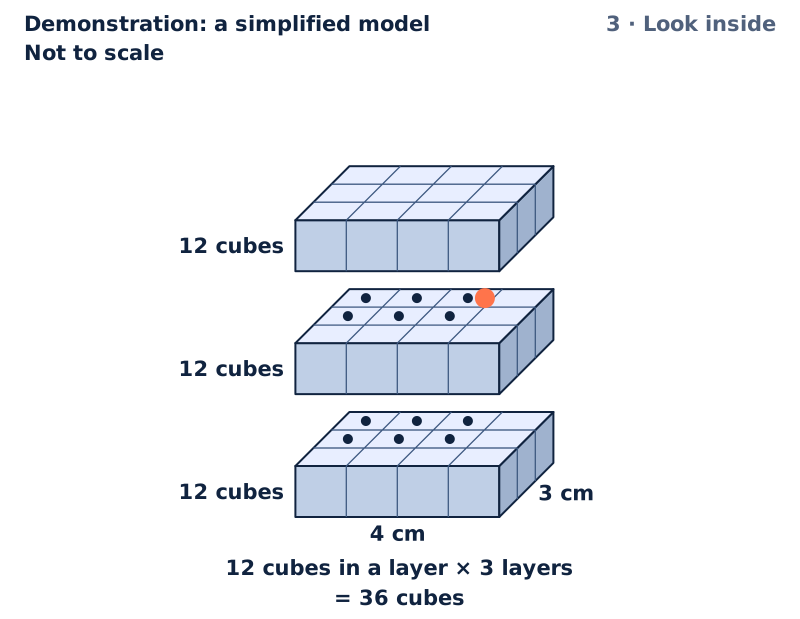
3 · Look insideStacked, only 24 cubes show from outside. Lifted apart, the dots mark 12 more that were hidden inside. 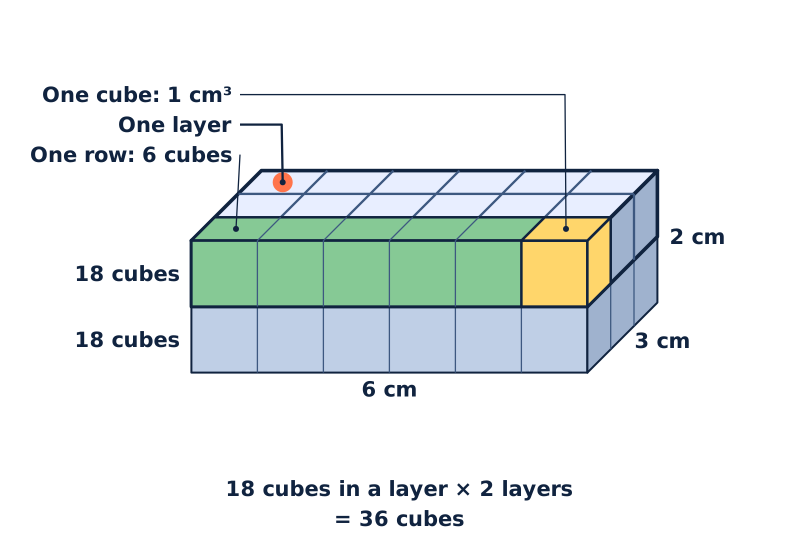
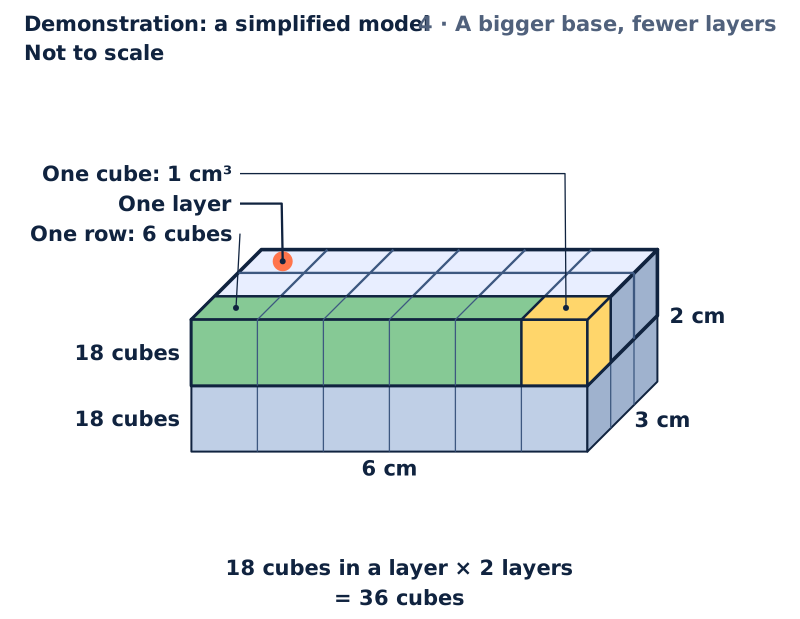
4 · A bigger base, fewer layersA bigger base but fewer layers: 18 × 2 = 36 cubes, the same as the box.1 One row: 6 cubes · 2 One layer · 3 One cube: 1 cm³ 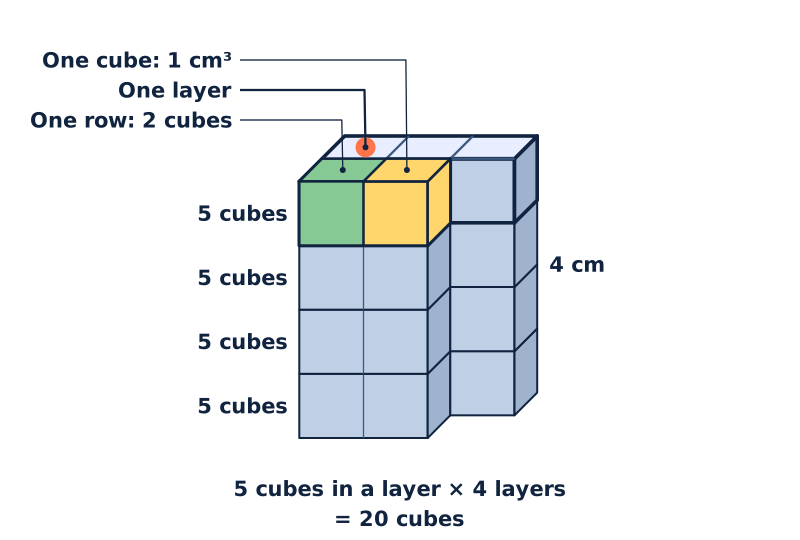
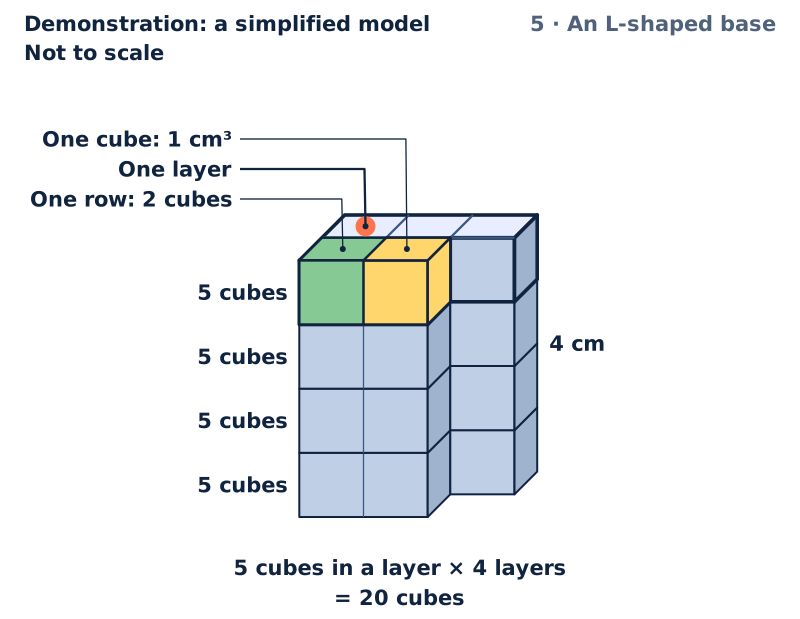
5 · An L-shaped baseRows of 3 and 2 make an L-shaped layer of 5 cubes. 4 layers: 5 × 4 = 20 cubes.1 One row: 2 cubes · 2 One cube: 1 cm³ · 3 One layer 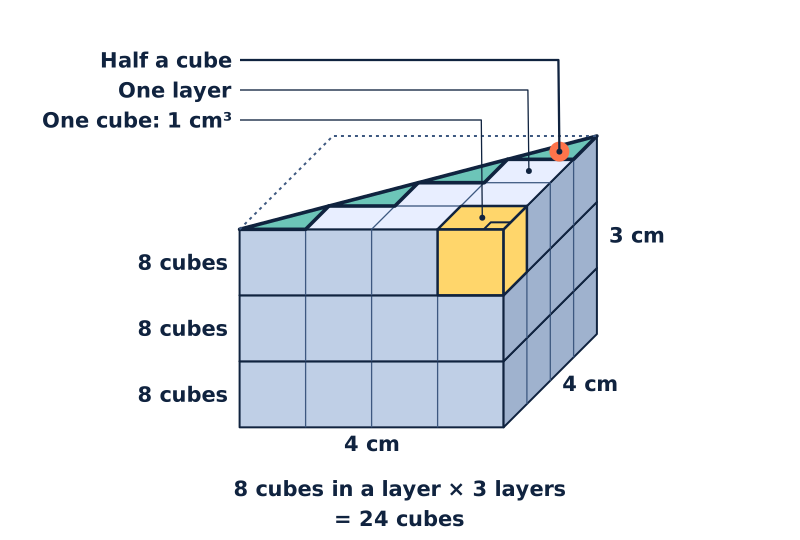
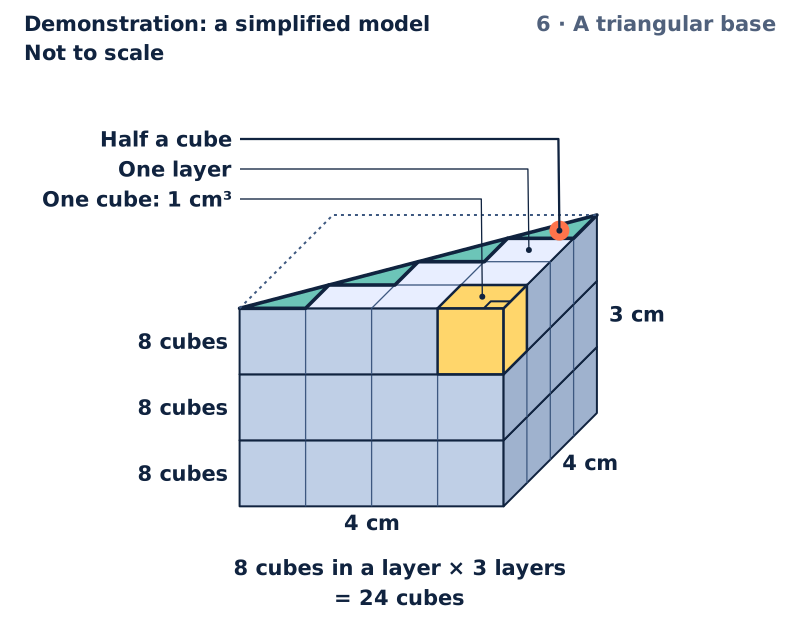
6 · A triangular baseThe sloping side cuts cubes in half: 6 whole and 4 halves make 8 cubes a layer. 3 layers: 24 cubes.1 One cube: 1 cm³ · 2 Half a cube


Each stacked layer, and the volume so far
| Layer | Whole cubes in it | Half cubes in it | Volume so far (cm³) | In the first figure |
|---|---|---|---|---|
| 1 | 12 | 0 | 12.0 | Shown |
Try it in the Lab
Practicals with real materials, each with its safety card.
- Layer count: volume in cubic centimetres by packingYears 3–4Hands-on mathematicsLow risk
- Packing a box: volume with cubes in layersYears 1–2Hands-on mathematicsLow risk
- Volume of a rectangular prism: packing centicubes and filling with waterYears 7–8Hands-on mathematicsLow risk
- Cubic centimetres, litres and displacementYears 5–6Hands-on mathematicsLow risk
- Make a cubic metreYears 5–6Hands-on mathematicsLow risk
- Volume of a cylinder: formula, measuring cylinder and displacementYear 8Hands-on mathematicsLow risk
Learn it in a lesson
- Calculates the volume of rectangular prismsStage 3Find the lesson
- Calculates the volume and capacity of right prisms with various cross-sectionsStage 4Find the lesson
- Calculates the volume of prisms and cylindersStage 4Find the lesson
With a learner
Three questions to ask
- How many cubes are in one layer of the box, and how can you tell without counting them one by one?
- How many cubes are hidden inside the box, where you cannot see them from any side?
- How can you tell, before building it, whether a base six by three, two layers high, holds more cubes than the box?
What to expect
Many learners count only the cubes they can see, or add the three lengths. Stacking the layers one at a time, then lifting them apart, shows every cube.
What to try next
Pack a box with centimetre cubes, layer by layer, in Try it in the Lab, above. Then work out an L-shaped or triangular prism with the right prisms lesson in Learn it in a lesson.
About this model
What is simplified
- The prism is drawn the way textbooks draw a stack of cubes: the front face true shape, and depth sloping up to the right at half its length. So the drawing is not to scale, and a length on the screen is not a length in centimetres.
- The drawing is fitted to the stage, so a cube is drawn smaller in a bigger prism, and smaller again when the layers are lifted apart.
- The cubes fit together exactly, with no gaps and square edges, so they fill the prism with nothing left over. Real centimetre cubes are close to this.
- A triangle base here always has its two short sides equal, so its sloping side cuts every cube it crosses exactly in half. A triangle with unequal sides cuts cubes into other pieces, and its volume is still base area × height.
- A layer is lowered onto the stack at a steady pace so you can watch the stack grow. No time is shown, and none is taught.
- The model counts every cube and half cube in every layer. It never uses a formula, so the layers-times-cubes rule is a result, not an assumption.
- A cylinder's round base cannot be covered exactly by centimetre cubes, but it has the same slice all the way up, so its volume is also base area × height. The cylinder lesson in Learn it in a lesson, above, works it out.
Review
Demonstration: a simplified model. Checked against its written sources, 26 September 2026. Not reviewed by a qualified teacher.
Curriculum references
MA3-3DS-02MA4-VOL-C-01AC9M7M02AC9M8M02
Reference, not a verified alignment.