The Sun lifts water, and cooling brings it back
Years 3–8Stage 2 to Stage 4Run it
The Sun's energy lifts water from the sea, soil and plants as invisible vapour. Rising air cools, clouds form and rain falls. The same water goes round and round.
Demonstration: a simplified modelNot to scale1 · The water cycle
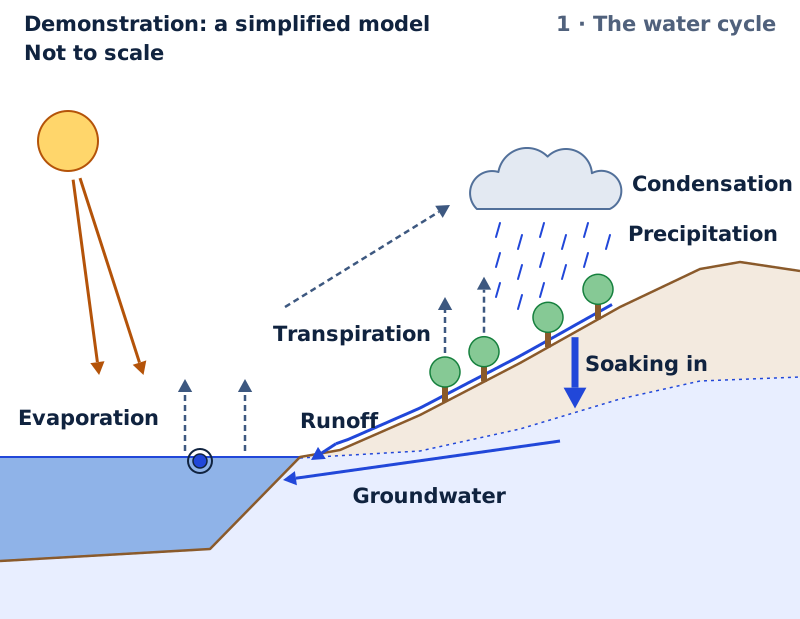
The Sun's energy lifts water from the sea, soil and plants into the air. Follow one ringed water particle round the cycle.
- Evaporation
- Transpiration
- Condensation
- Precipitation
- Runoff
- Soaking in
- Groundwater
Key Amber arrows from the Sun: the energy it sends to the sea. Dashed grey arrows: water vapour, an invisible gas, moving. Solid blue: liquid water moving, falling as rain or flowing along an arrow. A wider arrow carries more of the rain. Pale blue under the ground: groundwater, filling the spaces in soil and rock. Its dotted top edge is where the ground is full of water. A ringed dot: the water particle to follow. In the circles, each blue dot is a water particle: touching in a liquid, far apart in water vapour.
The model could not start here. The figure, the steps and the table on this page still show the idea; reload the page to try again.
The idea, step by step
Not to scale
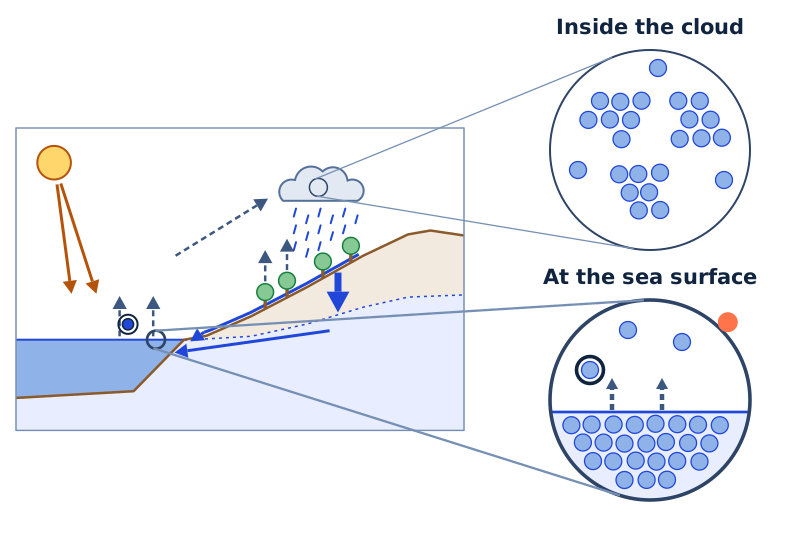
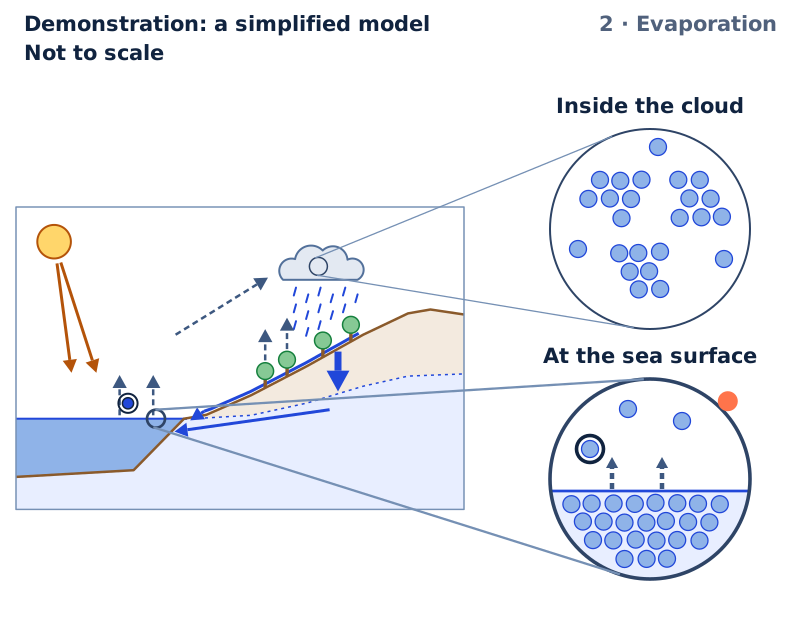
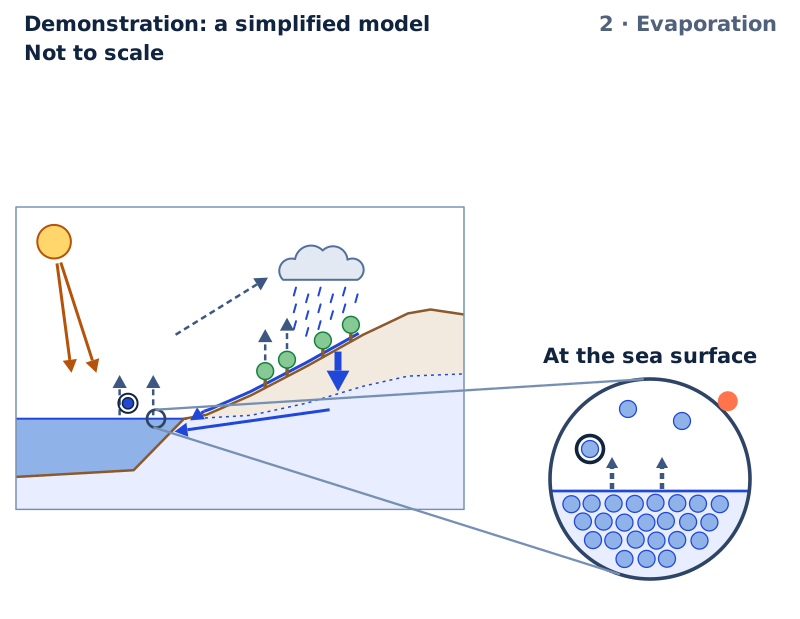
2 · EvaporationSunlight warms the sea. Water particles escape from its surface into the air as water vapour, though the sea is far below 100 °C. 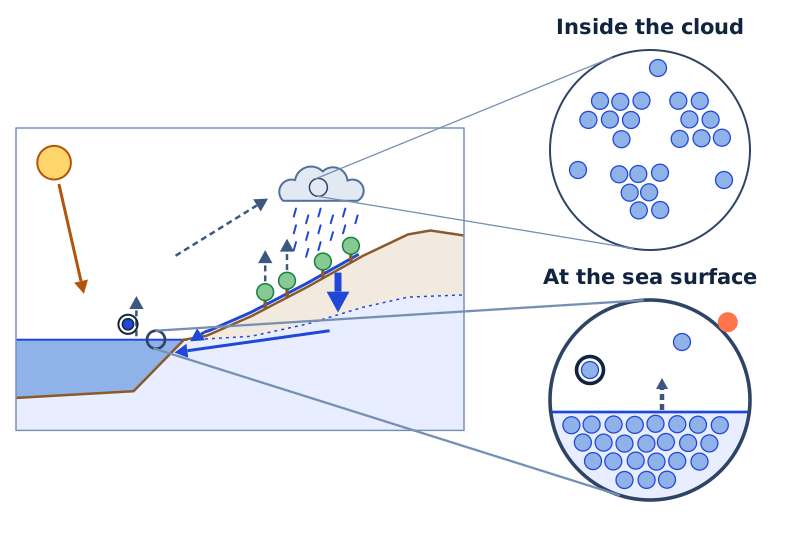
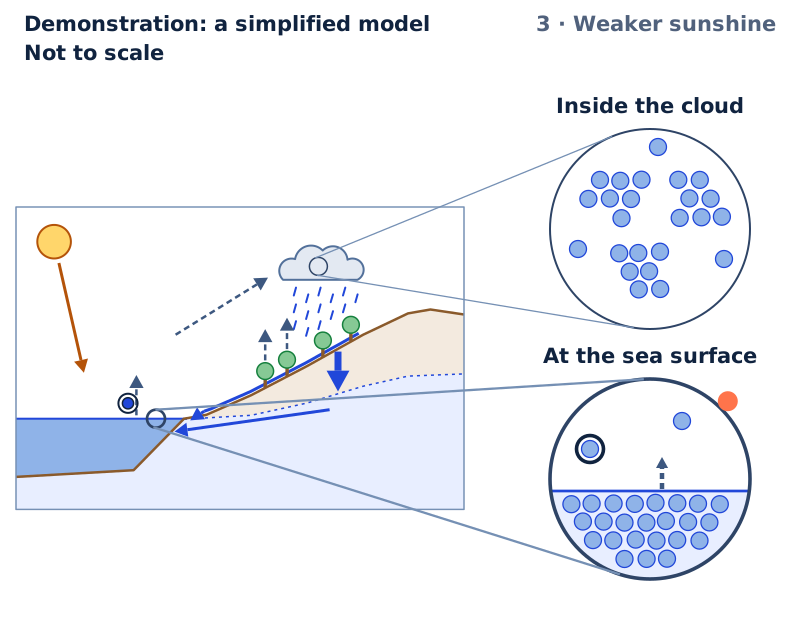
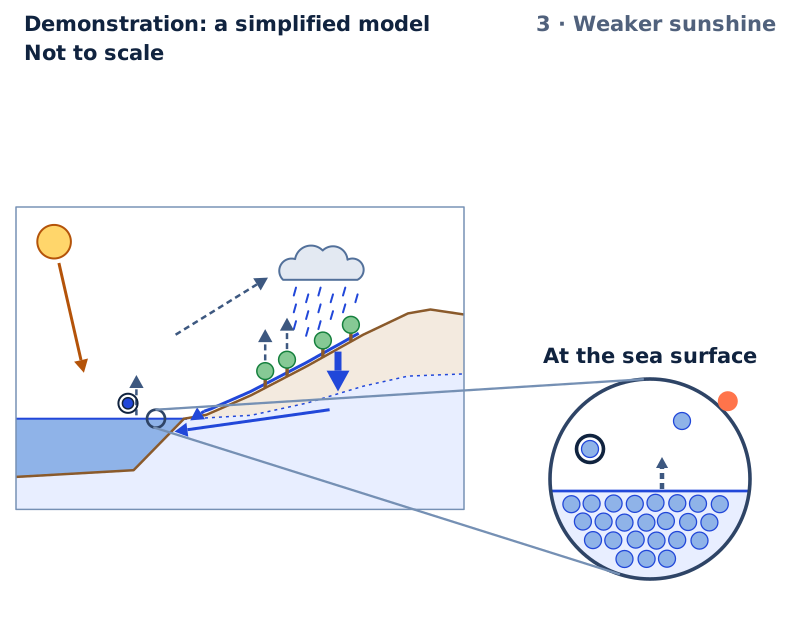
3 · Weaker sunshineWith less energy from the Sun, fewer particles escape each second. Evaporation slows down, but it does not stop. 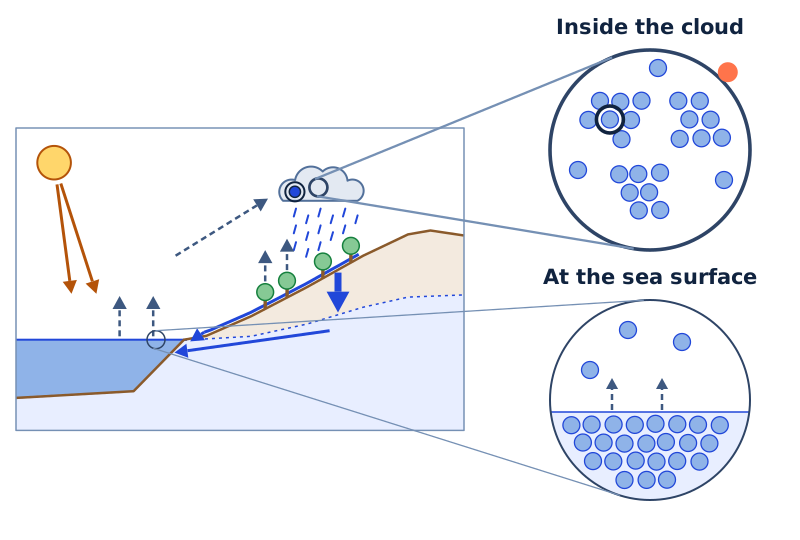
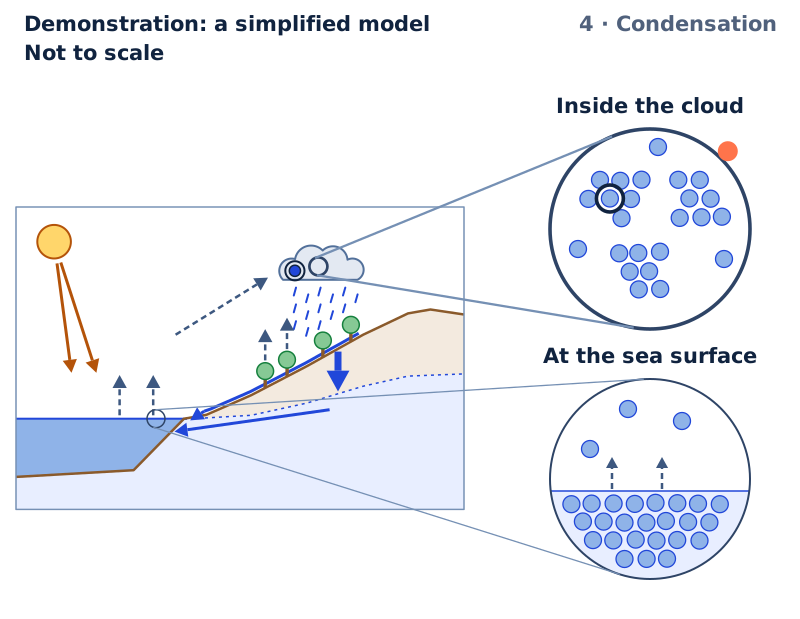
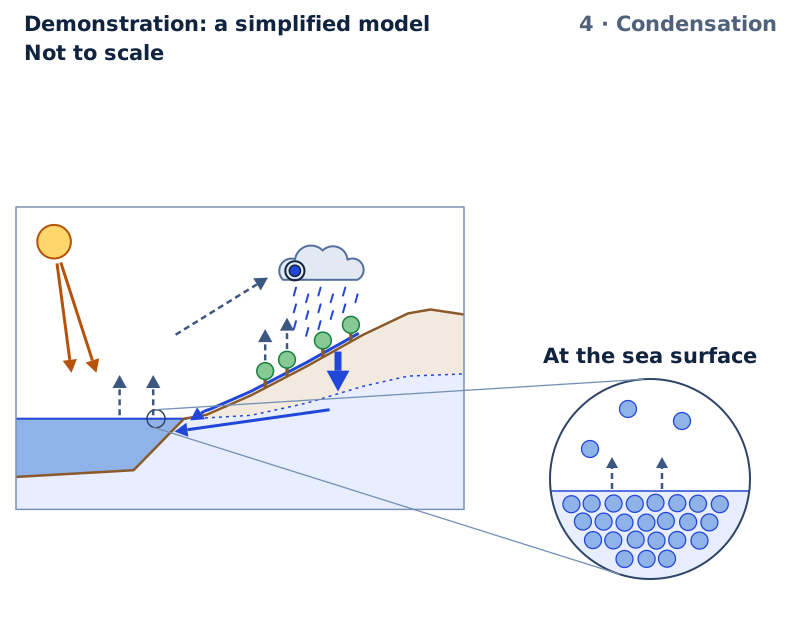
4 · CondensationAir cools as it rises. Water vapour condenses into tiny drops of liquid water: a cloud. Water forms on a cold can the same way. 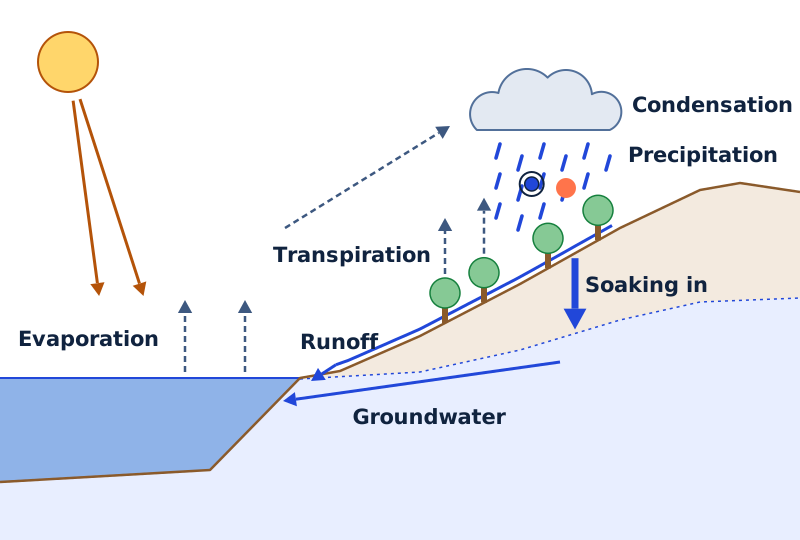
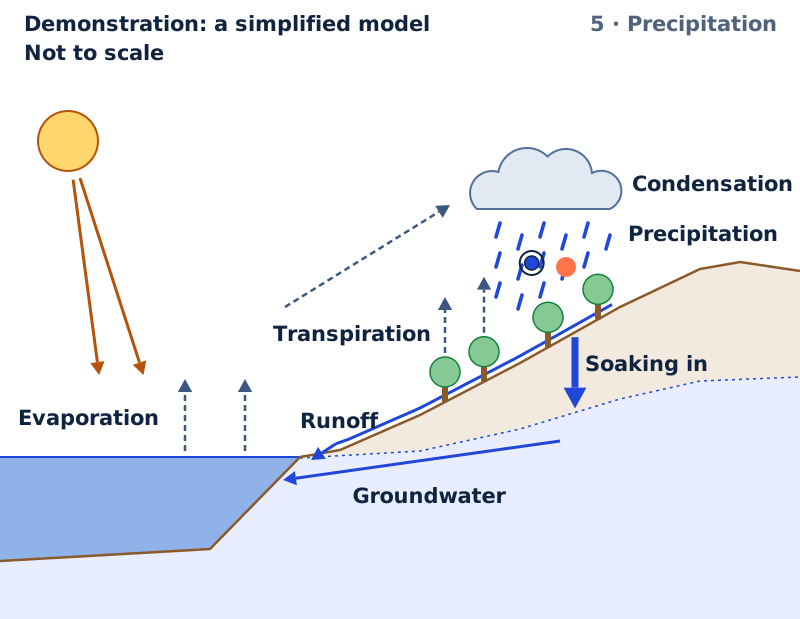
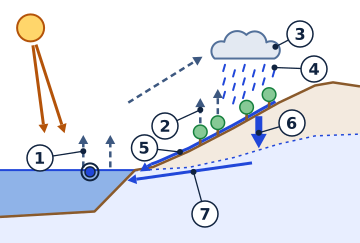
5 · PrecipitationRain falls from the cloud onto the hill. Snow and hail are precipitation too.1 Evaporation · 2 Transpiration · 3 Condensation · 4 Precipitation · 5 Runoff · 6 Soaking in · 7 Groundwater 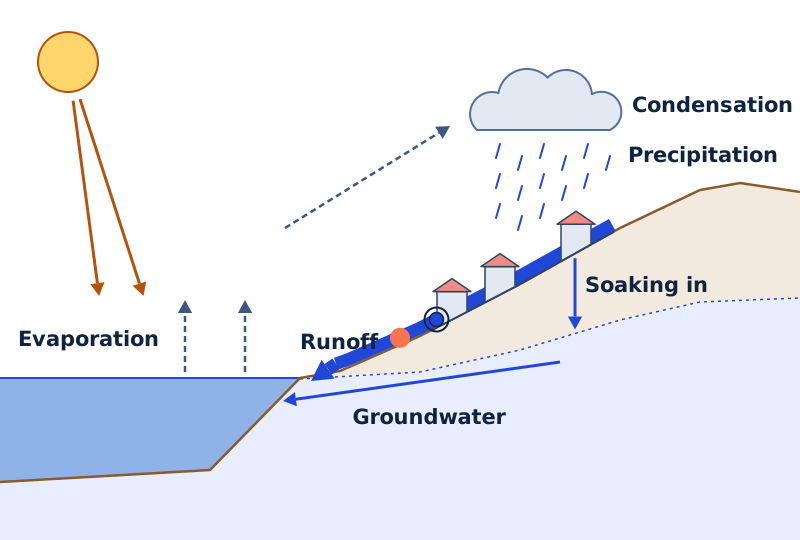
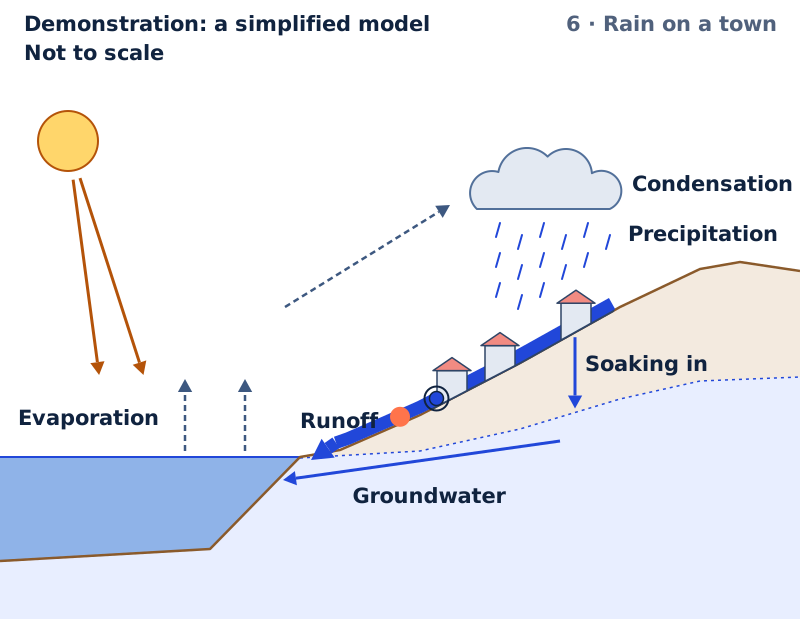
6 · Rain on a townRoofs and roads stop rain soaking in, so much more of it runs off over the ground, through drains and rivers to the sea.1 Evaporation · 2 Condensation · 3 Precipitation · 4 Runoff · 5 Soaking in · 6 Groundwater 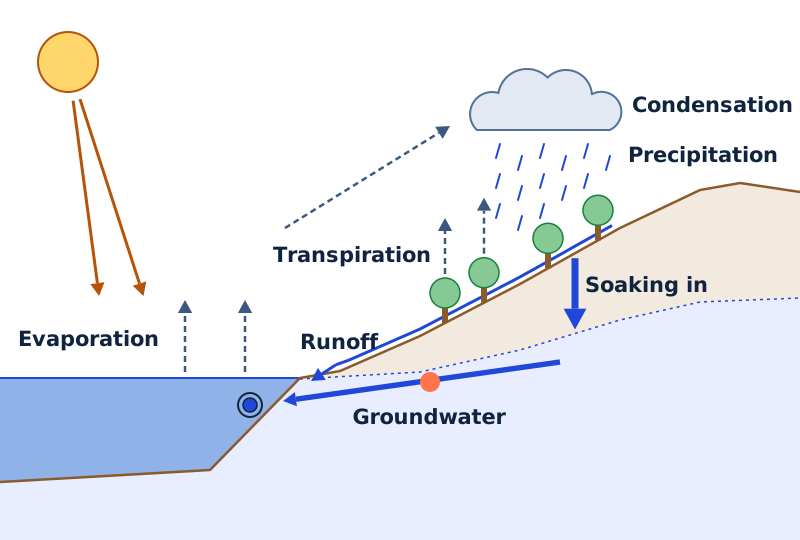
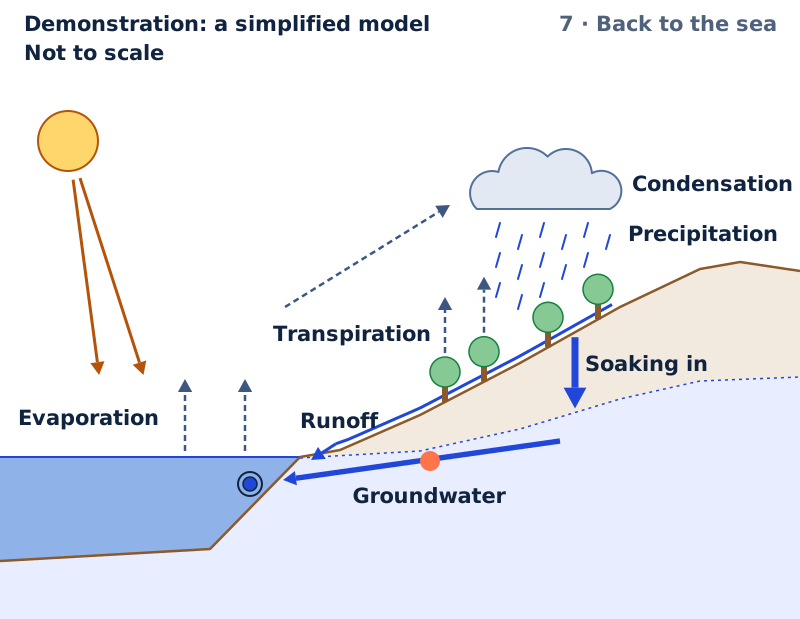
7 · Back to the seaUnder trees and grass, more rain soaks in and seeps slowly through the ground to the sea. The same water can go round again.1 Evaporation · 2 Transpiration · 3 Condensation · 4 Precipitation · 5 Runoff · 6 Soaking in · 7 Groundwater


The water cycle, stage by stage, and what drives each one
| Process | What happens to the water | What drives it | In the first figure |
|---|---|---|---|
| Evaporation | Liquid water turns into water vapour, a gas | Energy from the Sun | |
| Transpiration | Plants give off water vapour | Energy from the Sun | |
| Carried by the air | Water vapour is carried along and up by moving air | Moving air | |
| Condensation | Water vapour turns back into liquid water | Cooling as the air rises | |
| Precipitation | Water falls from the cloud | Gravity | |
| Runoff | Water flows over the ground to the sea | Gravity | |
| Soaking in (infiltration) | Water soaks into the ground | Gravity | |
| Groundwater flow | Water seeps slowly through the ground to the sea | Gravity | |
| Collection in the sea | Water gathers in the sea, and evaporates again | Gravity | Shown |
Try it in the Lab
Practicals with real materials, each with its safety card.
- Water cycle in a bag on a sunny windowYear 4Bench practicalLow risk
- Where does the water on a cold can come from? Finding the dew pointYear 4Bench practicalLow risk
- Evaporation race: sun, shade, wind and surface areaYear 4Bench practicalLow risk
- Catchment model: where the rain goesYears 5–6Fieldwork and mappingLow risk
- Where is Earth's water: dividing one litre by the real proportionsYears 3–4Fieldwork and mappingLow risk
- Water cycle in a box: energy that lifts water and cold that returns itYear 10Bench practicalLow risk
- Where the Earth’s water is: a 1000 mL model of oceans, ice, groundwater and riversYear 11Bench practicalLow risk
With a learner
Three questions to ask
- Where does the water on the outside of a cold drink can come from?
- Why does a puddle dry up on a cool day, when it is nowhere near boiling?
- Where does rain go after it lands on a road, and after it lands on a grassy hill?
What to expect
Many learners mix up clouds with water vapour, or think the water on a cold can leaked through the metal. Let them predict first, then step to the particles and look inside the cloud.
What to try next
Try the cold can or the water cycle in a bag in Try it in the Lab, above, safety card first.
About this model
What is simplified
- Not to scale: the Sun, the cloud, the hill and the particles are drawn far closer together, and far larger, than they are.
- The whole cycle goes on all the time, so every process is drawn at once. The ringed particle shows one path round it; other particles take other paths.
- The run is not in real time, and a real trip round the cycle takes far longer than the run; how long depends on the path the water takes.
- Here the energy from the Sun changes only how fast water evaporates from the sea. The model does not work out how much cloud or rain forms.
- The particle takes the path more of the rain takes on that ground: soaking in under trees and grass, running off roofs and roads. Real amounts depend on the soil, the slope and how hard it rains, so the arrows compare; they do not measure.
- Plants take up water from the soil and give off water vapour. The town is drawn with no plants, so it gives off none; a real town has gardens and street trees.
- In the circles each water particle is a dot, and a cloud drop is drawn as a few touching particles; a real drop holds far more than can be drawn. Air is not drawn.
- Clouds high up, where the air is below freezing, also hold tiny bits of ice. Cloud drops form on specks of dust, salt and smoke, which are not drawn.
- Rain also falls straight onto the sea; the figure does not show that, to stay clear.
Numbers and their sources
- 100 °C The boiling point of water at sea-level air pressure, to the nearest degree. The source gives it in kelvin, as the average of several measurements; converted to degrees Celsius it rounds to this value. The same value as the distillation demonstration: one value for a constant across every demonstration. Source: NIST Chemistry WebBook, SRD 69: Water, phase change data (Tboil), read 26 September 2026.
Review
Demonstration: a simplified model. Checked against its written sources, 26 September 2026. Not reviewed by a qualified teacher.
Curriculum references
ST2-SCI-01ST2-6MW-SSC4-CHG-01GE4-2GE4-PRI-01AC9S4U02AC9S3U04AC9S5U04AC9S7U05AC9HG7K01
Reference, not a verified alignment.