Seasons come from Earth's tilt
Years 3–8Stage 2 to Stage 4Run it
Earth's tilted axis always points one way in space. Watch a place's noon Sun and day length over the year.
Demonstration: a simplified modelNot to scale1 · December
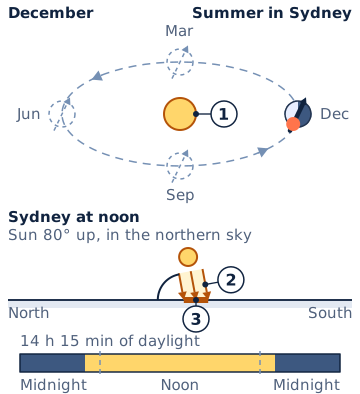
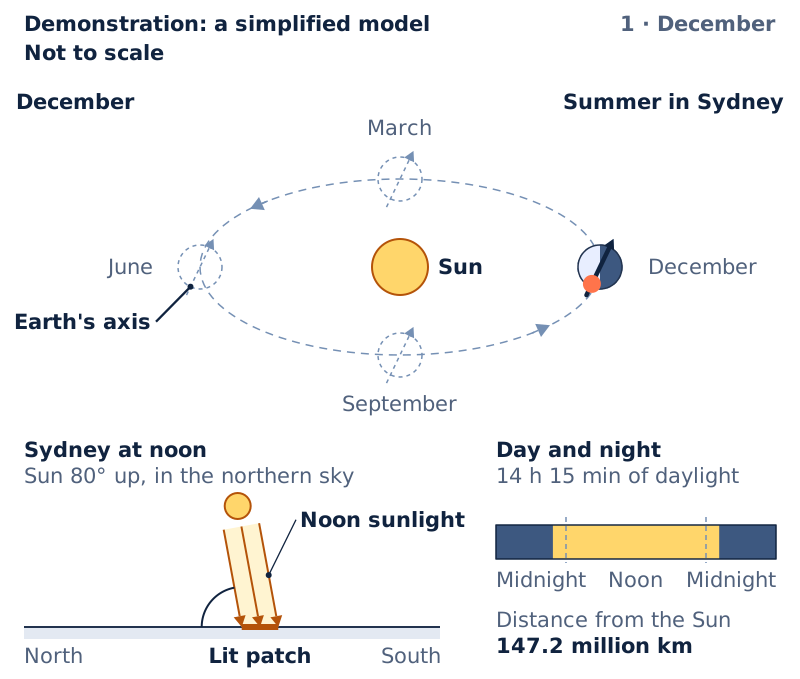
The south end of Earth's axis leans towards the Sun. Sydney's noon Sun is high, though never overhead, and the day is long.
- Sun
- Noon sunlight
- Lit patch
Key Dashed: Earth's path, seen at a slant, and Earth at the March, June, September and December marks. Arrowheads on the path: the way Earth goes around the Sun. Line through Earth: its axis. The arrowhead marks the north end. Dark: night, on Earth's side away from the Sun and on the day bar. Yellow on the bar: the hours of daylight, centred on noon. Arrows in a pale band: the noon sunlight, one beam width in every month. Thick line on the ground: the patch the beam lights. Arc at the ground: the noon Sun's height above the horizon. Dashed lines on the bar: where a twelve-hour day would begin and end.
The model could not start here. The figure, the steps and the table on this page still show the idea; reload the page to try again.
The idea, step by step
Not to scale
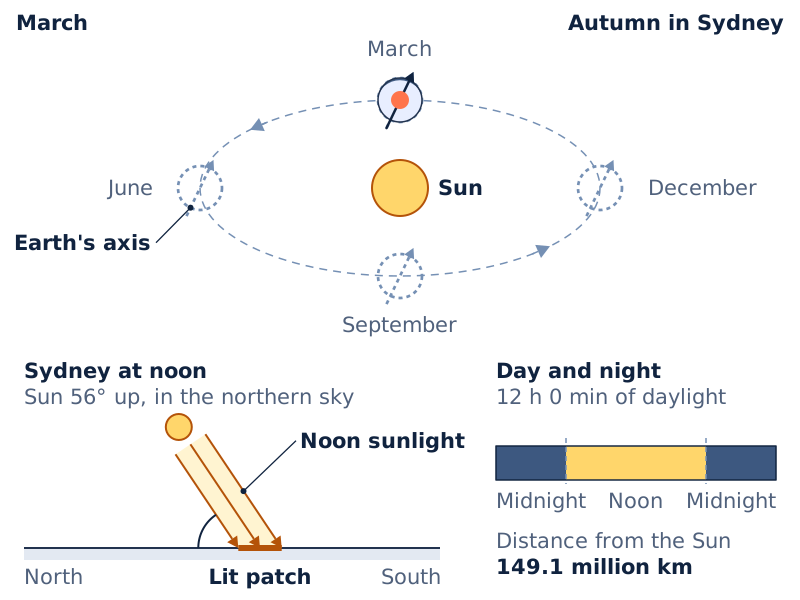
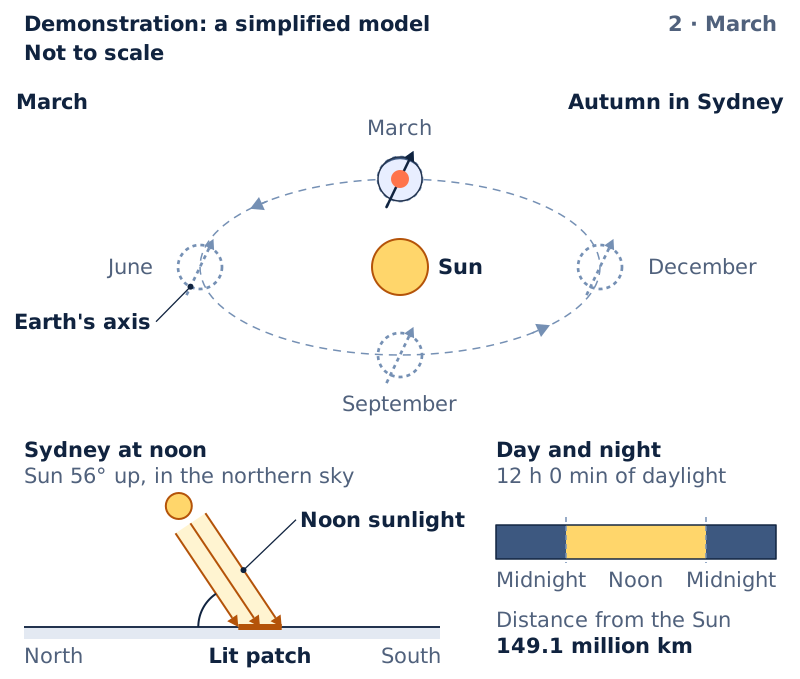
2 · MarchEach dashed Earth's axis points the same way in space. Now it leans neither towards nor away from the Sun, so day equals night.1 Sun · 2 Noon sunlight · 3 Lit patch 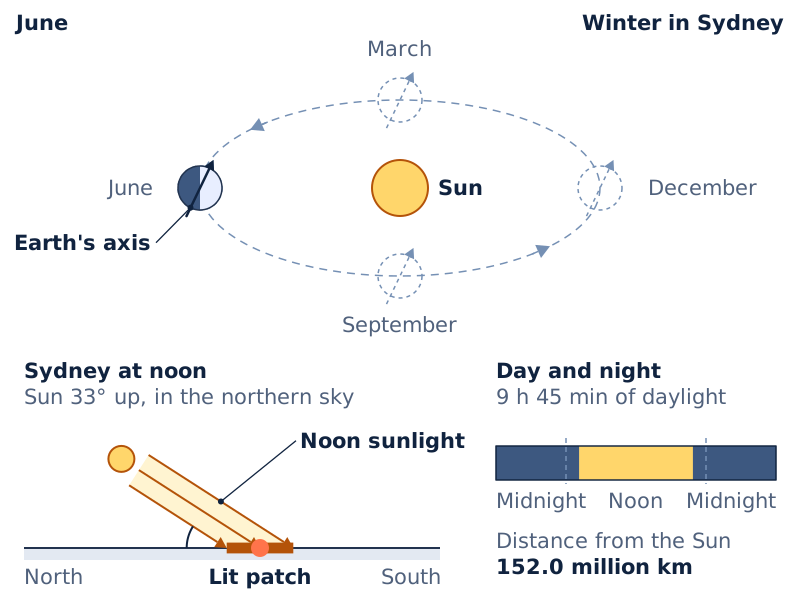
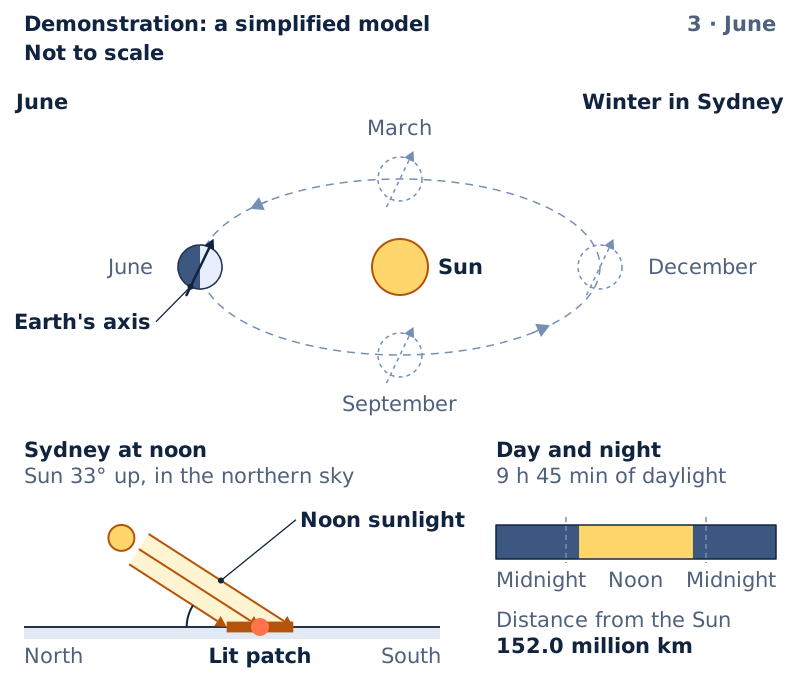
3 · JuneThe south leans away. Sydney's noon Sun is low, the same sunlight spreads over more ground, and the day is short: winter.1 Sun · 2 Noon sunlight · 3 Lit patch 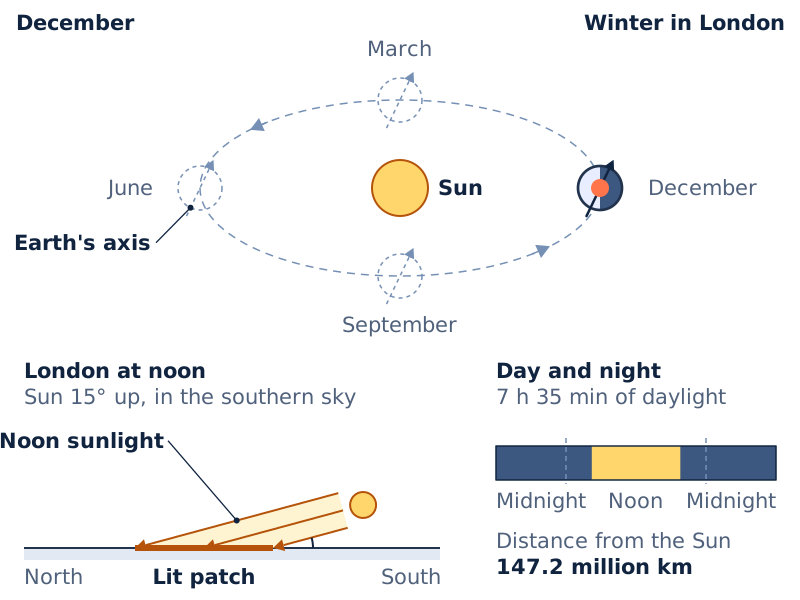
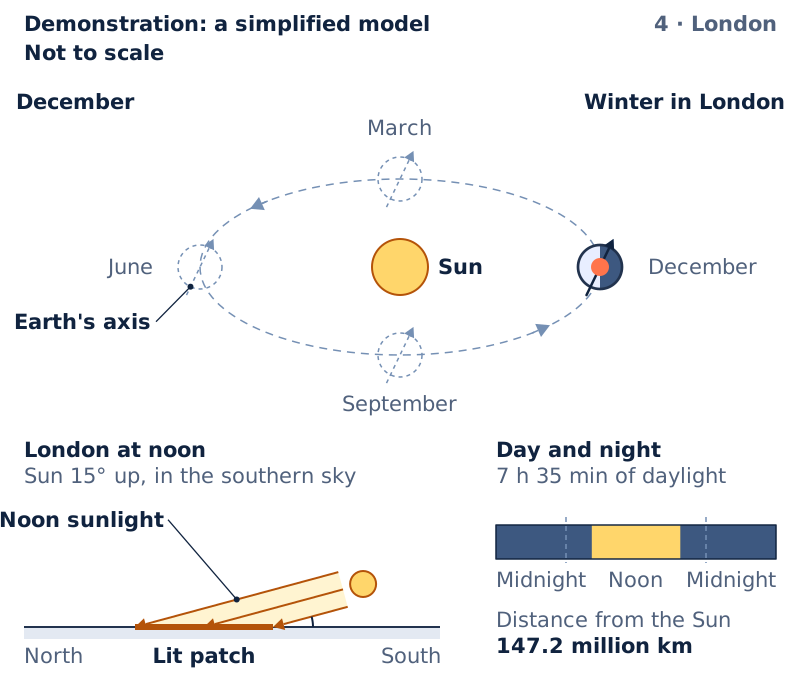
4 · LondonIn December the north end leans away from the Sun, so London has winter, though Earth is nearly at its closest to the Sun.1 Sun · 2 Noon sunlight · 3 Lit patch 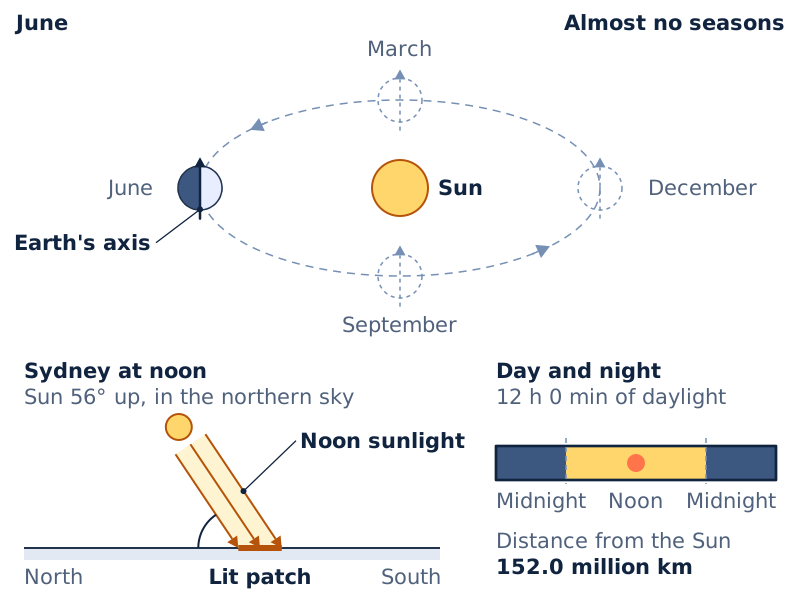
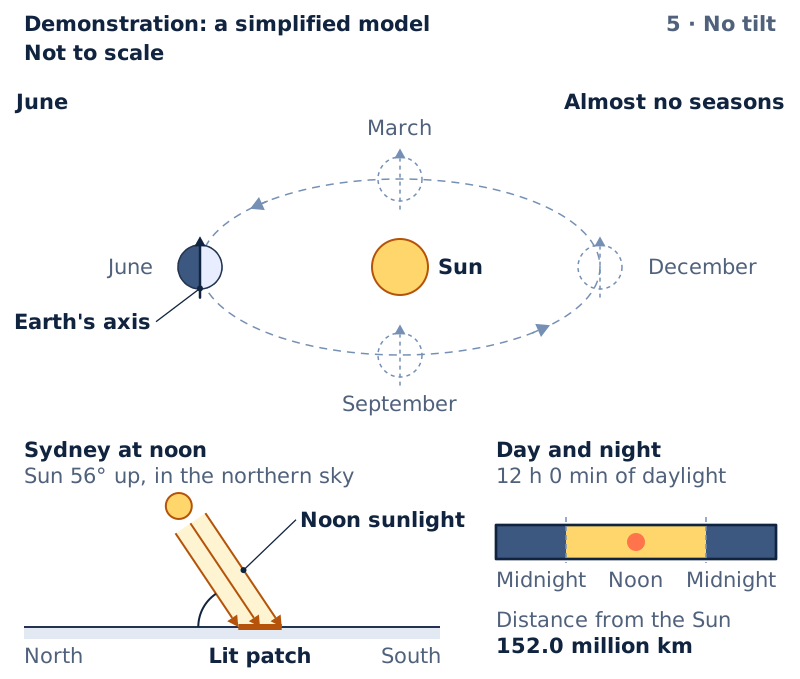
5 · No tiltSydney's day lasts 12 hours and the noon Sun is as high in June as in December. The seasons almost vanish.1 Sun · 2 Noon sunlight · 3 Lit patch


Each month mark at the place chosen, with the tilt set, and the month on the model
| Month | Season | Noon Sun's height (°) | Daylight | Distance from the Sun (million km) | In the first figure |
|---|---|---|---|---|---|
| December | Summer | 80 | Fourteen hours and fifteen minutes | 147.2 | Shown |
| January | Summer | 76 | Thirteen hours and fifty-five minutes | 147.2 | |
| February | Summer | 68 | Thirteen hours and five minutes | 147.9 | |
| March | Autumn | 56 | Twelve hours | 149.1 | |
| April | Autumn | 45 | Ten hours and fifty-five minutes | 150.3 | |
| May | Autumn | 36 | Ten hours and five minutes | 151.4 | |
| June | Winter | 33 | Nine hours and forty-five minutes | 152.0 | |
| July | Winter | 36 | Ten hours and five minutes | 152.0 | |
| August | Winter | 45 | Ten hours and fifty-five minutes | 151.3 | |
| September | Spring | 56 | Twelve hours | 150.1 | |
| October | Spring | 68 | Thirteen hours and five minutes | 148.8 | |
| November | Spring | 76 | Thirteen hours and fifty-five minutes | 147.8 |
Try it in the Lab
Practicals with real materials, each with its safety card.
- Tilted globe around a lamp: seasons and day lengthYear 7Bench practicalLow risk
- Globe and lamp: why winter days are shorterYear 6Bench practicalLow risk
- Torch on graph paper: why low winter sunshine heats lessYear 6Bench practicalLow risk
- Sun angle and energy per square metre: a torch on graph paperYear 7Bench practicalLow risk
- Seasons: keeping a term-long record of daylight and temperatureYears 1–2Bench practicalLow risk
- Angle of sunlight and energy received: the cosine law with a lamp and a light meterYear 11Bench practicalLow risk
With a learner
Three questions to ask
- Which end of Earth's axis leans towards the Sun in December?
- Why does a square metre of ground in Sydney get more sunlight at noon in December than in June?
- When it is summer in Sydney, what season is it in London?
What to expect
Many learners say summer comes when Earth is closest to the Sun.
What to try next
Open a practical in Try it in the Lab, above, to carry a tilted globe around a lamp or tip a torch beam over grid paper.
About this model
What is simplified
- Earth's path is drawn as a circle seen at a slant. The real path is so nearly round that, drawn true, it would look the same; Earth's distance from the Sun still changes a little, and the distance readout uses the real path.
- The Sun and Earth are drawn far larger than to scale, and far closer together.
- Each month mark stands for about the twenty-first of its month, when the solstices fall. The real equinoxes and solstices fall between the twentieth and the twenty-third.
- The day is counted from when the middle of the Sun crosses a flat horizon, with no air. Sunrise and sunset tables count from the Sun's top edge and allow for the air bending sunlight, so their days are about eight to fourteen minutes longer at these places. Day lengths are rounded to five minutes.
- The seasons are the Bureau of Meteorology's four: summer is December, January and February. Australia's tropical north counts a wet and a dry season, and Aboriginal and Torres Strait Islander seasonal calendars count others, so no tropical place is offered here.
- The noon sunlight is drawn as a beam of one width arriving at the noon Sun's height, so the patch it lights shows how the same sunlight spreads. Clouds, the air and sloping ground are left out.
- Run to December moves Earth on a month each second, from the month shown to the December mark.
Numbers and their sources
- 23.44 degrees The tilt of Earth's axis to the perpendicular of its orbit. The tilt slider moves in tenths of a degree, so the page opens at the nearest tenth. Source: NASA NSSDCA, Earth Fact Sheet (updated 15 November 2024): obliquity to orbit, read 26 September 2026.
- 149.598 The average of Earth's greatest and least distances from the Sun, in millions of kilometres. Source: NASA NSSDCA, Earth Fact Sheet (updated 15 November 2024): semimajor axis, read 26 September 2026.
- 0.0167 How far Earth's path is from a circle: so little that it is drawn as one. The distance readout uses it. Source: NASA NSSDCA, Earth Fact Sheet (updated 15 November 2024): orbit eccentricity, read 26 September 2026.
- 365.242 The year of the seasons, in days. Source: NASA NSSDCA, Earth Fact Sheet (updated 15 November 2024): tropical orbit period, read 26 September 2026.
- 12.7 Days from the December solstice to when Earth is closest to the Sun, in early January: the mean of the last two years. Source: US Naval Observatory, Astronomical Applications: Earth's seasons and apsides, 2026 (December solstice 21 December 20:50 UT) and 2027 (perihelion 3 January 02:33 UT); 2025 to 2026 gives 13.1 days, 2026 to 2027 12.2 days, read 26 September 2026.
- -33.86 degrees Sydney's latitude; south is negative. Source: Bureau of Meteorology, climate statistics, Sydney (Observatory Hill), station 066062: latitude 33.86 degrees south, read 26 September 2026.
- -42.89 degrees Hobart's latitude; south is negative. Source: Bureau of Meteorology, climate statistics, Hobart (Ellerslie Road), station 094029: latitude 42.89 degrees south, read 26 September 2026.
- 51.479 degrees London's latitude, at Heathrow; north is positive. Source: Met Office, historic station data, Heathrow (London Airport): Lat 51.479, read 26 September 2026.
Review
Demonstration: a simplified model. Checked against its written sources, 26 September 2026. Not reviewed by a qualified teacher.
Curriculum references
SC4-OTU-01ST2-10ES-SAC9S6U02AC9S7U03
Reference, not a verified alignment.