Each separating method uses one property
Years 1–8Stage 1 to Stage 4Step through it
Each method takes out the one part that has the property it uses.
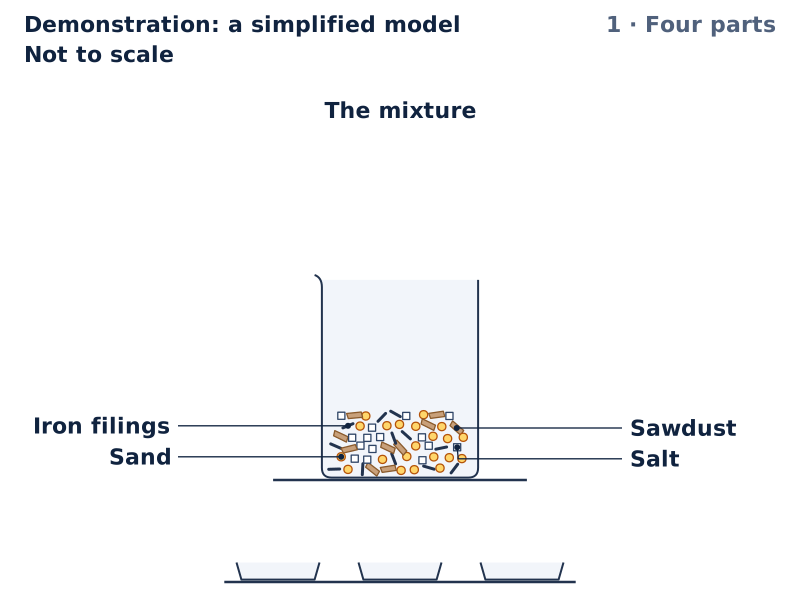
Demonstration: a simplified modelNot to scale1 · Four parts
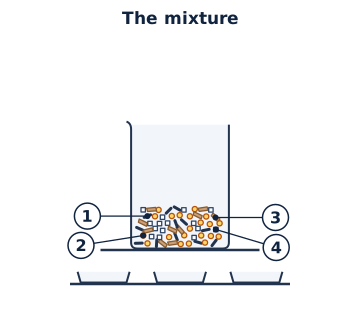
Iron filings, sand, sawdust and salt, all mixed together, dry.
- Iron filings
- Sand
- Sawdust
- Salt
Key Blue with a darker edge: water. Dashed grey arrows: water vapour leaving the dish. Short dark strokes: iron filings. Small round yellow grains: sand. Larger flat brown flakes: sawdust. Small white squares: salt crystals. The sun: the dish stands in a warm, sunny place. Small blue drops: water falling. Filled coral circle: what the step is about.
The model could not start here. The figure, the steps and the table on this page still show the idea; reload the page to try again.
The idea, step by step
Not to scale
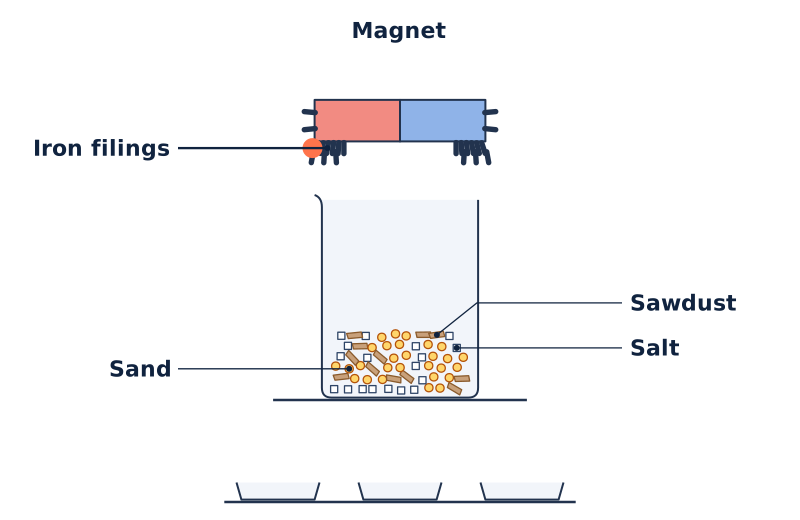
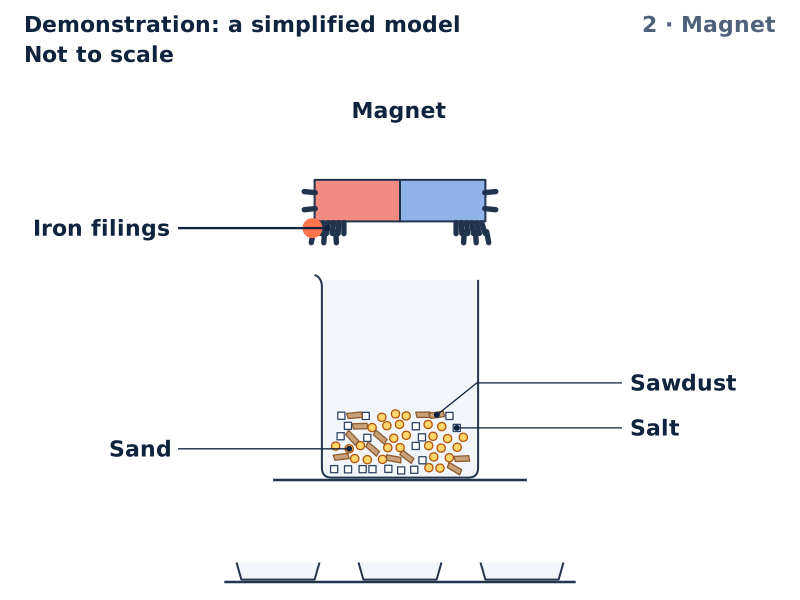
2 · MagnetIron is magnetic, so the magnet pulls out only the iron filings.1 Iron filings · 2 Sand · 3 Sawdust · 4 Salt 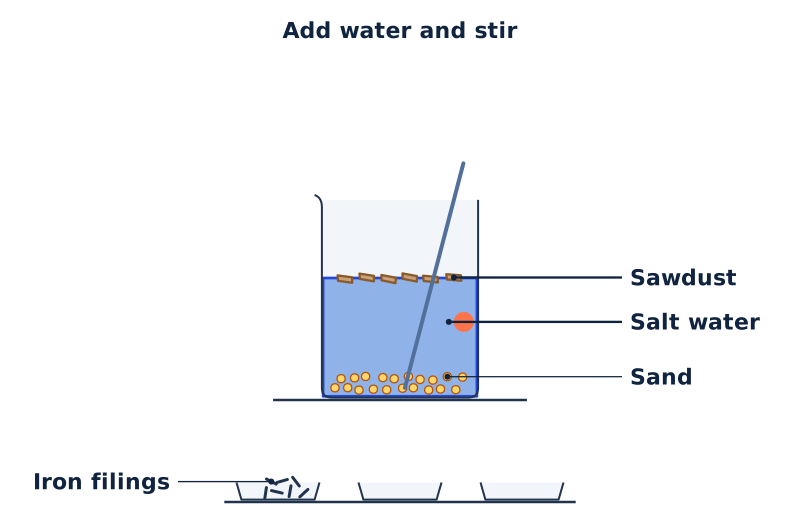
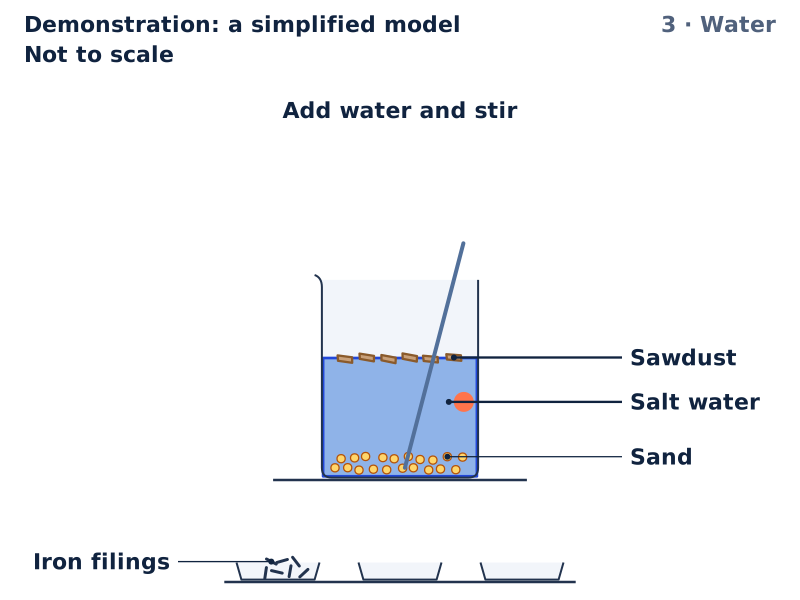
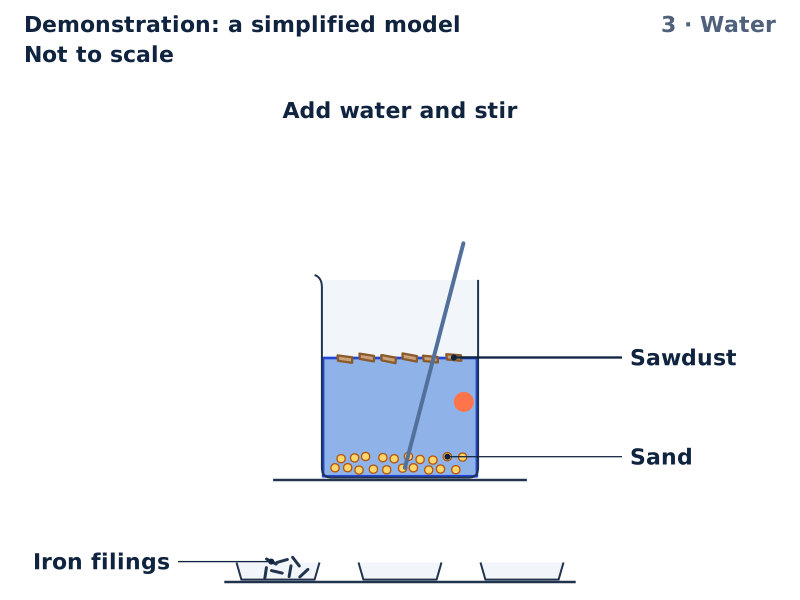
3 · WaterIn water, sawdust floats, sand sinks and salt dissolves, still there.1 Iron filings · 2 Sand · 3 Sawdust · 4 Salt water1 Iron filings · 2 Sand · 3 Sawdust 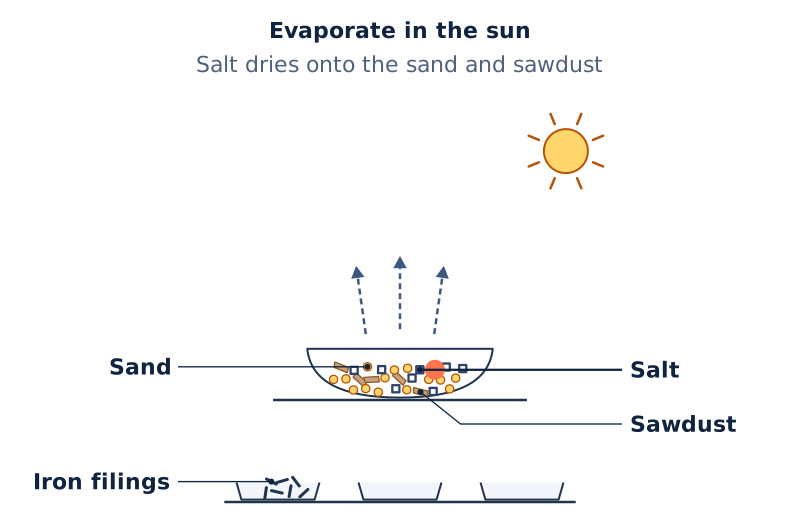
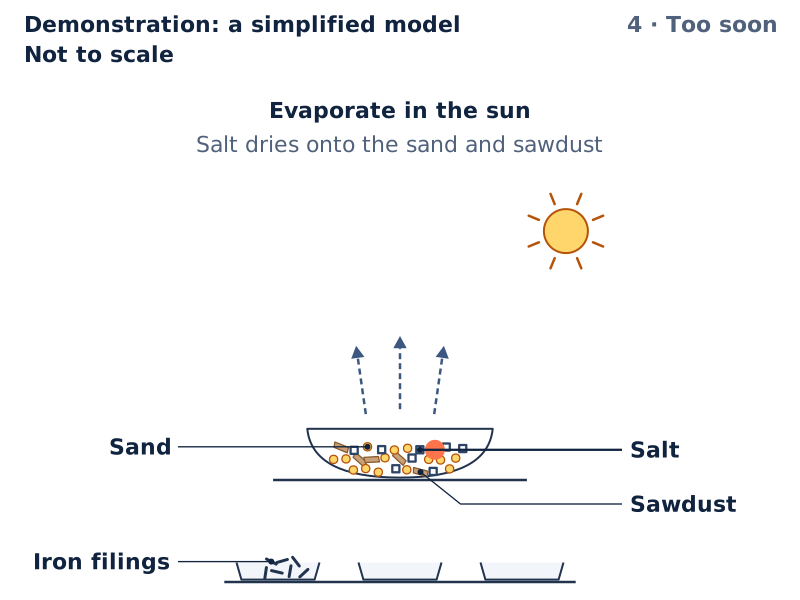
4 · Too soonEvaporating now dries the salt onto the sand and sawdust: mixed again.1 Iron filings · 2 Sand · 3 Sawdust · 4 Salt 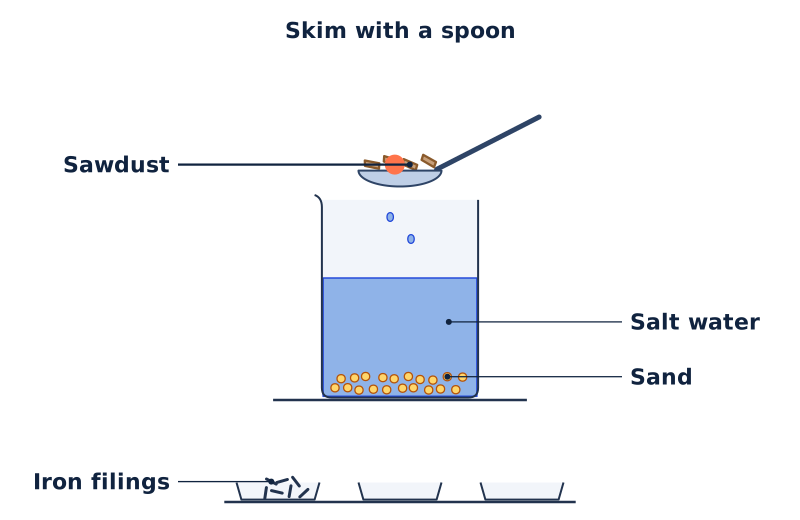
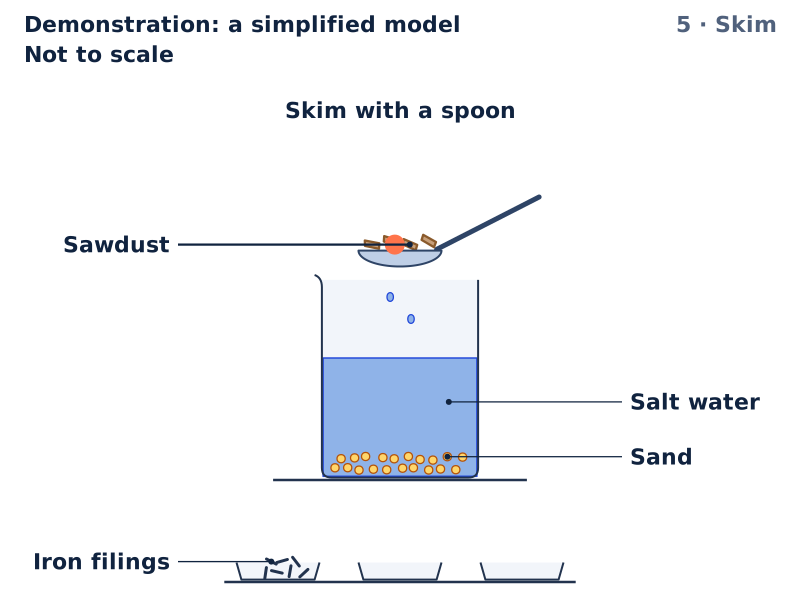
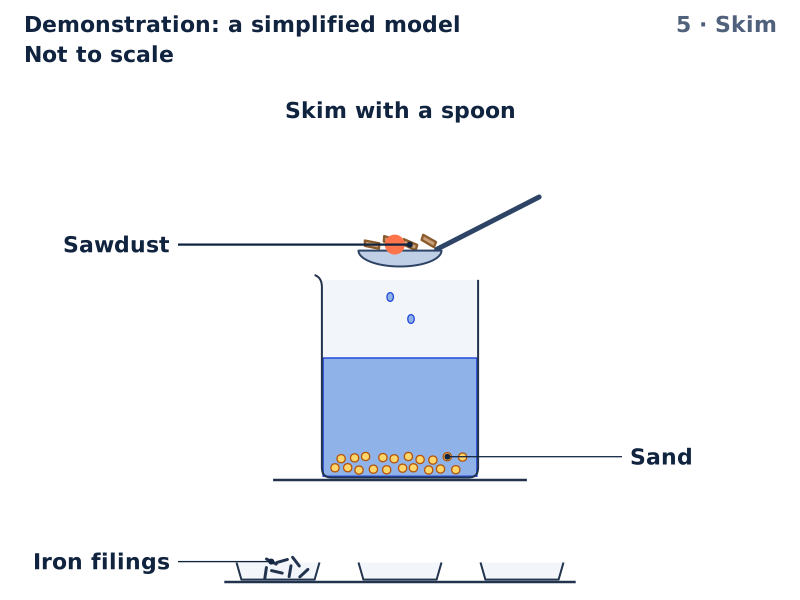
5 · SkimSawdust floats, so a spoon skims it off the top.1 Iron filings · 2 Sand · 3 Sawdust · 4 Salt water1 Iron filings · 2 Sand · 3 Sawdust 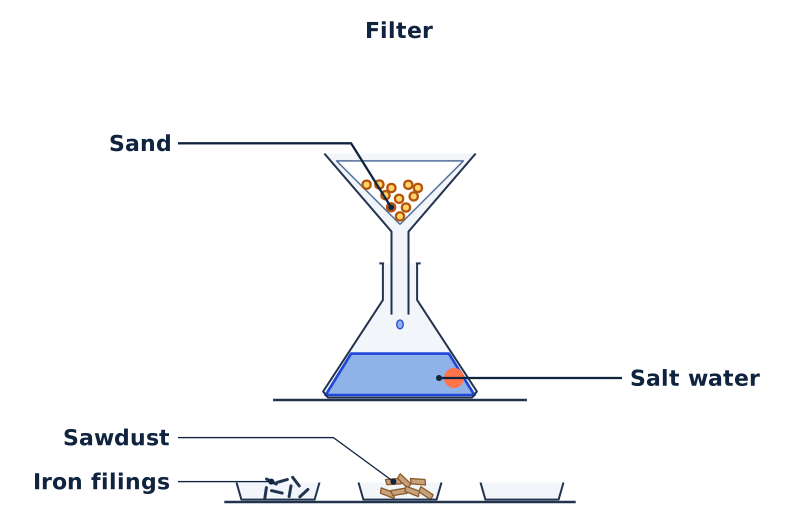
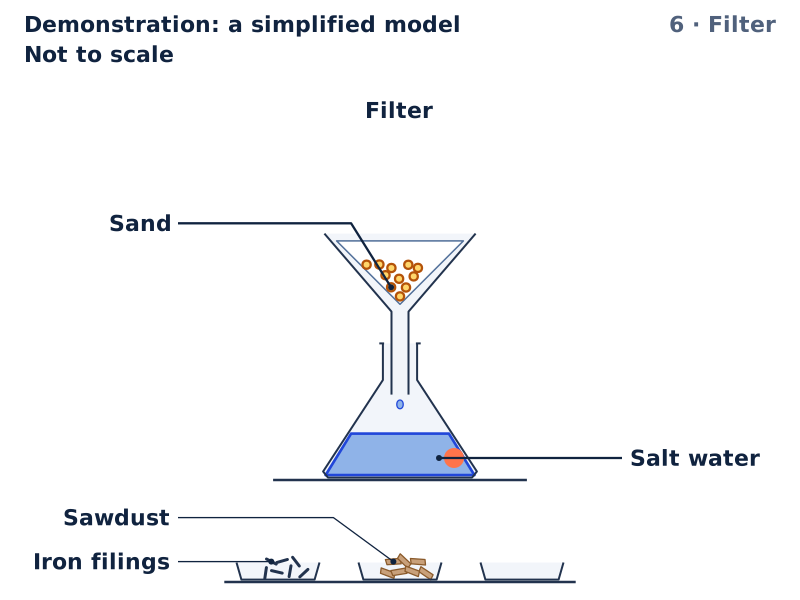
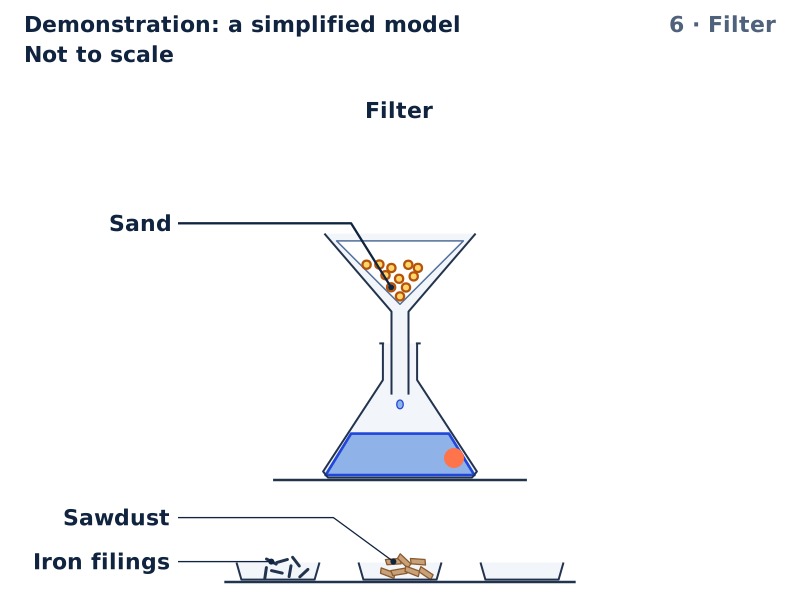
6 · FilterSand grains stay on the paper; salt water goes through.1 Iron filings · 2 Sand · 3 Sawdust · 4 Salt water1 Iron filings · 2 Sand · 3 Sawdust 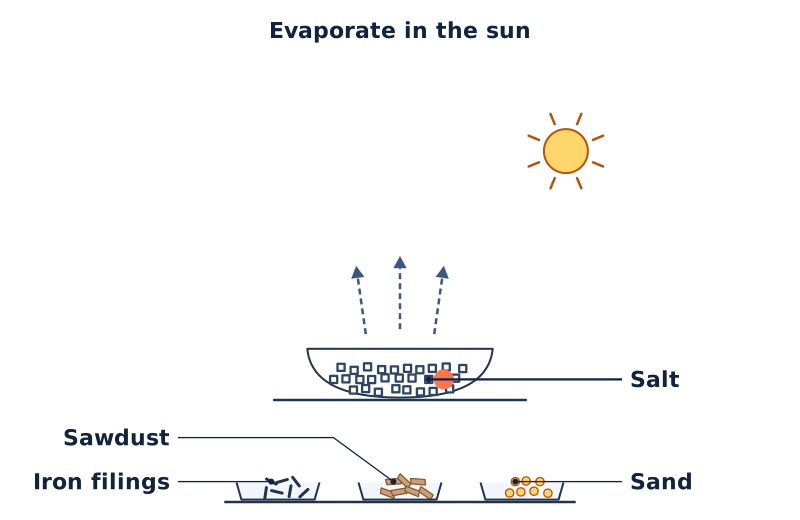
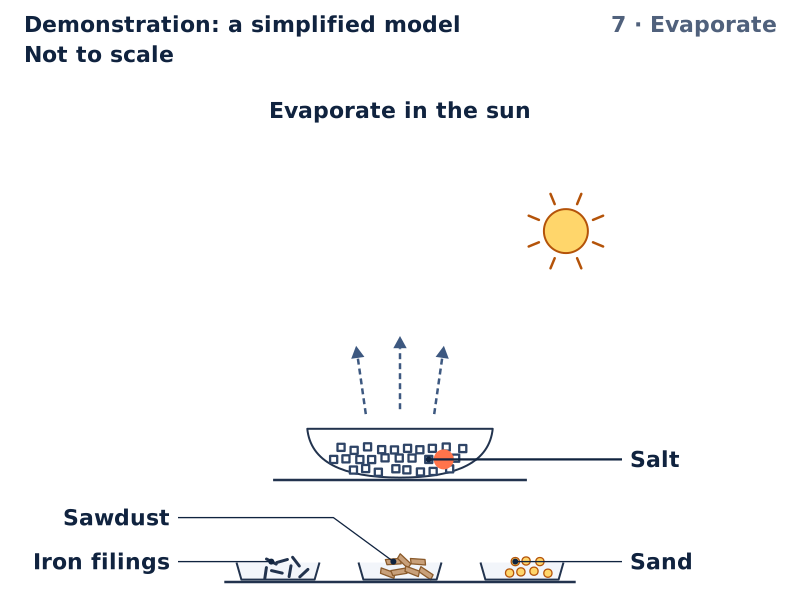
7 · EvaporateThe water evaporates and the salt is back: four parts, four properties.1 Iron filings · 2 Sand · 3 Sawdust · 4 Salt


The methods in the order that gets all four parts back, and what each relies on
| Method | What it relies on | What it takes out | In the first figure |
|---|---|---|---|
| Magnet | Iron sticks to a magnet; the other parts do not | Iron filings | |
| Add water and stir | Some things float, some sink, some dissolve | Nothing yet: sawdust floats, salt dissolves | |
| Skim with a spoon | Sawdust floats on water | Sawdust | |
| Filter | Sand grains are too big to pass the paper; dissolved salt passes | Sand | |
| Evaporate | Water evaporates; salt does not | Salt |
Try it in the Lab
Practicals with real materials, each with its safety card.
- Mixing and separating: sand, rice and paper clipsYears 1–2Bench practicalLow risk
- Dissolving and getting it back: separating sand and saltYear 6Bench practicalLow risk
- Design a separation: iron filings, sand, sawdust and saltYear 7Bench practicalLow risk
- Separating sand and salt by dissolving, filtering and evaporatingYear 7Bench practicalLow risk
- Water filter challenge: what filtering removes and what it cannotYear 7Bench practicalLow risk
- Paper chromatography of the dyes on coloured sweetsYear 7Bench practicalLow risk
- Winnowing and yandying: separating seed from husk and sandYear 7Bench practicalLow risk
- Separating a sand, salt and water mixture and finding its percentage compositionYear 11Bench practicalLow risk
- Panning for gold: separating a dense mineral from sand by densityYear 11Bench practicalLow risk
With a learner
Three questions to ask
- Which part of the mixture would a magnet pick up, and why only that one?
- Where does the salt go when it dissolves, and how do you get it back?
- What goes wrong if the wet mixture is left to dry before it is filtered?
What to expect
Many learners say the salt has gone once it dissolves, or that filter paper will catch it. Step to Filter and to Evaporate and look for the salt.
What to try next
Try the four-part separation, or separating sand and salt, from Try it in the Lab, above, safety card first.
About this model
What is simplified
- Not to scale: the grains, filings and flakes are drawn far larger than real ones, and far fewer.
- The sand in the model is clean, washed sand. Some natural sands hold dark grains of magnetite, a mineral that a magnet also picks up.
- Sawdust floats at first. Left in water for a long time it soaks up water and some of it sinks, so it is skimmed off soon after stirring. Skimmed sawdust is damp and holds a little salt water.
- The steps are moments, not a timed run. In a warm, sunny place the water takes a day or more to evaporate; a school laboratory often heats the dish gently instead, as the Lab practicals above do.
- Nothing is lost in the model. In a real separation a little of each part stays on the glassware, the filter paper and the wet sand.
- Dissolved salt is not drawn: it is spread through the water in pieces far too small to see.
- Other methods use other properties, such as sieving (the size of the pieces), panning (density) and chromatography (how strongly a dye clings to paper). They are in the Lab practicals above, not in this model.
Numbers and their sources
- 7.87 The relative density of iron: how many times as dense as water it is, so iron filings sink in water. The source gives the density of iron in grams per cubic centimetre; the density of water is one gram per cubic centimetre, so the relative density is the same number, with no unit. Source: PubChem, Iron (CID 23925): Density, citing Lide (ed.), CRC Handbook of Chemistry and Physics, 81st edition, read 26 September 2026.
- 2.65 The relative density of quartz, the mineral clean sand is mostly made of, so sand sinks in water. The source gives the density of alpha-quartz to three decimal places; it is rounded here to two. Source: PubChem, Silicon dioxide (CID 24261): Density (alpha-quartz), citing the IARC Monographs, read 26 September 2026.
- 0.55 The relative density of radiata pine, Australia's main plantation softwood, taken as the sawdust: below one, so sawdust floats on water. The source gives the density of Australian radiata pine in kilograms per cubic metre when seasoned; divided by the density of water it rounds to this value. Source: Business Queensland (Queensland Government), Radiata pine: properties, read 26 September 2026.
- 36 g The most salt (sodium chloride) that dissolves in a hundred grams of water at room temperature. The model's mixture holds far less salt than its water can dissolve, so all of it dissolves. Source: PubChem, Sodium chloride (CID 5234): Solubility, citing Haynes (ed.), CRC Handbook of Chemistry and Physics, 94th edition, p. 4-89, read 26 September 2026.
- 100 °C The boiling point of water at sea-level air pressure, to the nearest degree. Water evaporates well below it, and far below the boiling point of salt, so the water goes and the salt stays. Source: NIST Chemistry WebBook, SRD 69: Water, phase change data (Tboil), read 26 September 2026.
- 1465 °C The boiling point of sodium chloride, common salt. Source: PubChem, Sodium chloride (CID 5234): Boiling Point, citing the CRC Handbook of Chemistry and Physics, 94th edition, p. 4-89, read 26 September 2026.
Review
Demonstration: a simplified model. Checked against its written sources, 26 September 2026. Not reviewed by a qualified teacher.
Curriculum references
SC4-SOL-01SC4-WS-02SC4-WS-07ST1-6MW-SST2-6MW-SST3-6MW-SST1-SCI-01ST3-PQU-01AC9S7U06AC9S6U04AC9S3U04AC9S2I01
Reference, not a verified alignment.