Distillation separates water from salt
Years 7–8 and 11–12Stage 4 and Stage 6Step through it
Boiling turns the water into vapour, and the salt stays behind. Cold glass turns the vapour back into pure water.
Demonstration: a simplified modelNot to scale1 · The set-up
Safety: a flame, hot glass and steam are real hazards. Wear eye protection, and never heat a sealed apparatus.
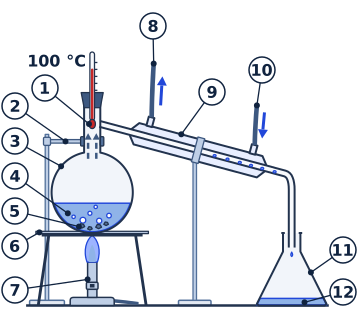
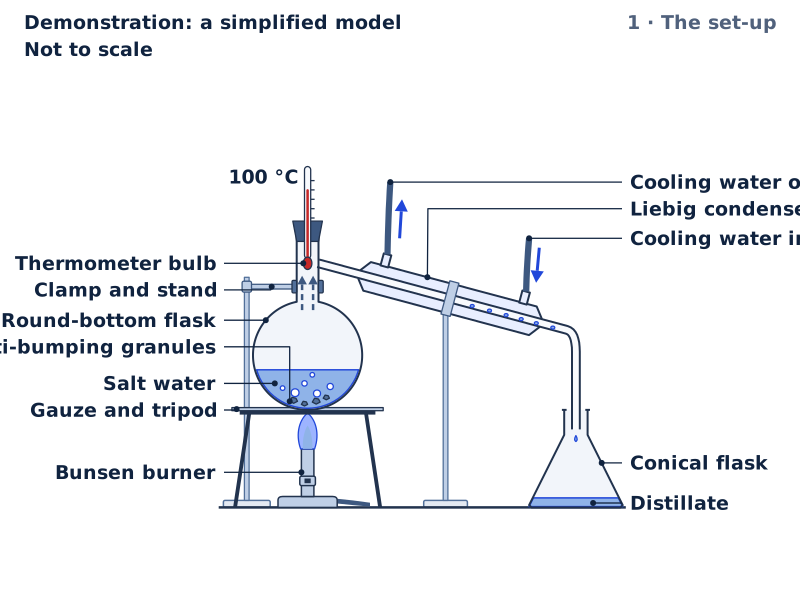
The whole apparatus while it runs: salt water boils in the flask, and pure water drips into the conical flask.
- Thermometer bulb
- Clamp and stand
- Round-bottom flask
- Salt water
- Anti-bumping granules
- Gauze and tripod
- Bunsen burner
- Cooling water out
- Liebig condenser
- Cooling water in
- Conical flask
- Distillate
Key Dashed grey arrows: water vapour moving. Solid blue arrows: cooling water moving, in at the lower end and out at the upper end. In the particle view, blue circles are water particles. Larger dark circles are salt particles. In the flask circle, a large ring in the liquid is a bubble: water particles far apart, which is water vapour. In the condenser circle, the two outlined bands are the glass of the inner tube, and the particles outside them are the cooling water.
The model could not start here. The figure, the steps and the table on this page still show the idea; reload the page to try again.
The idea, step by step
Not to scale
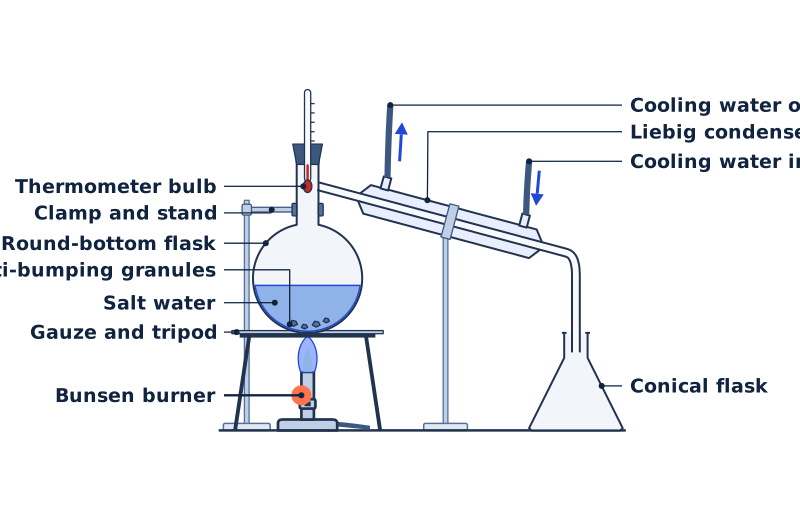
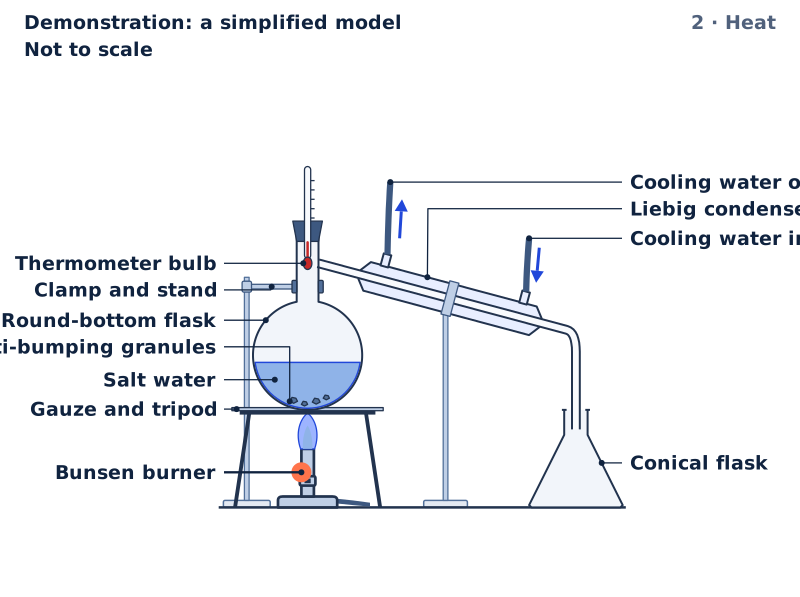
2 · HeatThe Bunsen burner heats the salt water. The thermometer bulb is still in air at room temperature.1 Thermometer bulb · 2 Clamp and stand · 3 Round-bottom flask · 4 Salt water · 5 Anti-bumping granules · 6 Gauze and tripod · 7 Bunsen burner · 8 Cooling water out · 9 Liebig condenser · 10 Cooling water in · 11 Conical flask 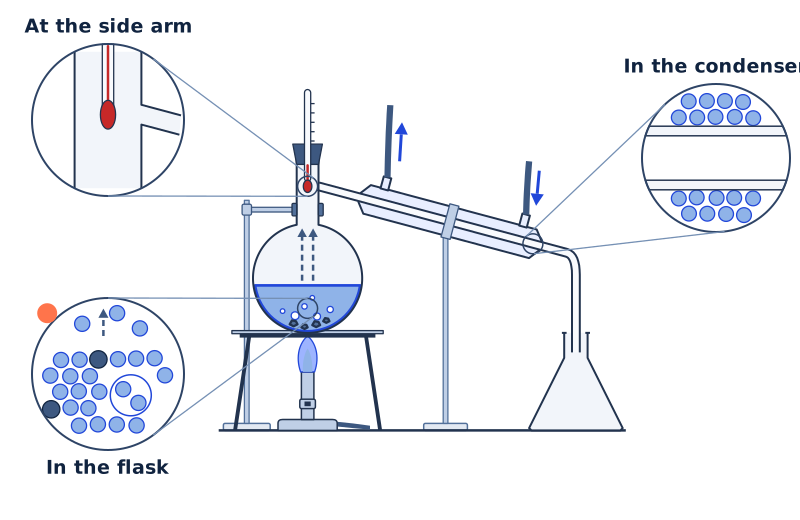
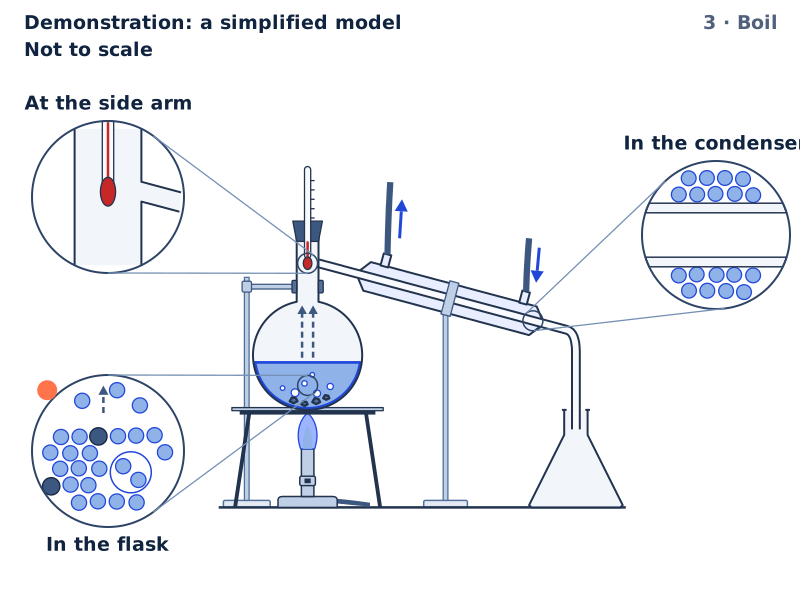
3 · BoilThe water boils. Bubbles form on the granules, which keep the boiling smooth. A bubble holds water particles far apart: water vapour. 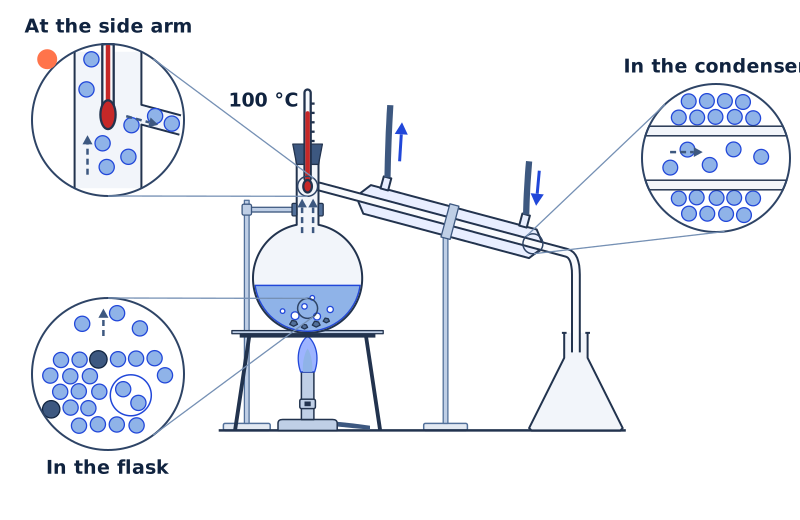
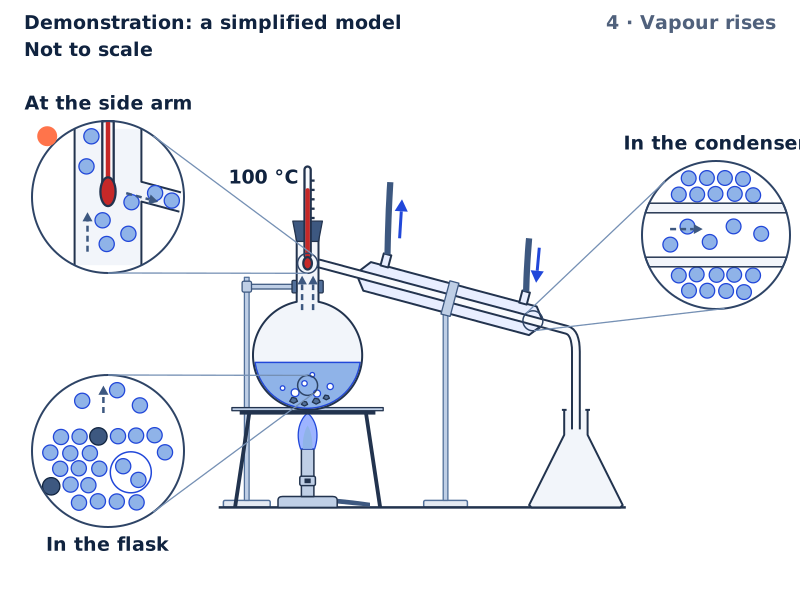
4 · Vapour risesWater particles leave as vapour and rise past the thermometer bulb, which now reads 100 °C. Salt particles stay in the flask. 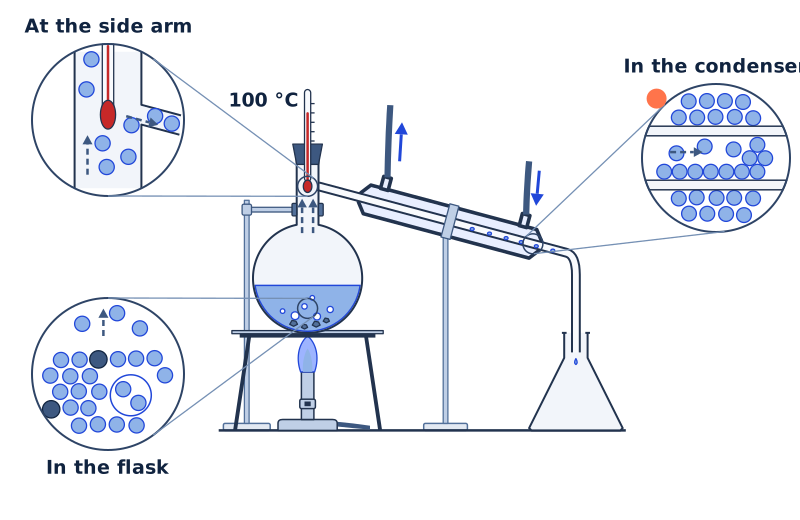
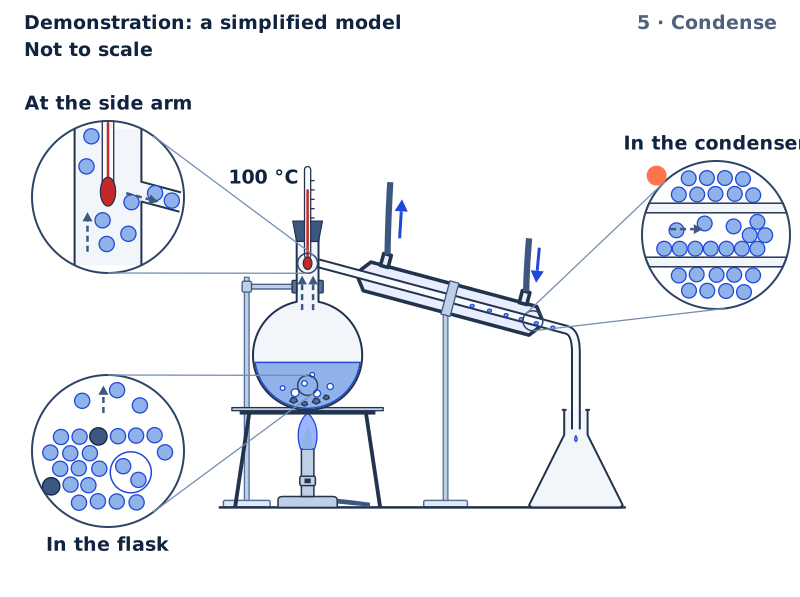
5 · CondenseCold glass takes heat from the vapour, which condenses back into the water that left the flask. The cooling water stays outside the inner tube. 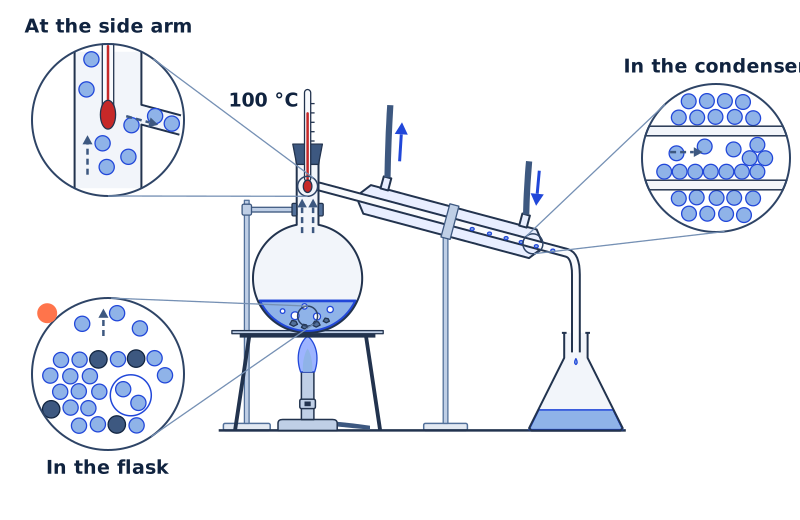
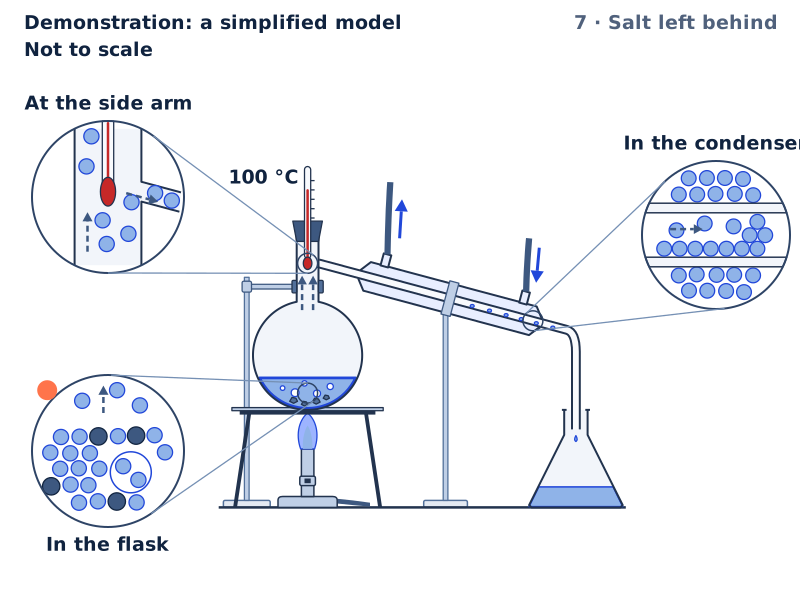
7 · Salt left behindBoiling took half the water away as vapour; all the salt stayed behind in the rest. Salt boils only at 1465 °C.


What the model shows at each step, with the salt you chose
| Step | Thermometer at the side arm | Water collected (mL) | Salt collected (g) | In the first figure |
|---|---|---|---|---|
| Heat | Room temperature: the bulb is in air | 0 | 0 | |
| Boil | Room temperature: the bulb is in air | 0 | 0 | |
| Vapour rises | Steady at the boiling point of water | 0 | 0 | |
| Condense | Steady at the boiling point of water | 0 | 0 | |
| Collect | Steady at the boiling point of water | 25 | 0 | Shown |
| Salt left behind | Steady at the boiling point of water | 50 | 0 |
Try it in the Lab
Practicals with real materials, each with its safety card.
- Simple distillation: recovering pure water from salt waterYear 7Bench practicalMedium riskSchool laboratory, not for home
- Simple distillation of salt water: boiling-point plateau and purity of the distillateYear 11Bench practicalMedium riskSchool laboratory, not for home
With a learner
Three questions to ask
- What goes out of the flask when the salt water boils?
- Why is the thermometer bulb level with the side arm, and not in the salt water?
- Why does the cooling water go in at the lower end of the condenser?
What to expect
Many learners say the salt goes over with the steam, or that the bubbles are air. Step through to the particles and look for salt anywhere but the flask.
What to try next
Open a practical in Try it in the Lab, above, to see how a school laboratory sets this up, safety card first.
About this model
What is simplified
- Not to scale: the condenser is drawn shorter than a real one, and the particles far larger and far fewer than real ones.
- Salt particles are drawn many times more common than they are in real salt water, so that you can find them. How many are drawn rises with how concentrated the salt water is, and at least one of each kind is always drawn.
- Air is not drawn in the particle view. Before the vapour arrives, the neck, the side arm and the condenser hold air.
- The condenser circle is a slice through the condenser: the inner tube, the glass above and below it, and the cooling water outside that glass. The jacket's outer wall lies beyond the circle and is not drawn.
- The steps are moments, not a timed run. Between them the flame keeps heating and the water collects drop by drop.
- The model starts with the flask less than half full and stops when half the water has distilled over. A real distillation is never run until the flask boils dry.
- In the model no salt at all reaches the conical flask. Heating too hard can splash a little salt water into the side arm; gentle heating and the granules prevent it.
- The boiling point of water here is for air pressure at sea level. Where the air pressure is lower, the reading at the side arm holds a little lower.
- With ions in solution, the dissolved salt is drawn as separate sodium ions and chloride ions, the chloride ion the larger, as it is. Each water molecule is one circle.
Numbers and their sources
- 100 °C The boiling point of water at sea-level air pressure, to the nearest degree. The source gives it in kelvin, as the average of several measurements; converted to degrees Celsius it rounds to this value. Source: NIST Chemistry WebBook, SRD 69: Water, phase change data (Tboil), read 24 September 2026.
- 1465 °C The boiling point of sodium chloride, common salt. Source: PubChem, Sodium chloride (CID 5234): Boiling Point, citing the CRC Handbook of Chemistry and Physics, 94th edition, p. 4-89, read 24 September 2026.
Review
Demonstration: a simplified model. Checked against its written sources, 26 September 2026. Not reviewed by a qualified teacher.
Curriculum references
SC4-SOL-01SC4-WS-01CH11-8CH11/12-3CH11/12-4CH-11-01CH-11WS-03AC9S7U06AC9S7I03
Reference, not a verified alignment.