Float or sink: it is not just how heavy
Kindergarten to Year 2 and Year 7–8Early Stage 1 to Stage 1 and Stage 4Move it
A thing sinks when it is heavier than the same amount of water, not because it is big or heavy.
Demonstration: a simplified modelNot to scale1 · Apple and coin
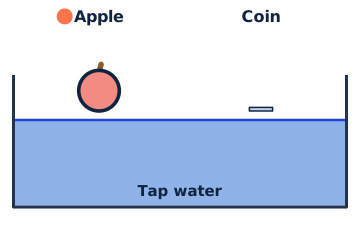
Trying it with real objects: an adult stays close to children near water, and small things such as coins and pebbles are choking hazards.
The apple is much heavier than the coin. Let them go.
Key Blue: the water, in a cut-away view of the tub. The darker line is its surface. White inside the boat: air.
The model could not start here. The figure, the steps and the table on this page still show the idea; reload the page to try again.
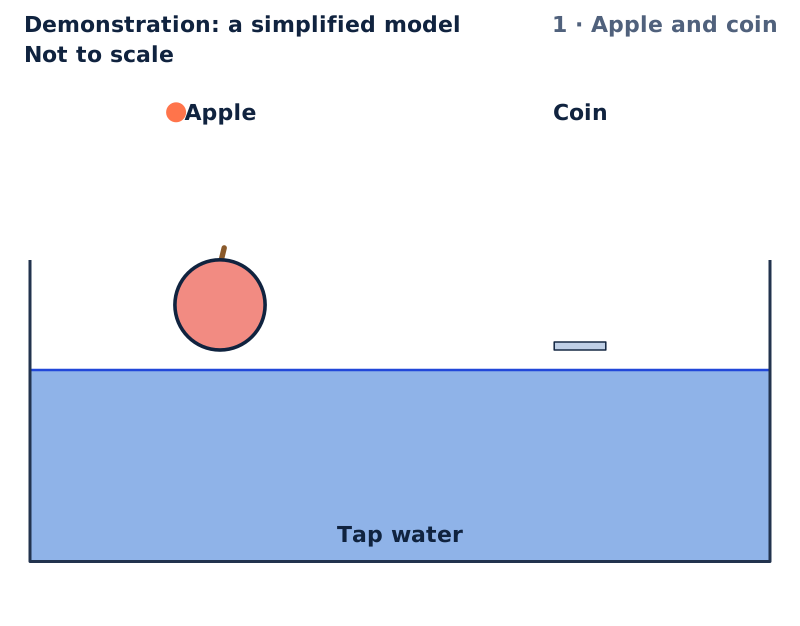
The idea, step by step
Not to scale
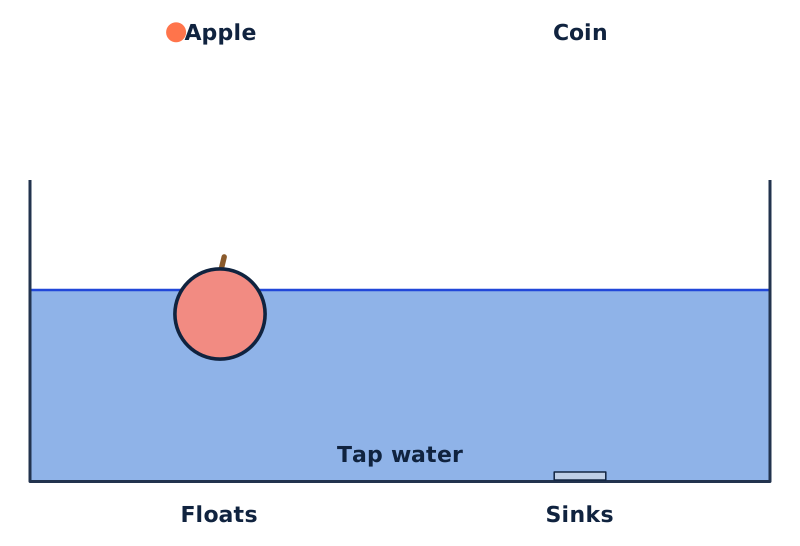
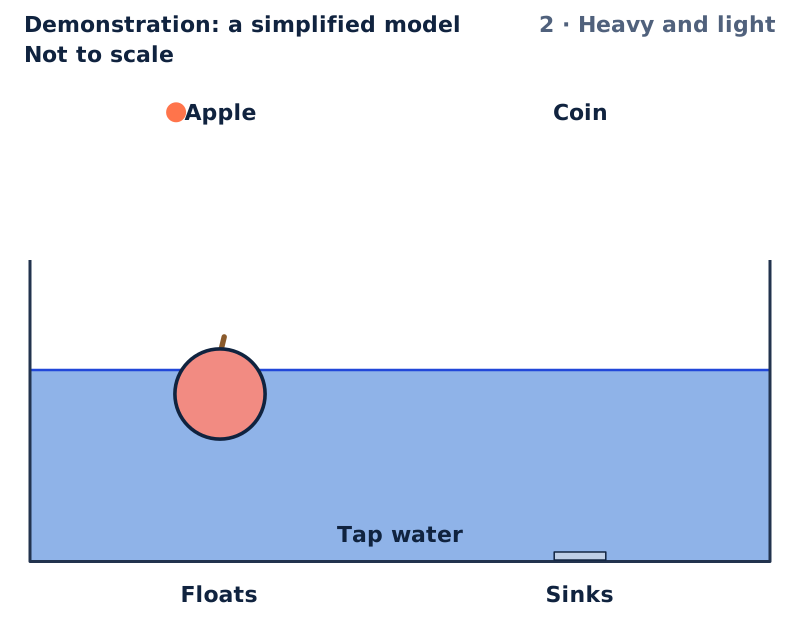
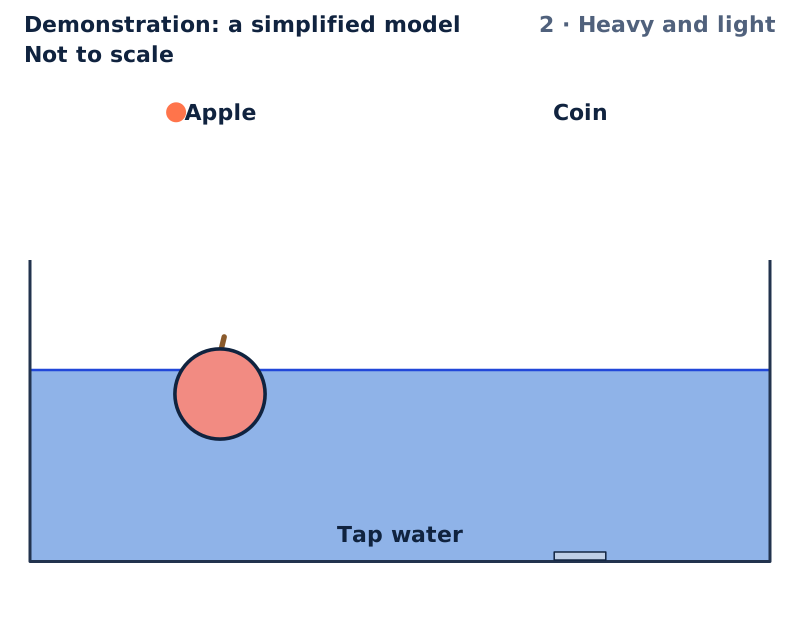
2 · Heavy and lightThe heavy apple floats. The light coin sinks. 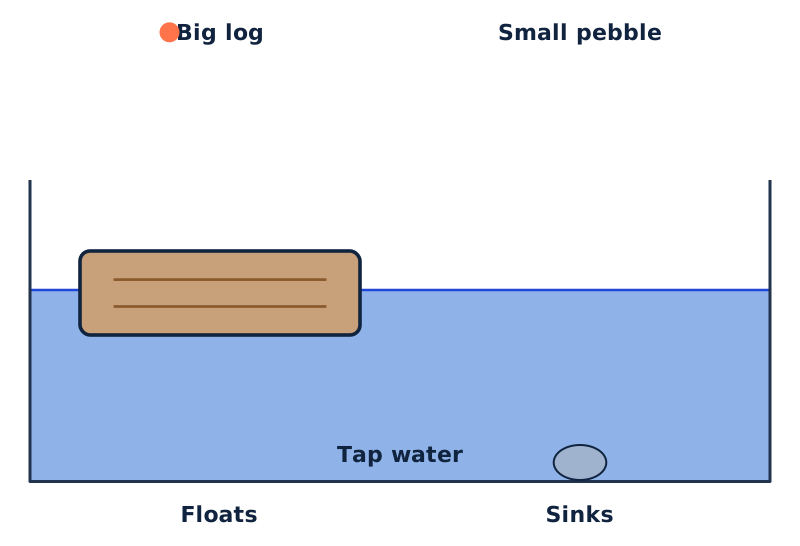
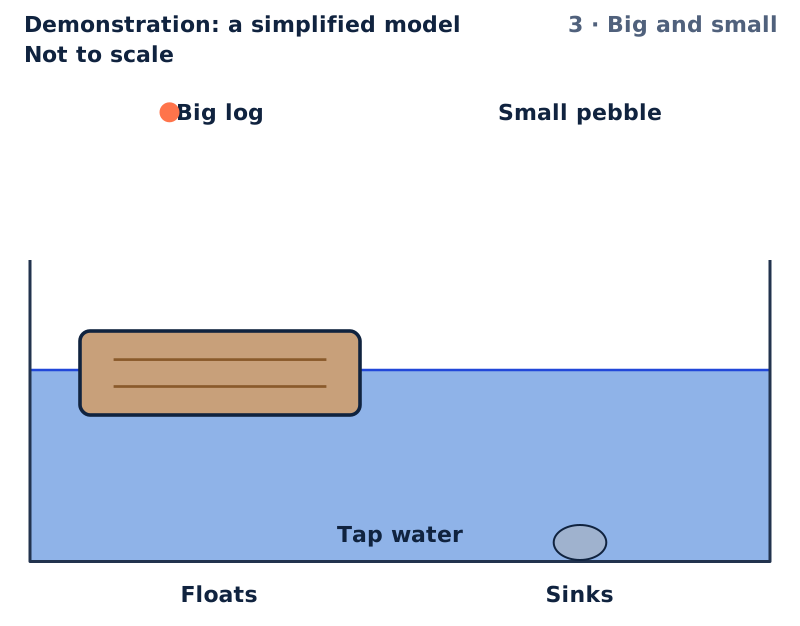
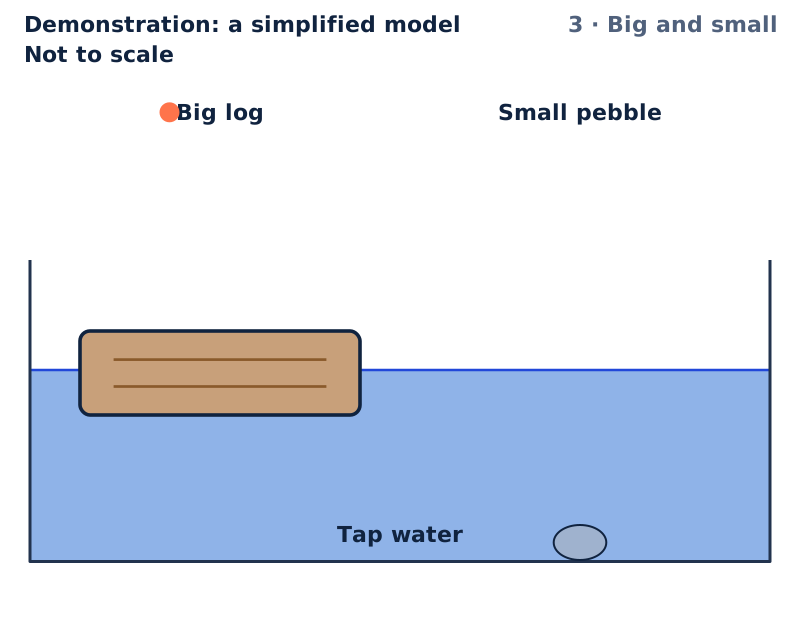
3 · Big and smallThe big log floats. The small pebble sinks. 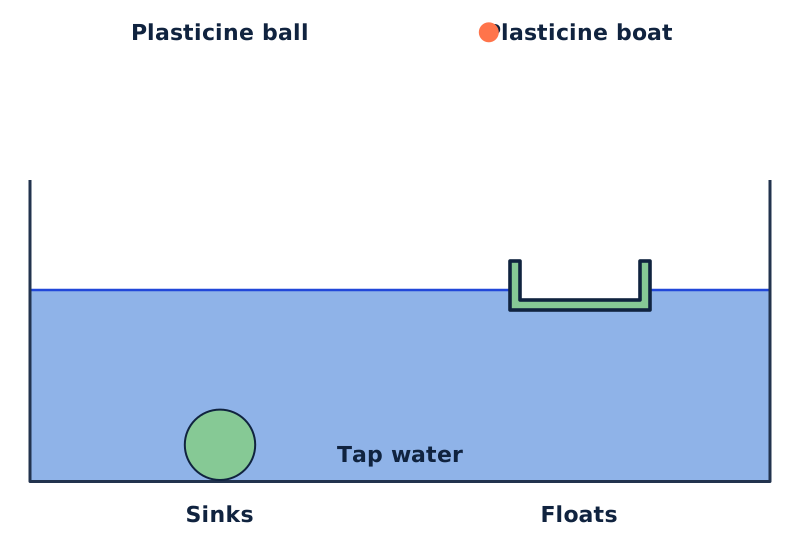
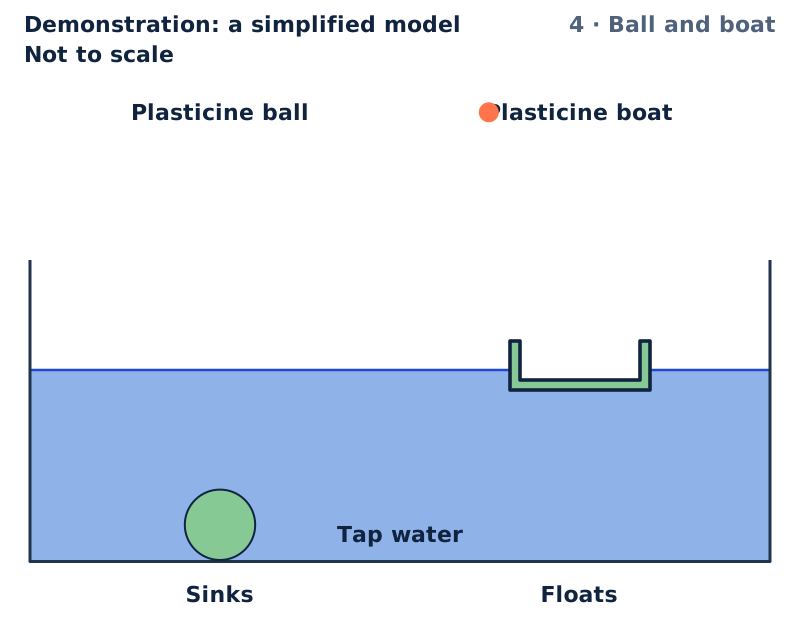
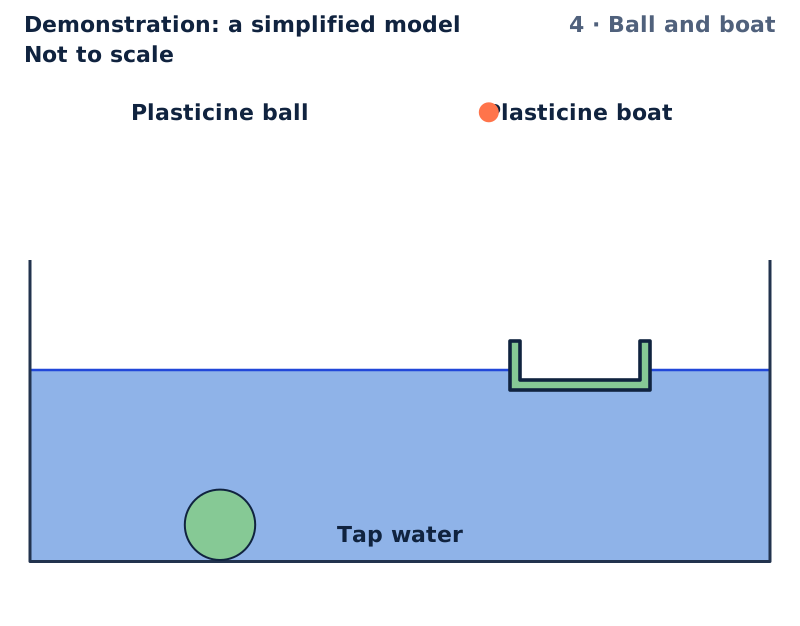
4 · Ball and boatThe same plasticine: the ball sinks, the boat floats. 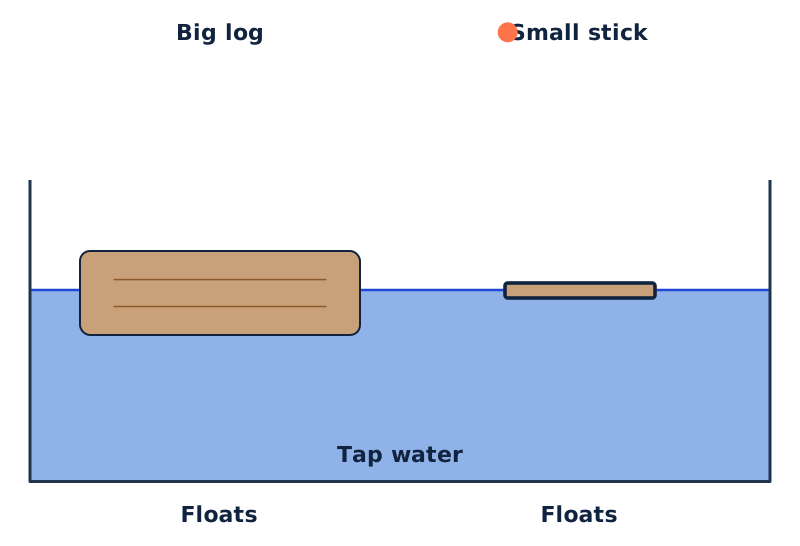
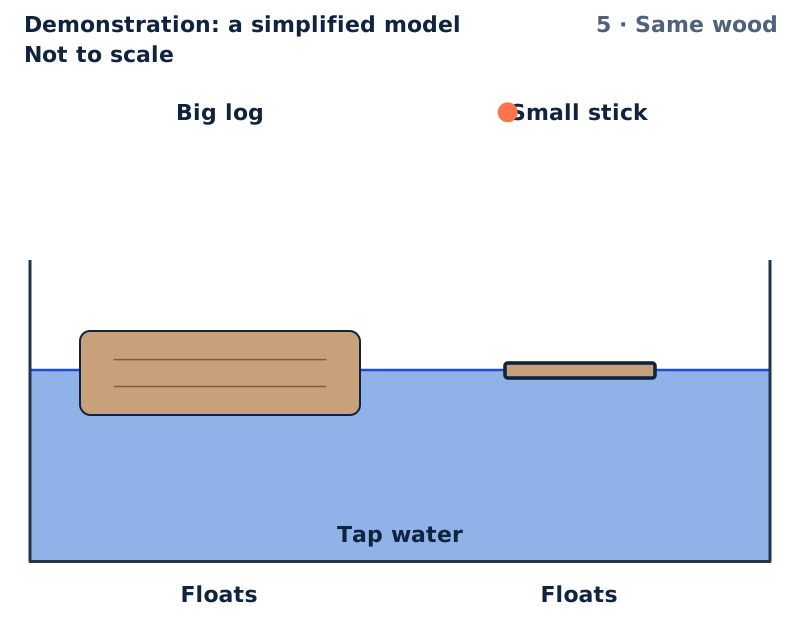
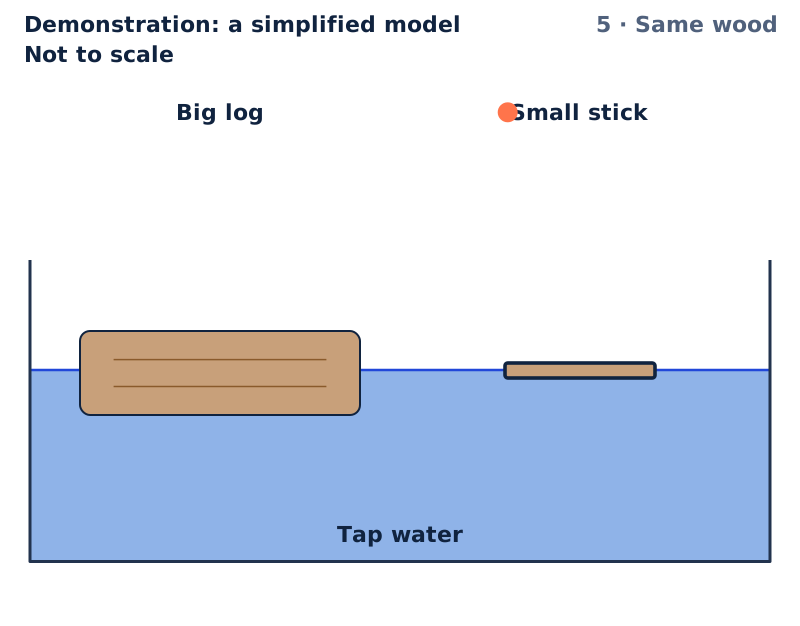
5 · Same woodBig log, small stick, the same wood: both float. 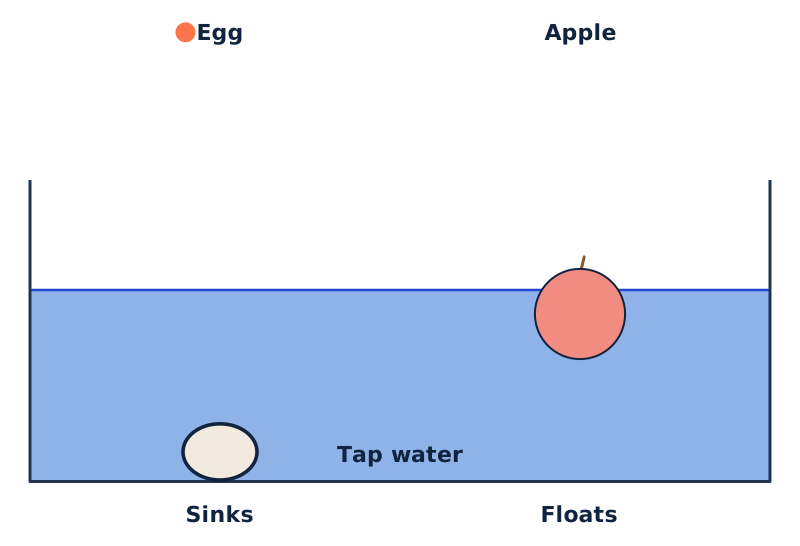
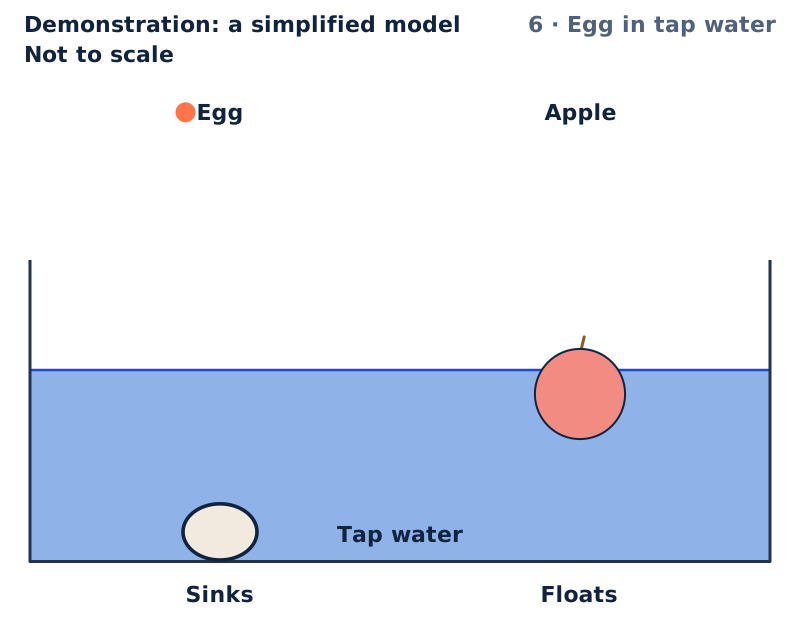
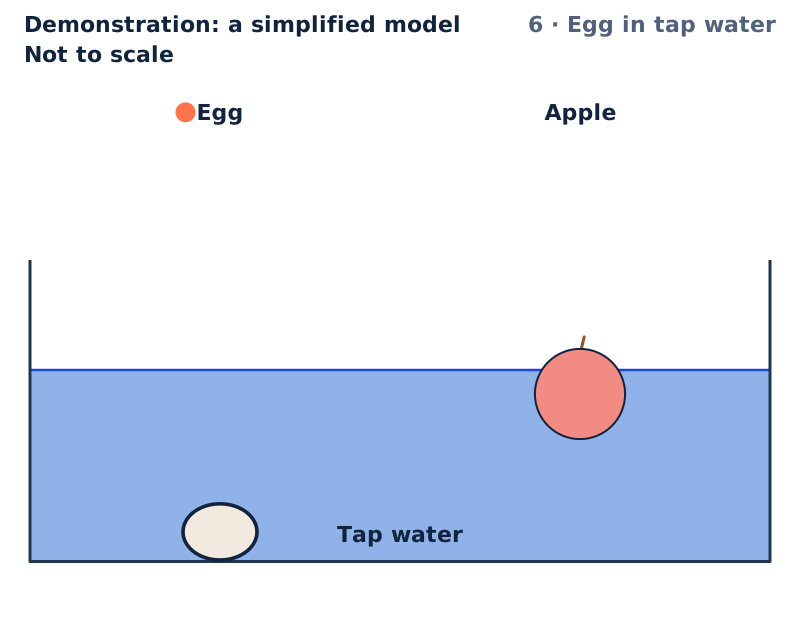
6 · Egg in tap waterIn tap water, the egg sinks and the apple floats. 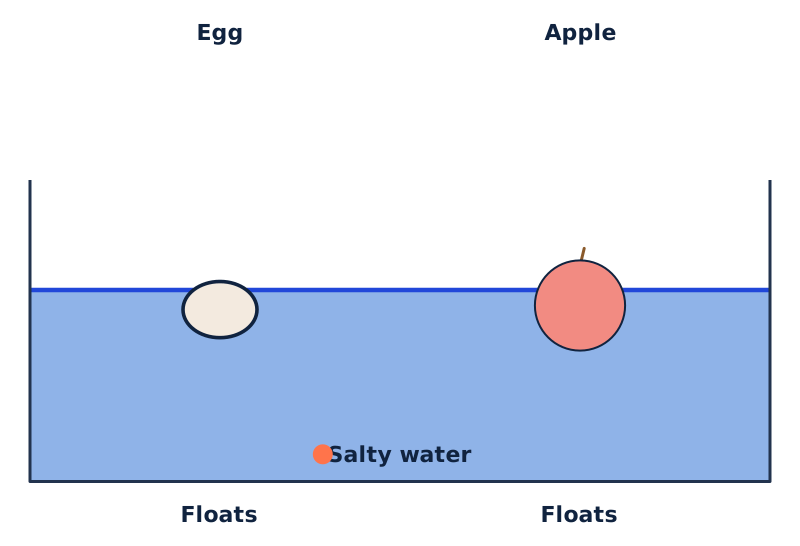
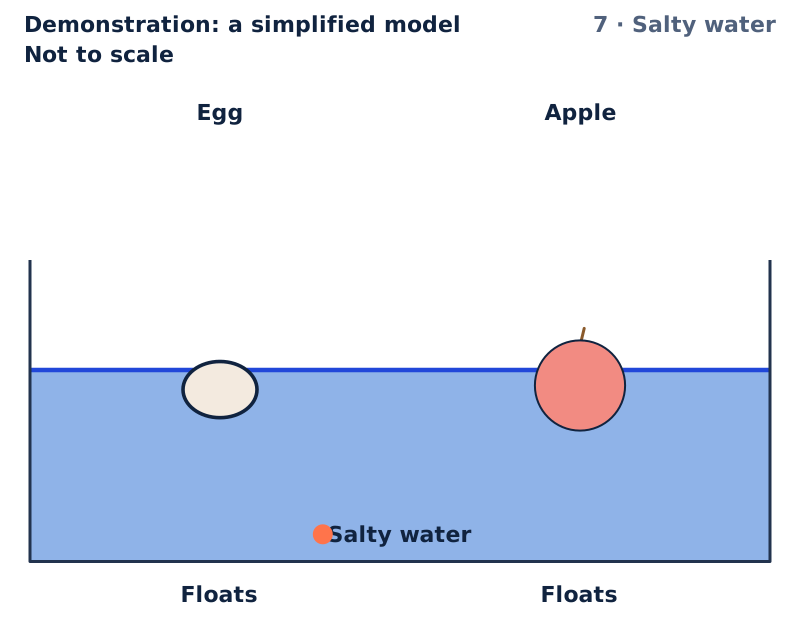
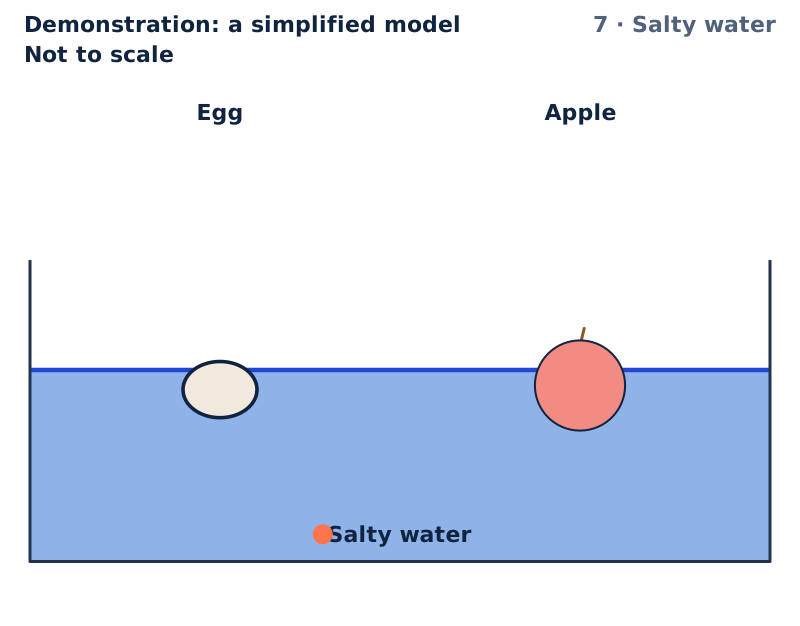
7 · Salty waterVery salty water: the egg floats, and the apple rides higher.


After letting go, moment by moment: what each side does, and the water it has pushed aside
| Moment | On the left | On the right |
|---|---|---|
| Held over the water | Not in the water yet | Not in the water yet |
| The left one stops | Floats | Going down |
| The right one stops | Floats | Sinks to the bottom |
Try it in the Lab
Practicals with real materials, each with its safety card.
- Float or sink: testing objects in waterKindergartenBench practicalLow risk
- Foil boats: designing a boat that carries the most coinsKindergartenMake and testLow risk
- Density of tap water and seawater from a mass-volume graphYear 7Bench practicalLow risk
- Sorting plastics for recycling by floating and sinkingYears 7–8Make and testLow risk
- Isostasy: pieces of wood floating in water and in syrupYear 8Bench practicalLow risk
With a learner
Three questions to ask
- Hold the apple and the coin. Which is heavier? Which one do you think will float?
- Make a ball and a boat from the same plasticine. What do you think each one will do?
- Guess first, then test some objects from home. Which guesses were right?
What to expect
Many learners expect heavy things and big things to sink. Let them test each guess with the model, then with real objects.
What to try next
Try it in the Lab, above: test real objects in a tub of water, or fold a foil boat and count the coins it carries.
About this model
What is simplified
- The tub is drawn as a cut-away view, as if sliced down the middle: you see the water around each object, and the air inside the boat. The front of the tub is not drawn.
- The objects are not drawn to one scale. Each is drawn big enough to see, and a bigger real object is always drawn bigger. Each keeps its real shape, and the part under the water is worked out from that shape and its density.
- Both objects move at one slow, steady pace chosen for the model, so the time since letting go is the model's, not a real drop's. A real sinker falls at its own speed, and a real floater bobs up and down before it settles.
- In a real tub the water rises a little as an object goes in, by the volume of water it pushes aside. In a tub this size that rise is too small to see, so the surface is drawn level.
- Each object is one typical example: real apples, eggs, corks, wood and plasticines differ a little. The egg is a fresh hen's egg, the wood is dry pine and the plasticine is an oil-based modelling clay.
- The apple, the egg and the pebble are drawn as smooth round shapes, and the cork, the log and the stick as plain cylinders lying on their sides. The coin lies flat on the bottom. The coin, and the boat's walls and floor, are drawn thicker than they are so that they can be seen.
- The salty water is a strong salt solution, about one part salt to four parts water by mass: far saltier than the sea.
- Average density is an object's mass divided by its whole volume. For the boat, the whole volume includes the air inside it, up to the rim. The water pushed aside is the volume of the object below the surface.
Numbers and their sources
- 0.9982 g/cm³ The density of pure water at twenty degrees Celsius. Tap water carries only a trace of dissolved salts, so the model uses this value for it. The linked practical on tap water and seawater uses the same value. Source: Wikipedia, Water (data page): liquid water density table after Dean, Lange's Handbook of Chemistry (1999), 0.9982071 g/cm3 at 20 °C, read 26 September 2026.
- 1.15 g/cm³ A strong solution of table salt in water, about one part salt to four parts water by mass, the same density as the salt solution in the linked plastics practical. It lies between the source's values for twenty and twenty-two per cent salt by mass at twenty degrees Celsius, and well below a saturated solution, so it can be made in a kitchen. Source: Wikipedia, Sodium chloride (data page): density of aqueous NaCl, 20 % by mass 1.1478 g/cm3 and 22 % 1.164 g/cm3 at 20 °C, after the CRC Handbook of Chemistry and Physics, 86th edition (2005), read 26 September 2026.
- 0.86 g/cm³ The mean density of the Red Delicious apples the study measured, whose densities ranged a little either side of it. Every apple it measured was less dense than water. Source: Kheiralipour K. and Marzbani F. (2016), Multivariate modeling of settling depth of apple fruit (Red Delicious variety) in water, Food Science & Nutrition 4(2), Table 1: density 0.82 to 0.88 g/cm3, mean 0.86, read 26 September 2026.
- 150 g A typical apple, inside the range of masses the same study measured. Source: Kheiralipour K. and Marzbani F. (2016), Food Science & Nutrition 4(2), Table 1: mass 104.44 to 171.94 g, read 26 September 2026.
- 1.08 g/cm³ A fresh hen's egg. Egg specific gravity is its density compared with water's; most eggs tested fall in the middle three of the source's five salt solutions, so a typical egg is a little denser than water. Source: Butcher G. D. and Miles R. D., Egg Specific Gravity: Designing a Monitoring Program, University of Florida IFAS Extension VM044: solutions of 1.070 to 1.090, and 85 to 90 per cent of eggs fall in the 1.075, 1.080 and 1.085 groups, read 26 September 2026.
- 60 g An extra large egg, the average of the Australian size sold as a seven hundred gram dozen. Source: Australian Eggs, Egg types and labels: Extra Large (700 g dozen), 58.3 to 66.6 g per egg, averaging 60 g, read 26 September 2026.
- 0.2 g/cm³ The average density of cork. Natural wine corks vary a little either side of it. Source: Amorim Cork Solutions, About cork: cork has an average density of around 200 kg/m3, read 26 September 2026.
- 8.94 g/cm³ Cupronickel, three parts copper to one part nickel: the metal of the Australian twenty-cent coin. Source: AZoM, Copper Nickel Alloy UNS C71300 (75 % copper, 25 % nickel): density 8.94 g/cm3, read 26 September 2026.
- 11.3 g An Australian twenty-cent coin, as the Royal Australian Mint gives it. The linked foil boat practical uses the same coin. Source: Royal Australian Mint, Twenty cents: mass 11.3 grams, diameter 28.65 millimetres, 75 % copper and 25 % nickel, read 26 September 2026.
- 2.865 cm The twenty-cent coin's diameter. The model works out its thickness from its mass, its metal's density and this diameter. Source: Royal Australian Mint, Twenty cents: diameter 28.65 millimetres, read 26 September 2026.
- 2.65 g/cm³ The pebble is quartz, the mineral most pebbles in creeks and on beaches are made of or rich in; other rocks are denser still. Source: Webmineral, Quartz mineral data: specific gravity of quartz 2.65 g/cc, read 26 September 2026.
- 0.545 g/cm³ Dry radiata pine grown in Australia, the pine most often grown here. The big log and the small stick are both this wood. Source: Business Queensland, Radiata pine timber properties: density 545 kg/m3 at 12 % moisture content (Australia), read 26 September 2026.
- 1.5 g/cm³ An oil-based modelling clay of the plasticine kind. Brands differ; this one's data sheet gives a range, and the model takes a value inside it. Every value in that range sinks as a ball and floats as the boat. Source: Chavant Inc., Safety Data Sheet 2128, Roma Plastilina No. 1 (22 December 2022), section 9: specific gravity 1.40 to 1.55 g/cm3, read 26 September 2026.
Review
Demonstration: a simplified model. Checked against its written sources, 26 September 2026. Not reviewed by a qualified teacher.
Curriculum references
STE-SCI-01STE-PQU-01ST1-PQU-01SC4-SOL-01SC4-WS-02AC9SFU03AC9SFI01AC9S1I01AC9S2I01AC9S7U05AC9S7I01AC9S8I01
Reference, not a verified alignment.