A tangent's gradient is the limit of secant gradients
Years 11–12Stage 6Run it
The gradient at P is the limit of secant gradients as Q slides towards P; the derivative gives it at every point.
Demonstration: a simplified model1 · A secant
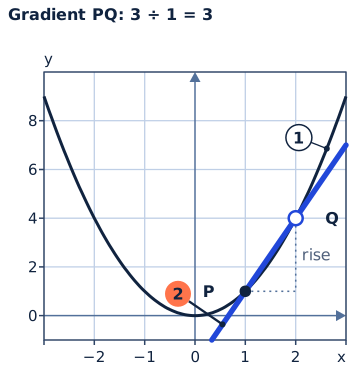
The secant PQ joins two points on y = x². Its gradient is rise ÷ run: 3 ÷ 1 = 3.
- Curve y = x²
- Secant PQ
Key Thick black line: the curve. Filled dot: P, which stays put. Open circle: Q, which slides along the curve. Solid blue line: the secant PQ, through two points on the curve. Dotted lines: the run and the rise from P to Q. Grey dashed lines: secants with longer runs, on the same side of P. Red dashed line: the tangent at P. Open red circle: where the tangent meets the curve again. Filled dot: the gradient at P, plotted above P's x-value.
The model could not start here. The figure, the steps and the table on this page still show the idea; reload the page to try again.
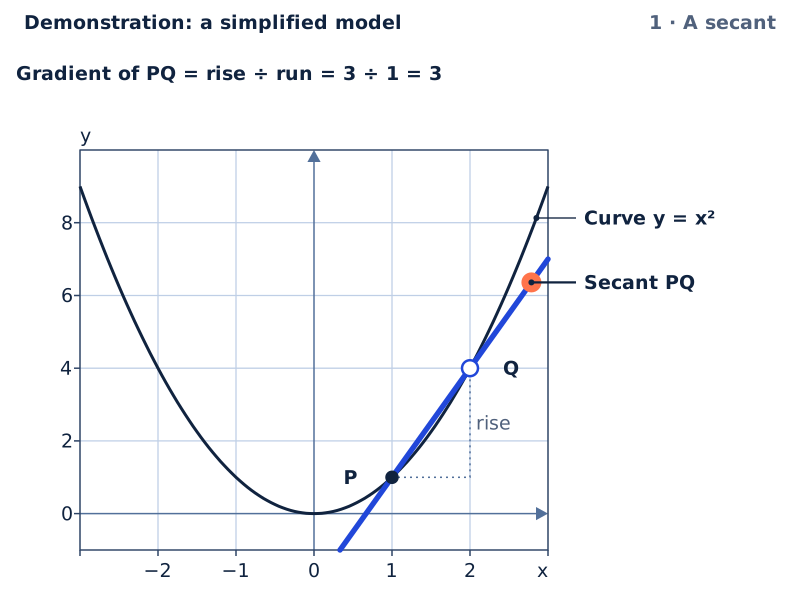
The idea, step by step
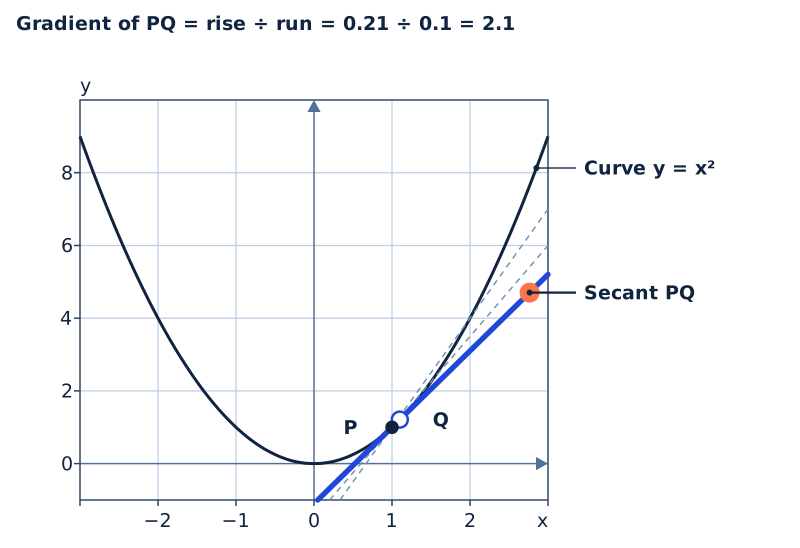
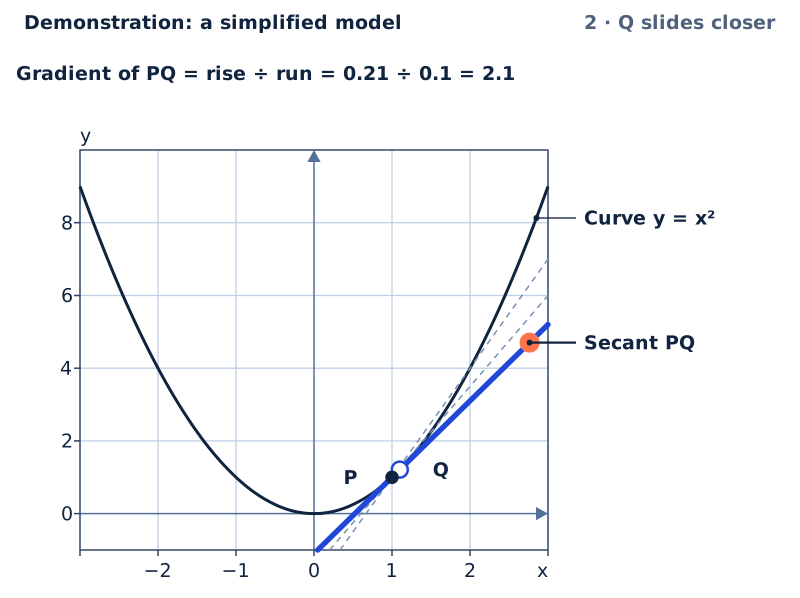
2 · Q slides closerSlide Q towards P. With a run of 0.1, the gradient of PQ is 2.1. The table lists more runs.1 Curve y = x² · 2 Secant PQ 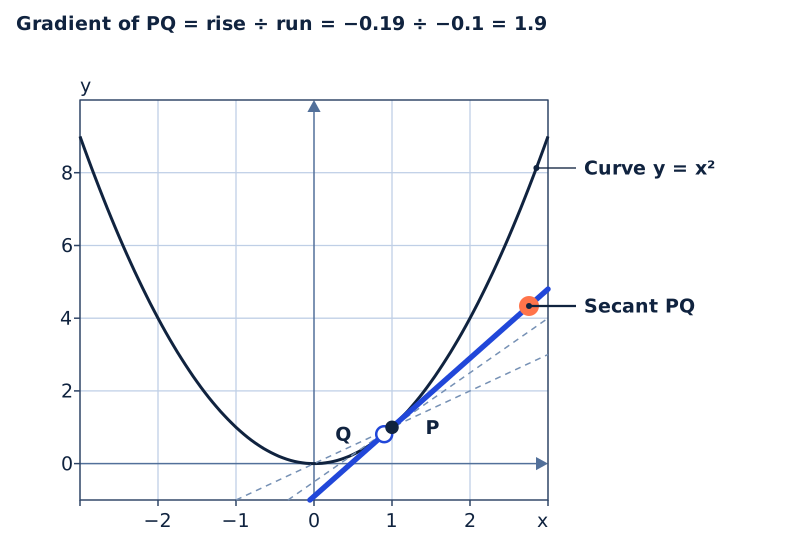
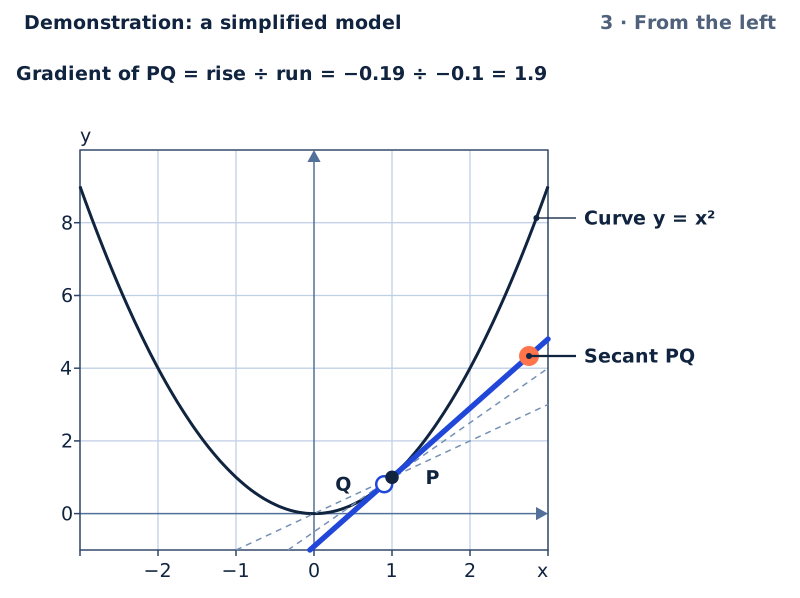
3 · From the leftQ on the left, 0.1 back from P: gradient 1.9. From each side the gradients close in on one value.1 Curve y = x² · 2 Secant PQ 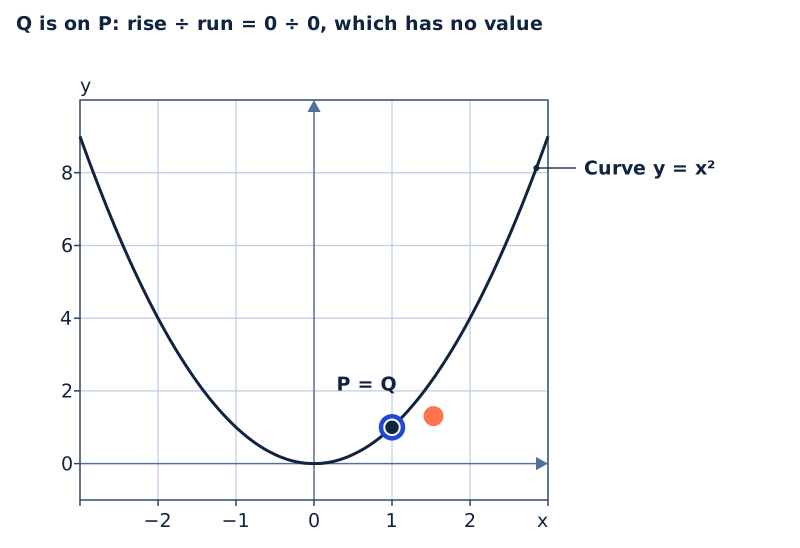
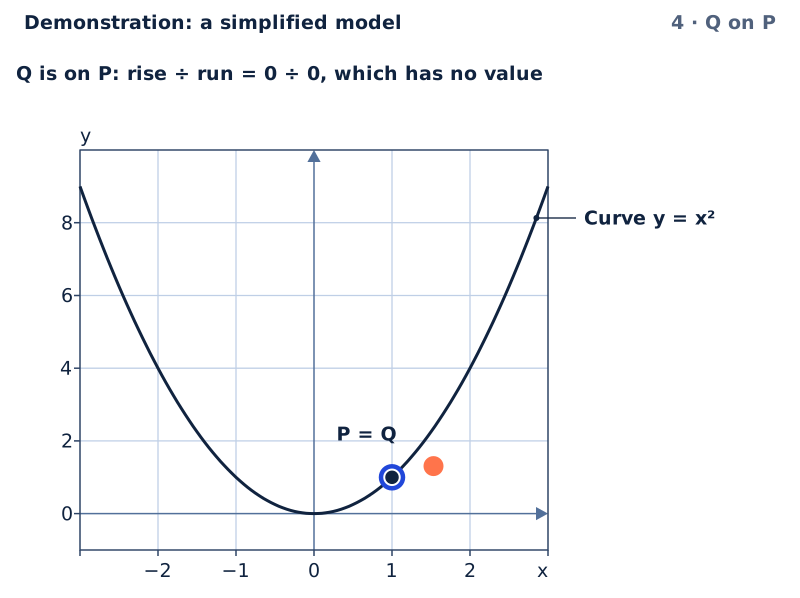
4 · Q on PPut Q on P: the rise and the run are both zero, and zero ÷ zero has no value. No secant is drawn.1 Curve y = x² 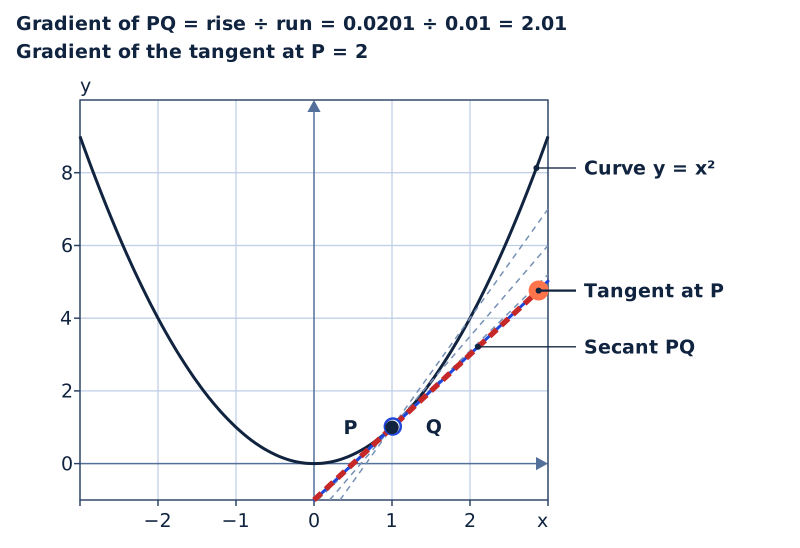
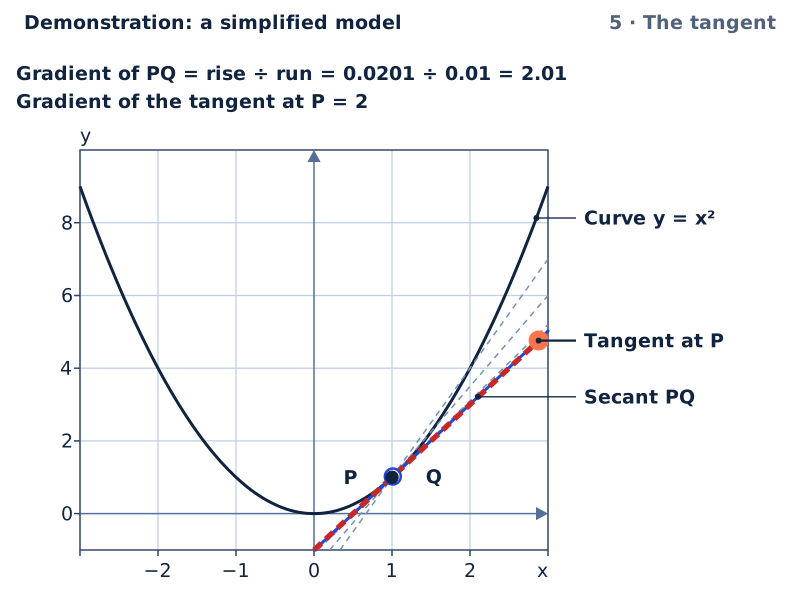
5 · The tangentThe secants close in on the tangent at P. Its gradient, 2, is their limit. P's height is 1: a different number.1 Curve y = x² · 2 Secant PQ · 3 Tangent at P 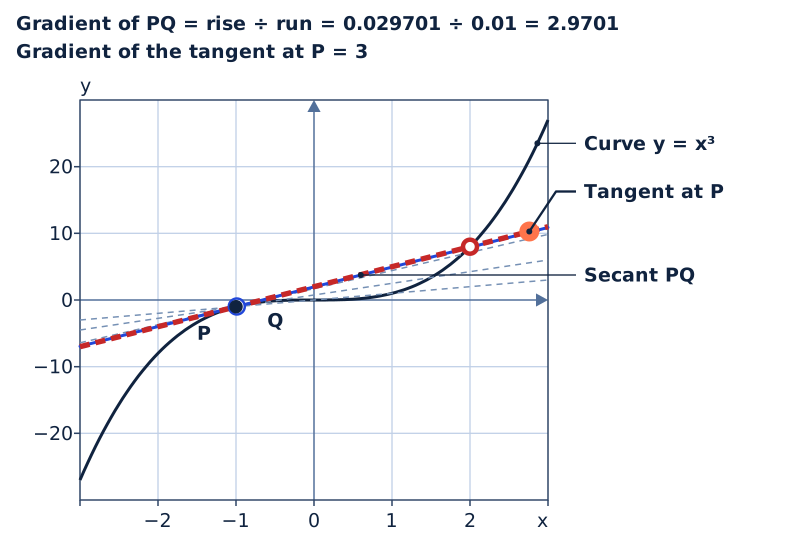
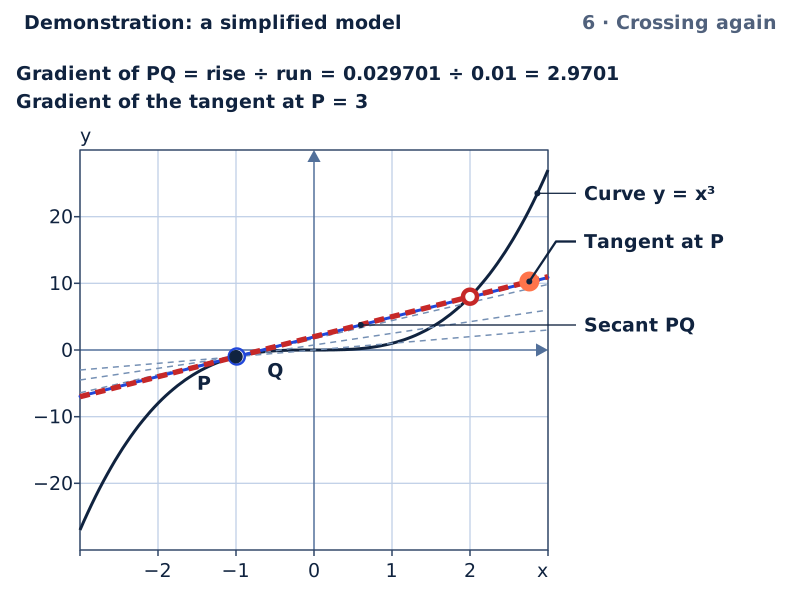
6 · Crossing againOn y = x³ the tangent at P meets the curve again, at x = 2. A tangent can cross a curve.1 Curve y = x³ · 2 Secant PQ · 3 Tangent at P 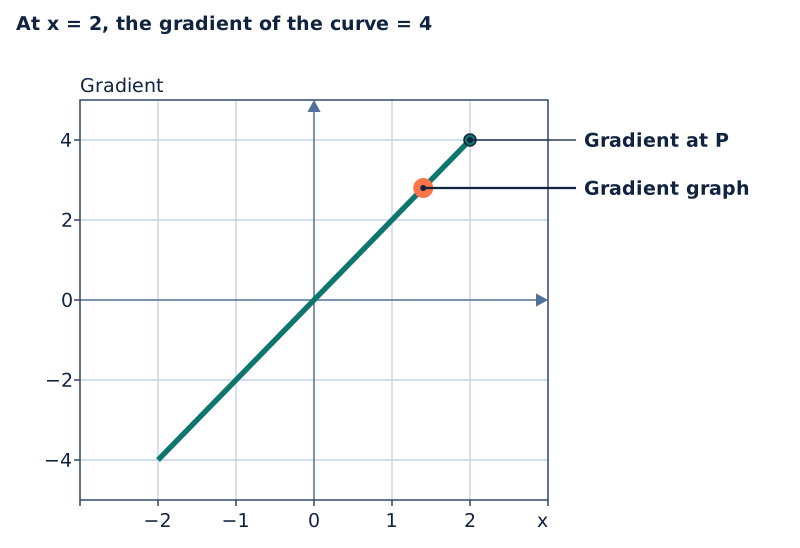
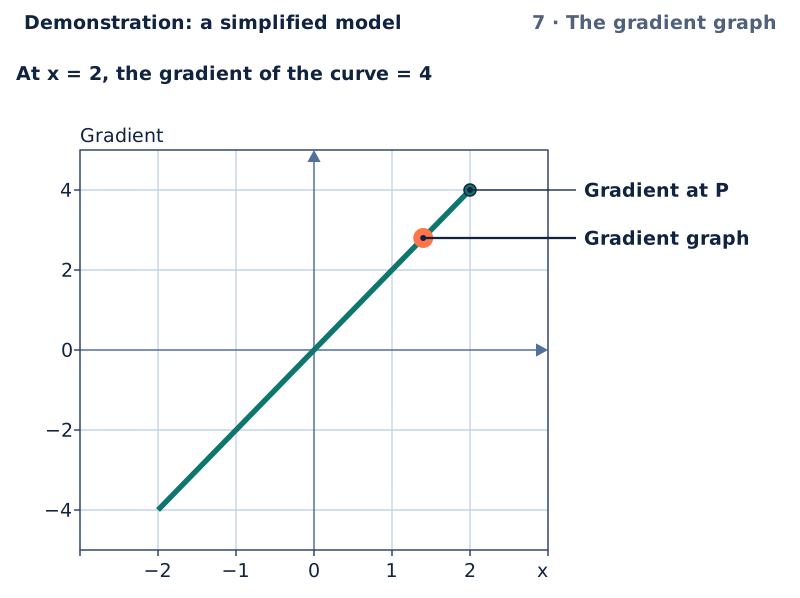
7 · The gradient graphThe derivative gives the gradient at every point: for y = x², plotted as P moves, the gradients make a straight line.1 Gradient graph · 2 Gradient at P


Gradients of the secants PQ as Q closes in on P, from the right and then from the left
| Run h | x at Q | Gradient of PQ | In the first figure |
|---|---|---|---|
| 1.000 | 2.000 | 3.0000 | Shown |
| 0.500 | 1.500 | 2.5000 | |
| 0.100 | 1.100 | 2.1000 | |
| 0.010 | 1.010 | 2.0100 | |
| 0.001 | 1.001 | 2.0010 | |
| -1.000 | 0.000 | 1.0000 | |
| -0.500 | 0.500 | 1.5000 | |
| -0.100 | 0.900 | 1.9000 | |
| -0.010 | 0.990 | 1.9900 | |
| -0.001 | 0.999 | 1.9990 |
Try it in the Lab
Practicals with real materials, each with its safety card.
- Gradient of a tangent as the limit of secant gradientsYear 11Hands-on mathematicsLow risk
- Average speed from 20 m splits: Bolt's 9.58 s and your own 100 mYears 11–12Hands-on mathematicsLow risk
- Free fall on video: displacement, velocity and acceleration from framesYears 11–12Hands-on mathematicsLow risk
With a learner
Three questions to ask
- What is the gradient of the secant PQ, and how did you work it out?
- What happens to the gradients in the table as Q gets closer to P from each side?
- What goes wrong if Q is put exactly on P to find the gradient there?
What to expect
Many learners say a tangent touches a curve at one point only, or that a gradient at a single point cannot exist.
What to try next
Open the secant practical in Try it in the Lab, above, to draw these secants on y = x² by hand and compare your table with this one.
About this model
What is simplified
- The curves, secants and tangents are computed from the functions themselves, not drawn by hand. The working on the figure rounds numbers to at most six decimal places and gradients to four; ≈ marks a rounded value.
- The run slider moves in hundredths, so on the slider Q comes no nearer to P than one hundredth, apart from zero, where Q sits on P. The table goes on to one thousandth.
- The tangent is the line through P whose gradient is the limit of the secant gradients: the derivative at P.
- For y = sin x, x is in radians. The gradient of sin x is cos x only when x is measured in radians.
- Move P moves P from left to right at a steady, slow rate, so you can watch the gradient graph grow; Speed runs it up to twice as fast. No time is shown, and none is taught.
- The gradient graph is drawn from the exact derivative at each x that P has passed, from the left end of P's range.
Review
Demonstration: a simplified model. Checked against its written sources, 26 September 2026. Not reviewed by a qualified teacher.
Curriculum references
MAV-11-06MAV-11-08MAV-12-04MA11-5
Reference, not a verified alignment.