Every fraction has a place on the number line
Years 3–6Stage 2 to Stage 3Move it
A fraction counts equal parts of one whole. It is a point on the number line, and equivalent fractions share it.
Demonstration: a simplified model1 · Equal parts
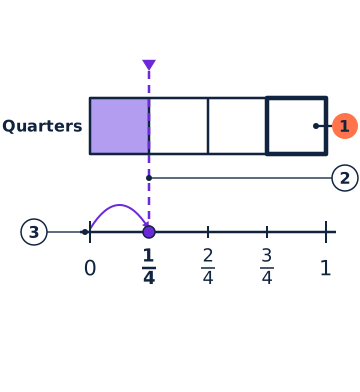
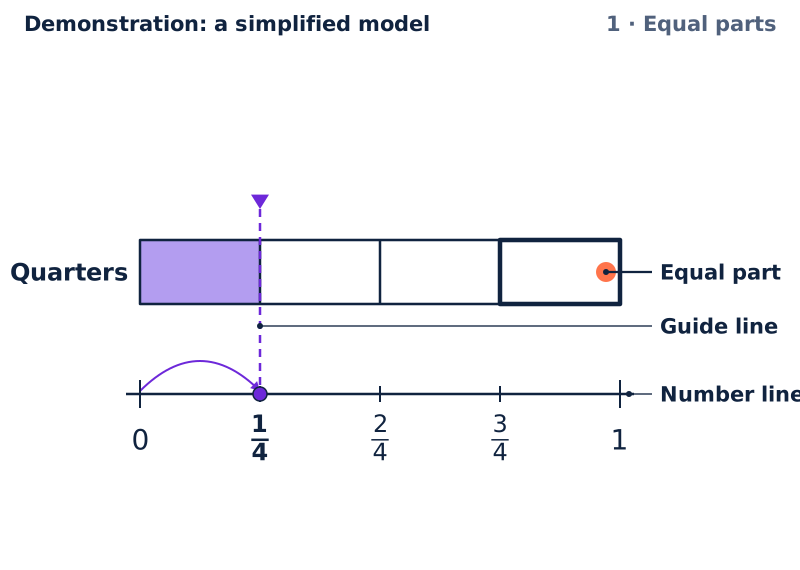
One whole is cut into four equal parts, so each part is one quarter. Four unequal pieces would not be quarters.
- Equal part
- Guide line
- Number line
Key Darker shading: the parts of your strip counted from zero. Lighter shading: another row's parts up to the guide line, where one of its cuts is on the line. Thick outline: your strip, one whole cut into equal parts. Dashed line: the guide line, from the end of the shaded parts to the number line. A ring: a cut on the guide line. That row names the same fraction. Arcs over the number line: jumps of one equal part from zero.
The model could not start here. The figure, the steps and the table on this page still show the idea; reload the page to try again.
The idea, step by step
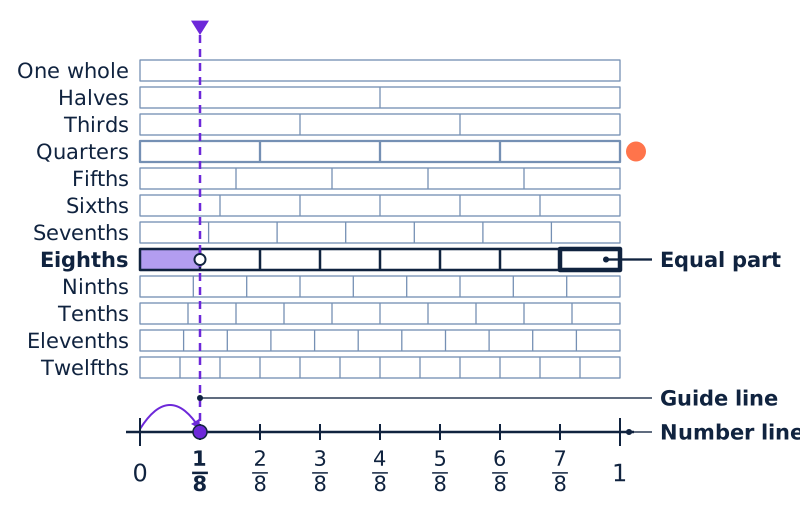
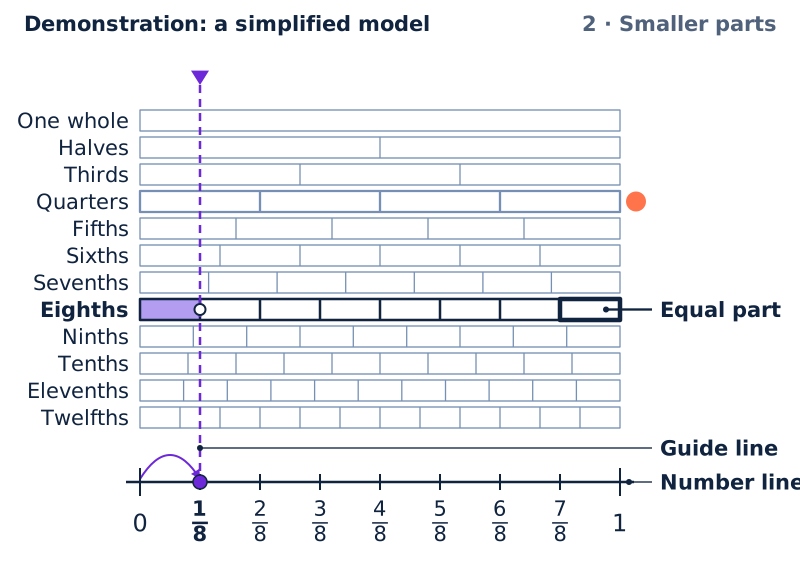
2 · Smaller partsEvery row of the wall is the same whole. One eighth is half as long as one quarter.1 Equal part · 2 Guide line · 3 Number line 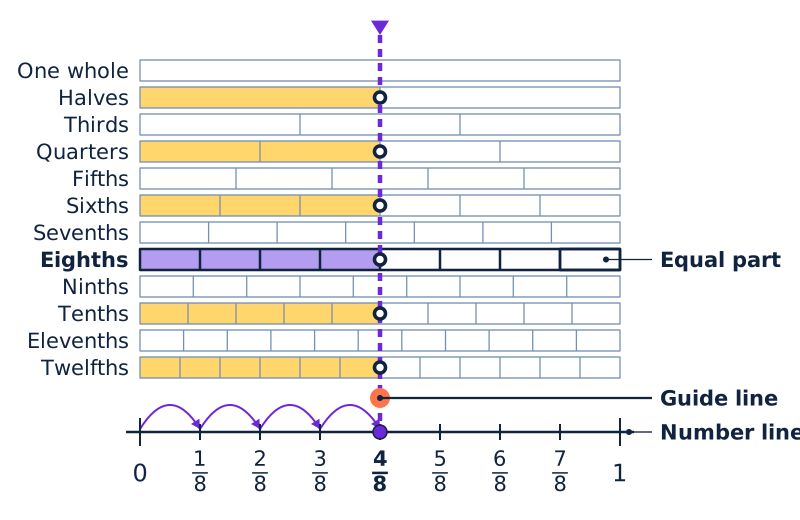
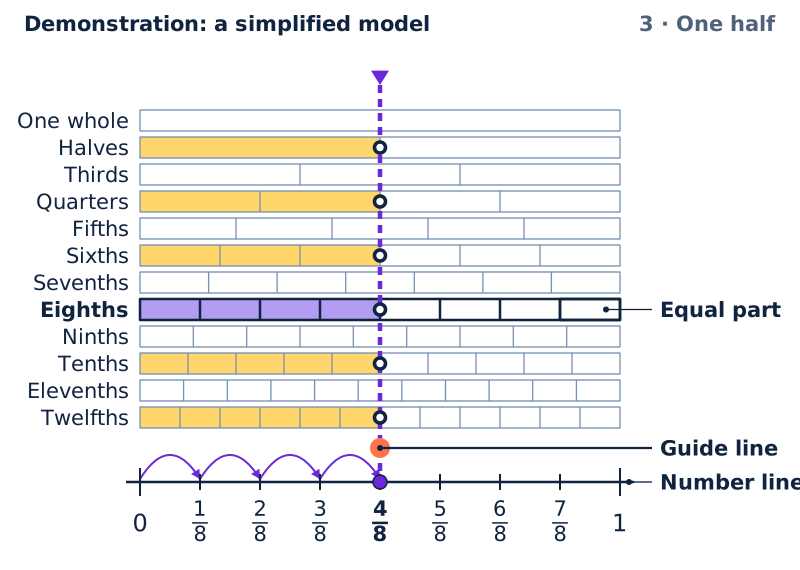
3 · One halfFour eighths ends at one half. So do two quarters, three sixths, five tenths and six twelfths: they are equivalent fractions.1 Equal part · 2 Guide line · 3 Number line 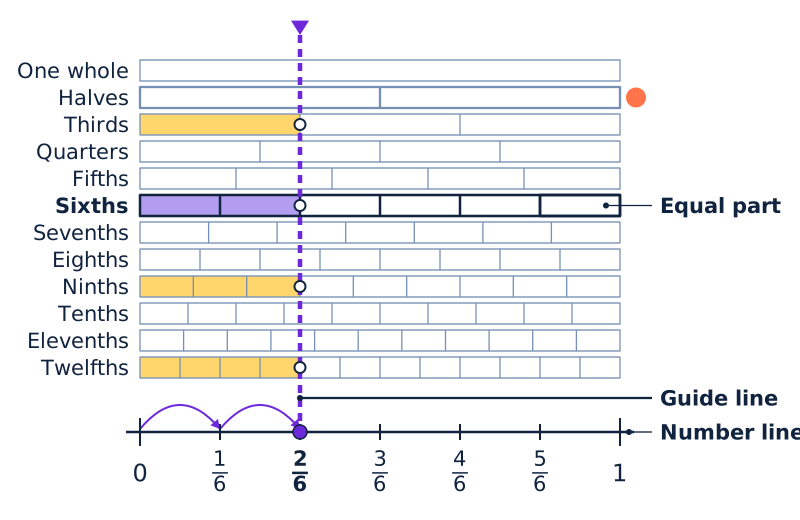
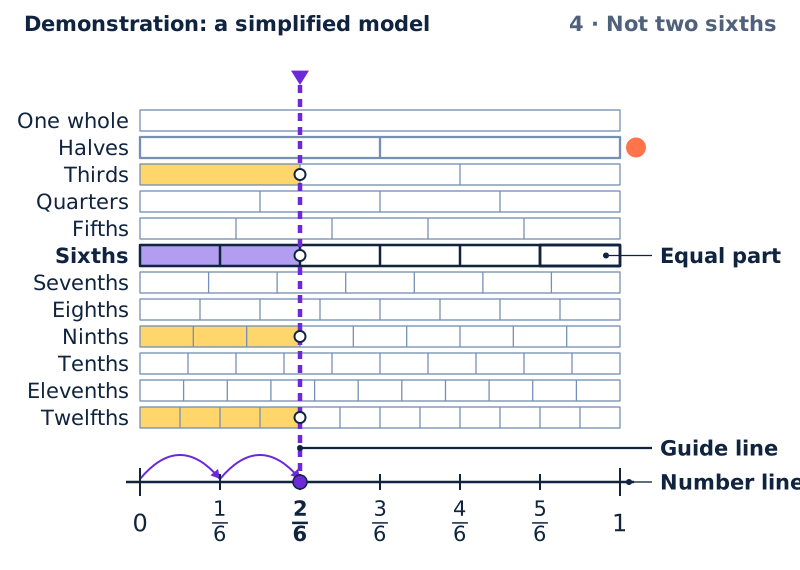
4 · Not two sixthsTwo sixths ends before one half. So one half and one quarter cannot make two sixths: together they reach past one half.1 Equal part · 2 Guide line · 3 Number line 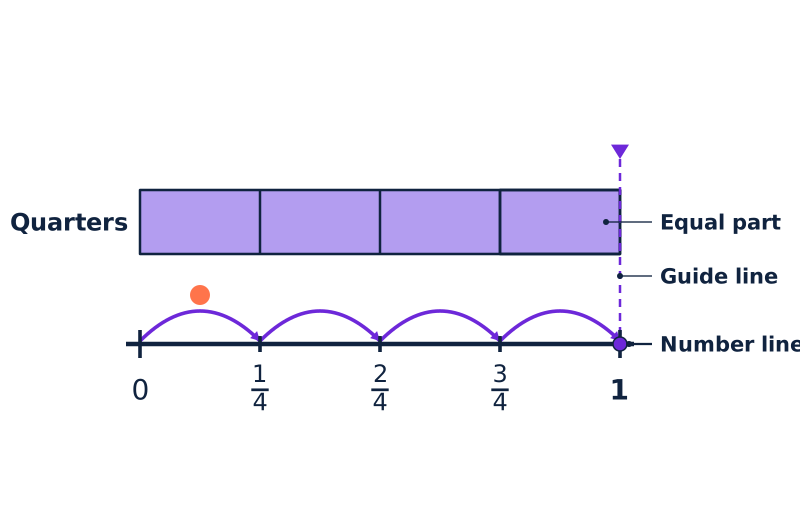
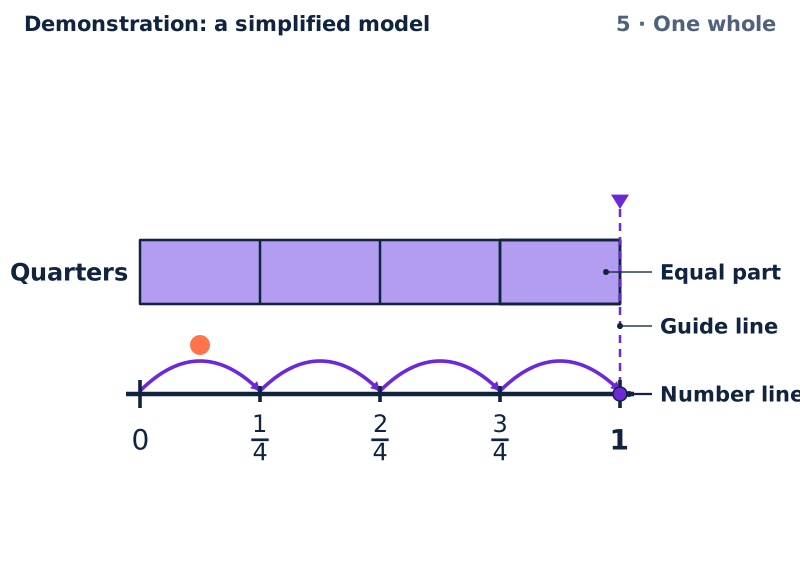
5 · One wholeCount four jumps of one quarter from zero. Four quarters make one whole: the point at one.1 Equal part · 2 Guide line · 3 Number line 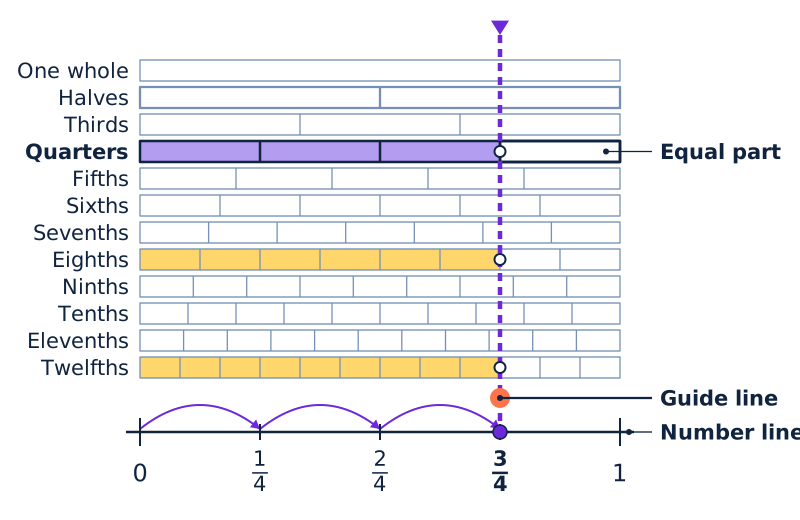
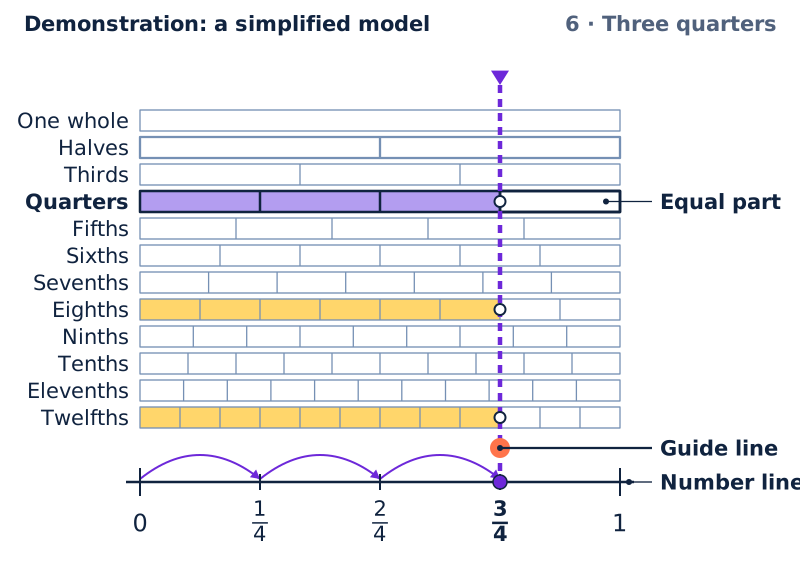
6 · Three quartersThree quarters is one half and one more quarter. Six eighths and nine twelfths share its point: they are equivalent.1 Equal part · 2 Guide line · 3 Number line


Each row of the fraction wall, and its parts up to the guide line
| Row | Equal parts | Parts up to the guide line | A cut on the guide line | In the first figure |
|---|---|---|---|---|
| One whole | 1 | No | ||
| Halves | 2 | No | ||
| Thirds | 3 | No | ||
| Quarters | 4 | 1 | Yes | Shown |
| Fifths | 5 | No | ||
| Sixths | 6 | No | ||
| Sevenths | 7 | No | ||
| Eighths | 8 | 2 | Yes | |
| Ninths | 9 | No | ||
| Tenths | 10 | No | ||
| Elevenths | 11 | No | ||
| Twelfths | 12 | 3 | Yes |
Try it in the Lab
Practicals with real materials, each with its safety card.
- Fraction strips: unit fractions and completing the wholeYears 3–4Hands-on mathematicsLow risk
- Counting by quarters along a ropeYears 3–4Hands-on mathematicsLow risk
- Ordering fractions with different denominatorsYears 5–6Hands-on mathematicsLow risk
- Fraction strips on a 24 cm whole: adding and subtractingYears 5–6Hands-on mathematicsLow risk
- Halves, quarters and eighths by foldingYears 1–2Hands-on mathematicsLow risk
Learn it in a lesson
- Recognises and names unit fractions of shapes and collectionsStage 3Find the lesson
- Finds equivalent fractions using models and multiplicationStage 3Find the lesson
- Adds and subtracts fractions with the same denominatorStage 3Find the lesson
- Adds and subtracts fractions with unlike denominatorsStage 3Find the lesson
- Converts between fractions, decimals and percentagesStage 3Find the lesson
With a learner
Three questions to ask
- Which is longer, one quarter or one eighth of the same strip, and how can you tell?
- Slide the guide line to one half and show the fraction wall. Which rows have a cut on the line?
- Put one half and one quarter end to end. Where do they finish on the number line?
What to expect
Many learners say one eighth is bigger, because eight is bigger than four, or add the tops and the bottoms to get two sixths. Let them compare lengths on the wall, then ask again.
What to try next
Try it in the Lab, above: fold paper strips into halves, quarters and eighths, or peg fractions along a rope number line.
About this model
What is simplified
- The wall and the number line share one scale: every row is as long as the whole, and one on the number line sits under the end of every row.
- The wall has a row for every number of equal parts from one to twelve. The number line runs from zero to one, so it shows no fraction greater than one whole.
- The parts are cut exactly equal. Paper folded or cut by hand is never quite exact, which is why the Lab practicals above measure their strips.
- The guide line snaps to the cuts of your strip, so it always stands at a fraction your strip can show.
- Count to one whole moves the point one jump at a time at a steady pace, so you can watch each jump. No time is shown, and none is taught.
- On a narrow screen, when the number line has too many parts for every fraction to fit under it, only zero, one and the point are labelled.
Review
Demonstration: a simplified model. Checked against its written sources, 26 September 2026. Not reviewed by a qualified teacher.
Curriculum references
MA2-PF-01MA3-RQF-01AC9M3N02AC9M4N03AC9M4N04AC9M5N03AC9M5N05AC9M6N03
Reference, not a verified alignment.