Soil layers and ground cover
Years 3–8Stage 2 to Stage 4Move it
Soil lies in layers over rock. What covers it changes where rain goes and how much topsoil washes away.
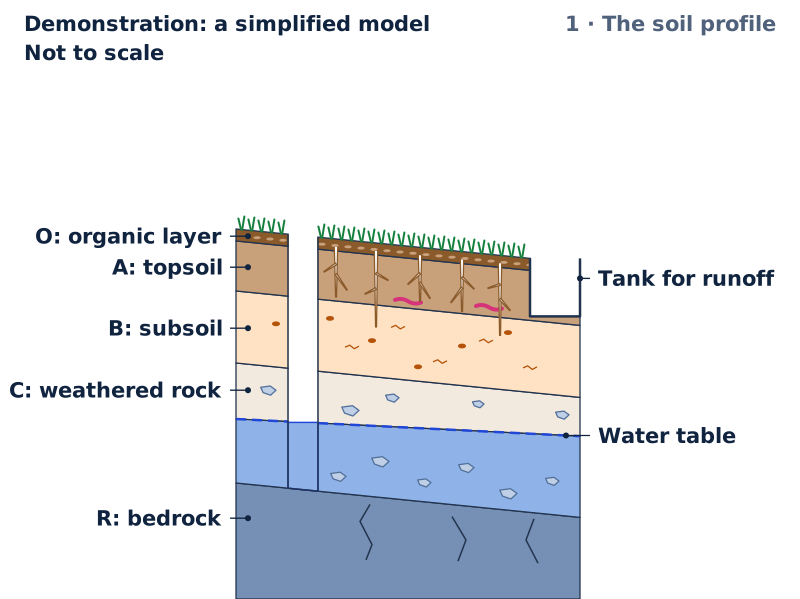
Demonstration: a simplified modelNot to scale1 · The soil profile
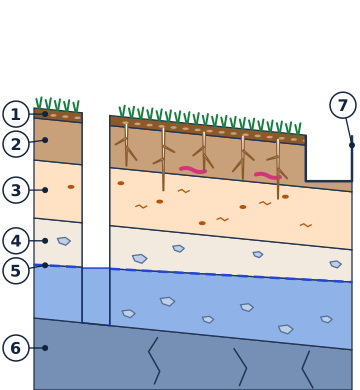
A slice through a grassy slope, dug to bedrock. Soil lies in layers over rock, each one different.
- O: organic layer
- A: topsoil
- B: subsoil
- C: weathered rock
- Water table
- R: bedrock
- Tank for runoff
Key Solid blue arrows pointing down: rain soaking into the soil. Dashed dark blue arrows along the ground: rain running off. Short blue lines above the ground: falling rain. Brown dots just above bare ground: soil splashed up by raindrops. Blue dashed line: the water table, the top of the groundwater. Blue in the weathered rock, below the water table: groundwater filling the spaces between the rock pieces. The white gap near the top of the slope: a pit dug down from the surface. Blue in the pit: groundwater seeping in below the water table. In the tank: the water that ran off, with the soil it carried settled at the bottom. Brown water is muddy. White lines in the topsoil: grass roots. Pink curves in the topsoil: earthworms. Yellow pieces on top of the soil: straw mulch.
The model could not start here. The figure, the steps and the table on this page still show the idea; reload the page to try again.
The idea, step by step
Not to scale
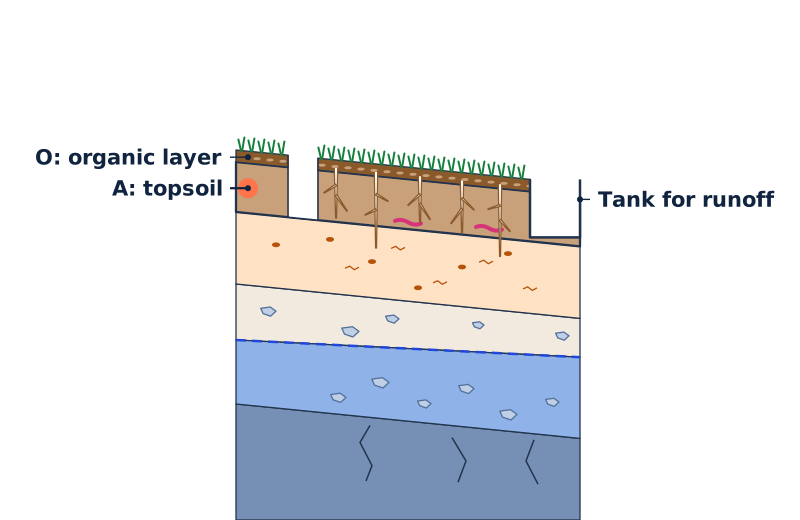
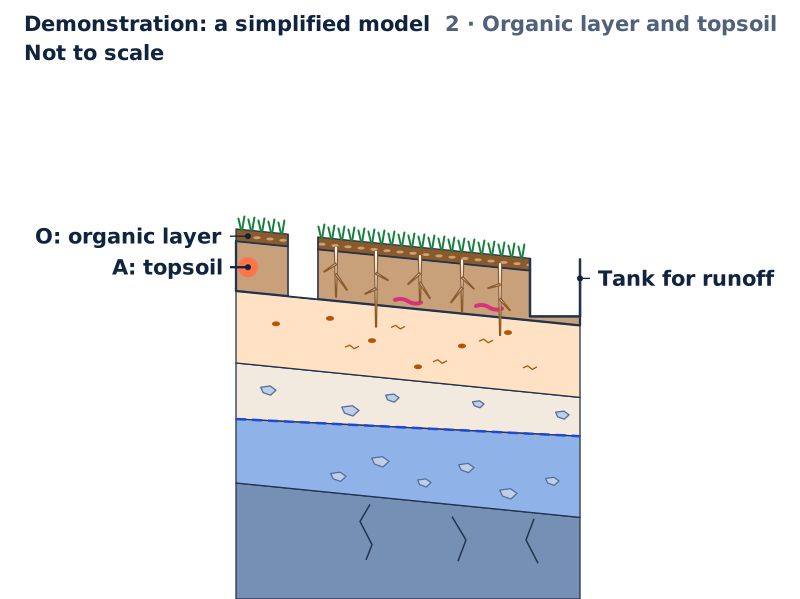
2 · Organic layer and topsoilOrganic layer: fallen plant material rotting down. Topsoil below, dark with humus, holds most roots and soil animals.1 O: organic layer · 2 A: topsoil · 3 Tank for runoff 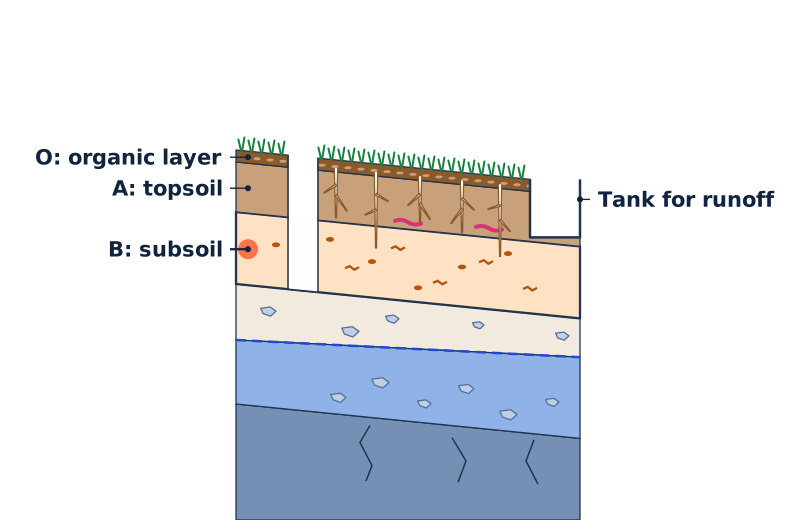
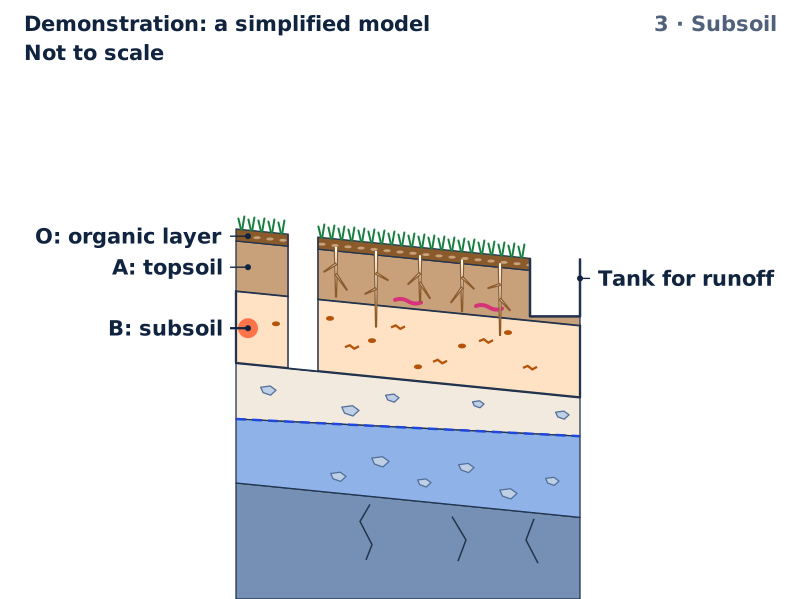
3 · SubsoilDeeper is the subsoil, with less humus and fewer roots. Clay and iron compounds carried down by water collect here.1 O: organic layer · 2 A: topsoil · 3 B: subsoil · 4 Tank for runoff 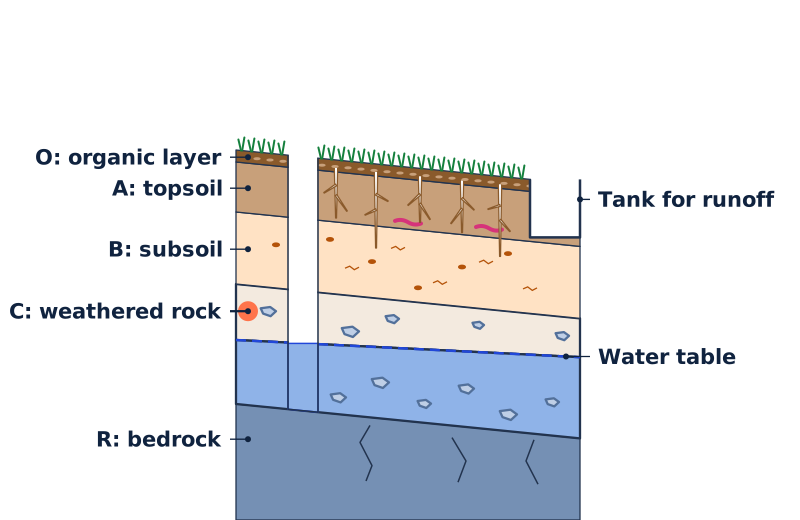
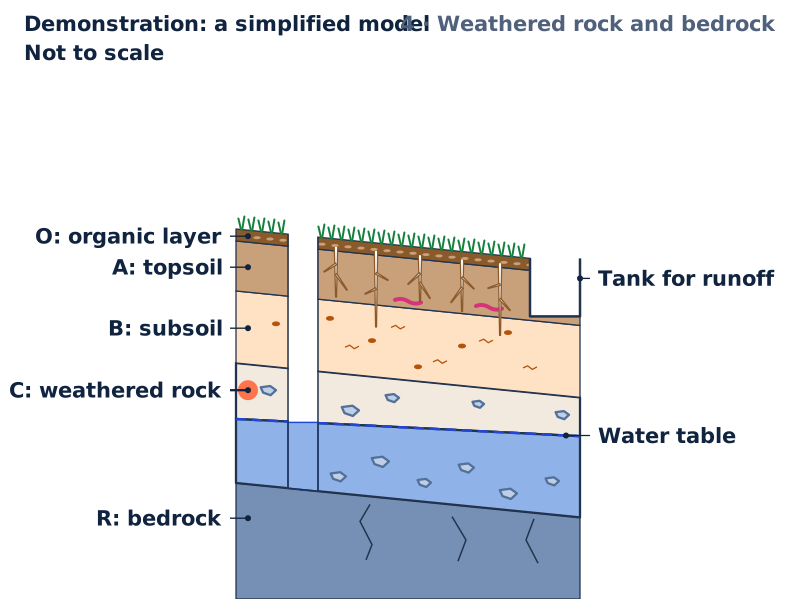
4 · Weathered rock and bedrockWeathered rock: groundwater fills its spaces below the water table. Bedrock lets little through, so groundwater collects above it.1 O: organic layer · 2 A: topsoil · 3 B: subsoil · 4 C: weathered rock · 5 Water table · 6 R: bedrock · 7 Tank for runoff 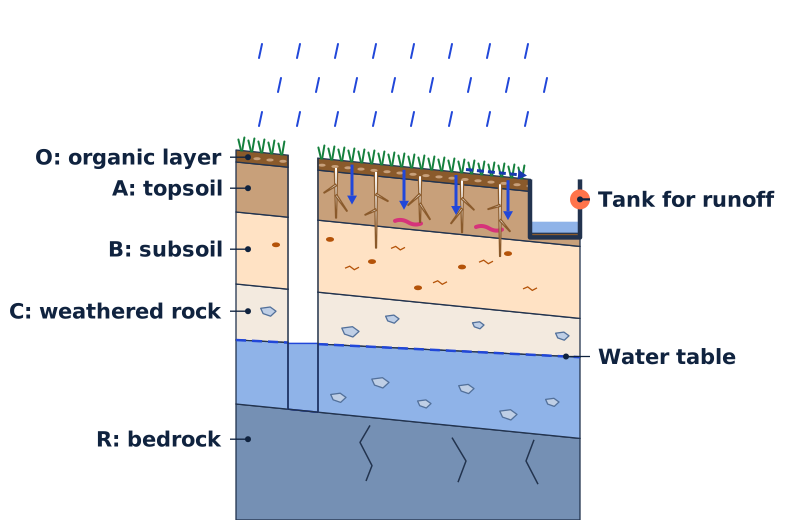
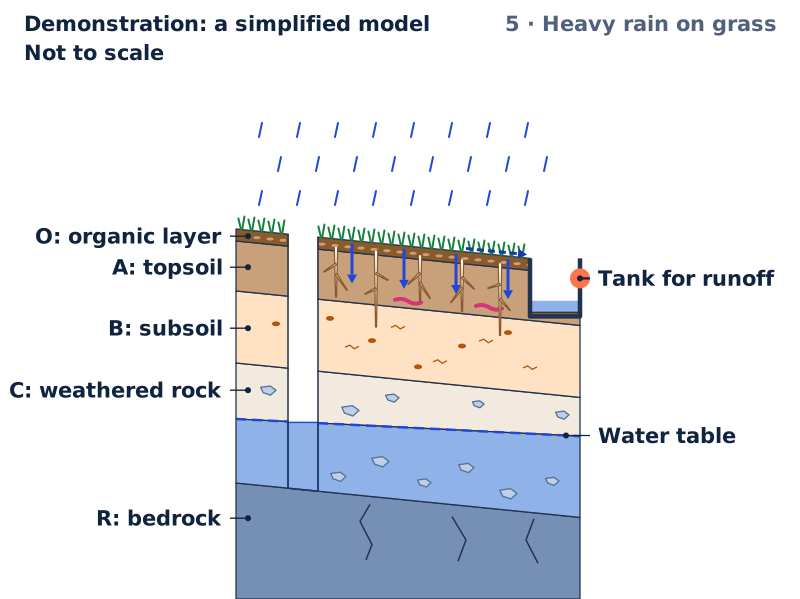
5 · Heavy rain on grassGrass breaks the raindrops' fall and slows the water: most soaks in. Roots hold the topsoil, so little washes off.1 O: organic layer · 2 A: topsoil · 3 B: subsoil · 4 C: weathered rock · 5 Water table · 6 R: bedrock · 7 Tank for runoff 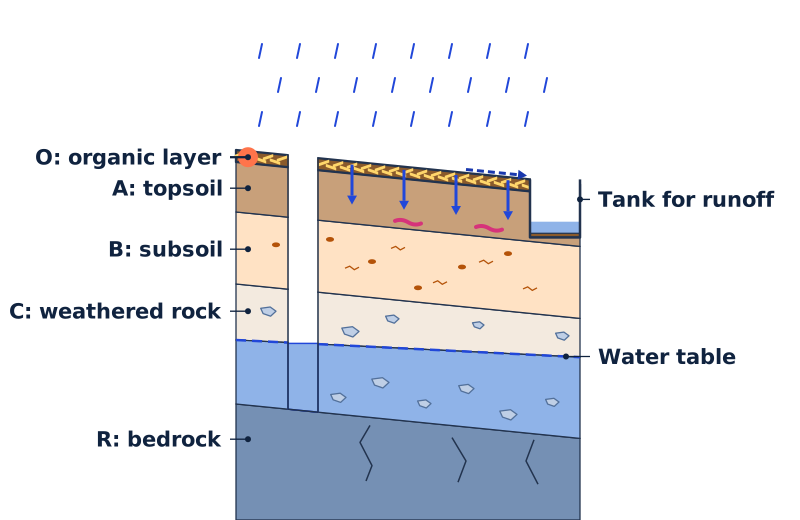
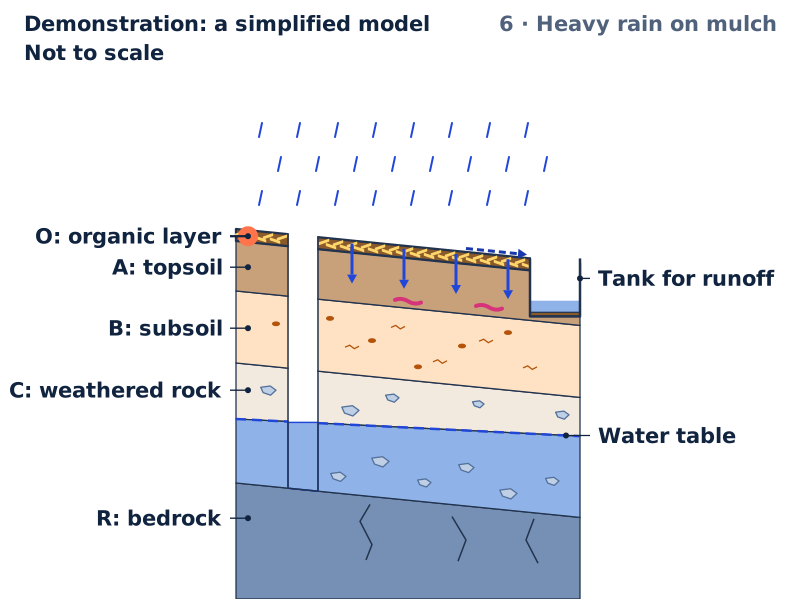
6 · Heavy rain on mulchMulch does the same job: it breaks the raindrops' fall and slows the water, so little soil washes off.1 O: organic layer · 2 A: topsoil · 3 B: subsoil · 4 C: weathered rock · 5 Water table · 6 R: bedrock · 7 Tank for runoff 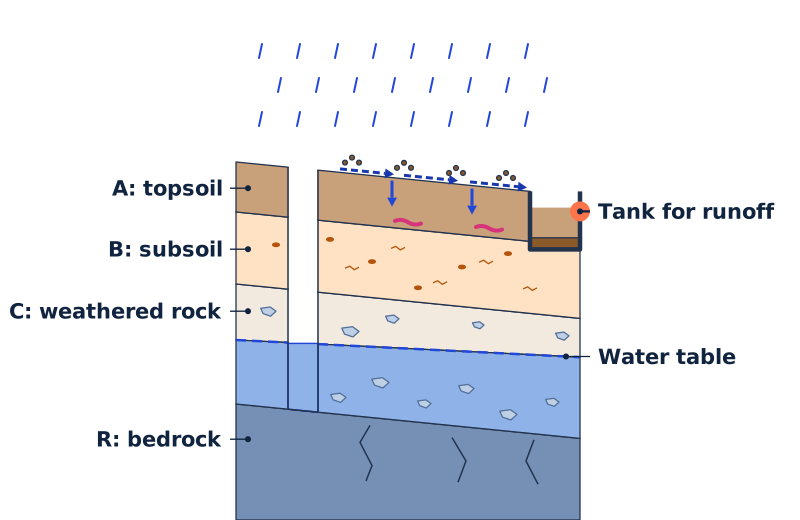
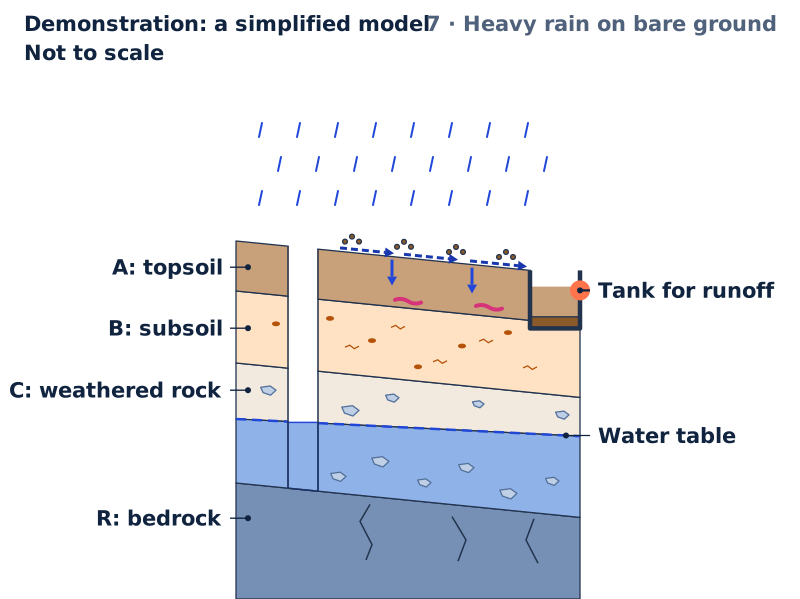
7 · Heavy rain on bare groundBare ground: raindrops splash soil loose, more water runs off, and it carries topsoil into the tank. That is erosion.1 A: topsoil · 2 B: subsoil · 3 C: weathered rock · 4 Water table · 5 R: bedrock · 6 Tank for runoff


The same rain on each surface
| Surface | Rain | Rain soaking in | Rain running off | Soil carried off | In the first figure |
|---|---|---|---|---|---|
| Bare ground | Heavy rain | Some | A lot | A lot | |
| Mulch | Heavy rain | Most | A little | A little | |
| Grass | Heavy rain | Most | A little | A little | |
| Bare ground | Light rain | Most | A little | A little | |
| Mulch | Light rain | Almost all | Almost none | Almost none | |
| Grass | Light rain | Almost all | Almost none | Almost none |
Try it in the Lab
Practicals with real materials, each with its safety card.
- Erosion trays: bare soil, mulched soil and turf under the same rainYears 3–4Fieldwork and mappingLow risk
- Rain on bare soil and covered soil: measuring runoff and washed-away sedimentYear 5Bench practicalLow risk
- Ring infiltrometer: how fast water soaks into three surfacesYears 7–8Fieldwork and mappingLow risk
- Soil erosion prevention: bare, mulched and planted trays under a measured rainfall (syllabus practical)Year 11Bench practicalLow risk
- Soil pH profile and the liming decisionYears 11–12Make and testLow risk
With a learner
Three questions to ask
- Dig down one layer at a time. How is each layer different from the one above it?
- Tip a cup of water onto bare ground and onto grass. Which takes it in faster?
- Where near you could rain wash bare soil away, and what would keep it covered?
What to expect
Many learners think soil is the same all the way down, or that plants use up the rain so less reaches the soil.
What to try next
Open a practical in Try it in the Lab, above, to send the same rain over bare, mulched and grassed trays and weigh the soil that washes off.
About this model
What is simplified
- Not to scale: the layers are drawn much thinner than real ones, and the tank much larger. Real soils differ from place to place: some have no organic layer, and bedrock may lie a few centimetres down or many metres.
- Each layer is drawn with a sharp edge. In real soil one layer often grades into the next.
- What the rain does is shown as an order, in words, counts of arrows and the tank's levels, not as measured amounts. Real amounts depend on the soil, the slope, how hard and how long it rains, and how wet the ground already is.
- Mulch and grass are given the same result. In real trials either can do more, depending on how thick the cover is and how well the grass has grown.
- Grass on hard, trampled ground lets far less water soak in than the model's grass: packing the ground down closes the spaces the water moves through.
- The water table is drawn at one depth. A real water table rises and falls with the seasons, and real bedrock can hold water and let it through its cracks.
- A pit dug below the water table fills with groundwater up to the water table, as the model shows. A real pit this deep needs machinery and support for its walls.
- Nothing moves in the model: the rain is drawn as drops in the air, and what it does is drawn once, as it ends up.
Review
Demonstration: a simplified model. Checked against its written sources, 26 September 2026. Not reviewed by a qualified teacher.
Curriculum references
ST2-10ES-SST2-SCI-01GE2-2HS2-GEO-01GE4-2GE4-PRI-01AC9S3U02AC9HS4K06AC9S5U02AC9HG7K01
Reference, not a verified alignment.