Atoms rearrange, and none are lost
Years 9–12Stage 5 to Stage 6Move it
In a chemical reaction, atoms rearrange and none is made or destroyed.
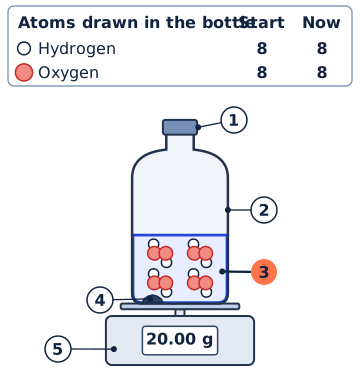
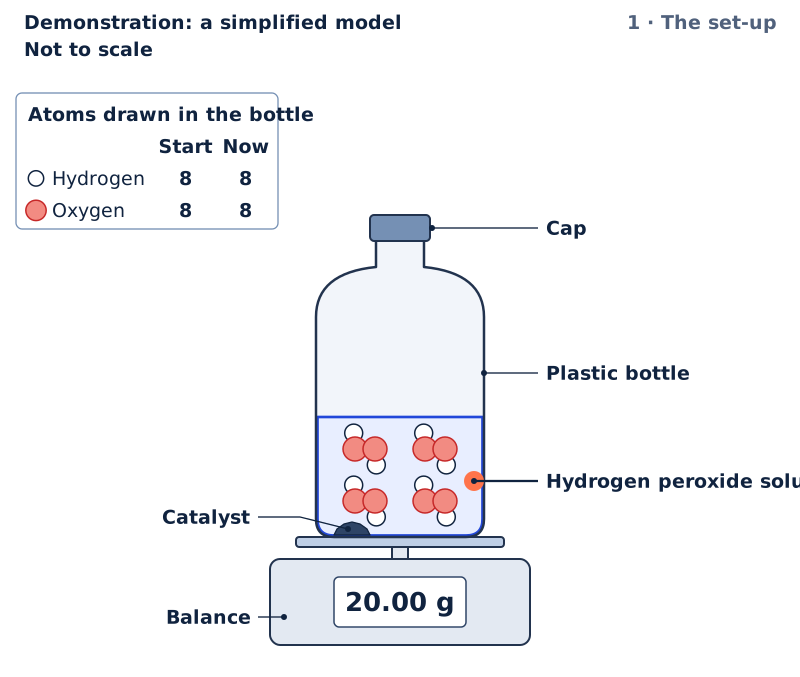
Demonstration: a simplified modelNot to scale1 · The set-up
Safety: a sealed bottle holds gas under pressure. Wear eye protection.
Hydrogen peroxide solution and a catalyst, in a sealed bottle on a balance.
- Cap
- Plastic bottle
- Hydrogen peroxide solution
- Catalyst
- Balance
Key Small white circles: hydrogen atoms, H. Larger red circles: oxygen atoms, O. Dashed arrow: the way out of the open bottle. A shaded row with a dashed outline: the two sides of the equation differ.
The model could not start here. The figure, the steps and the table on this page still show the idea; reload the page to try again.
The idea, step by step
Not to scale
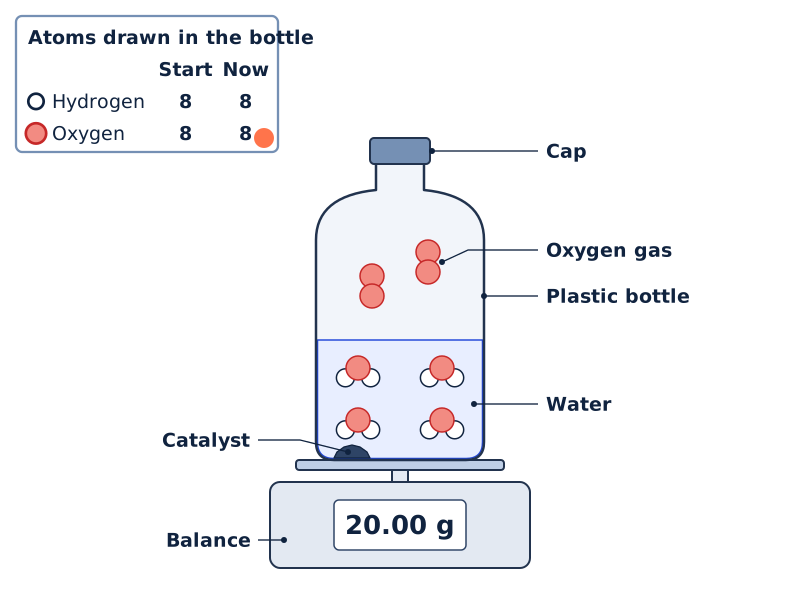
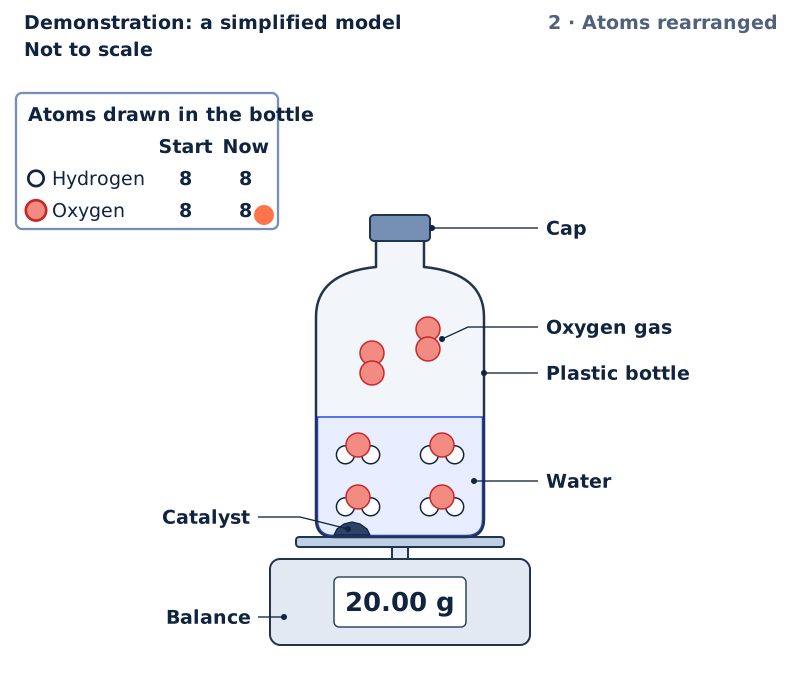
2 · Atoms rearrangedThe same atoms joined up again as water and oxygen: the bubbles. None made, none lost.1 Cap · 2 Oxygen gas · 3 Plastic bottle · 4 Water · 5 Catalyst · 6 Balance 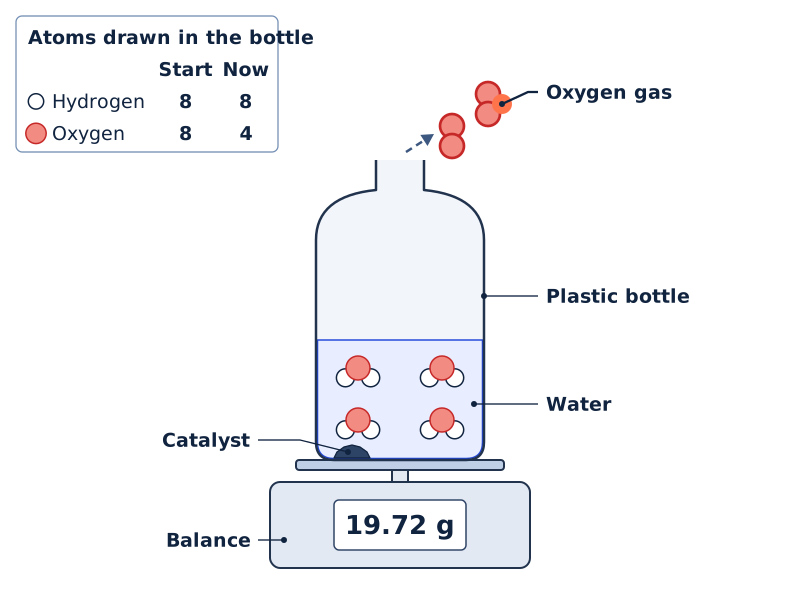
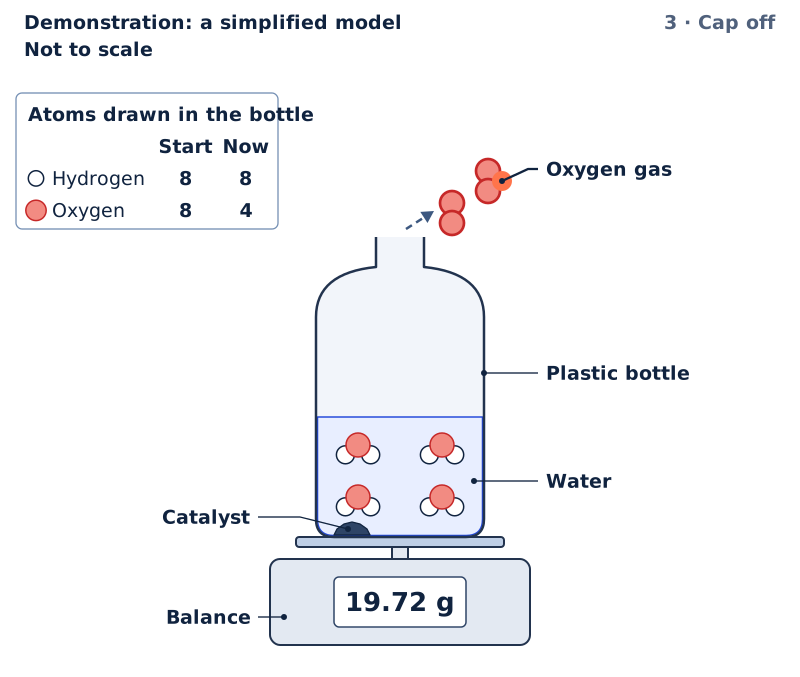
3 · Cap offCap off, the oxygen escapes. Gas has mass, so the reading falls by the oxygen's mass.1 Oxygen gas · 2 Plastic bottle · 3 Water · 4 Catalyst · 5 Balance 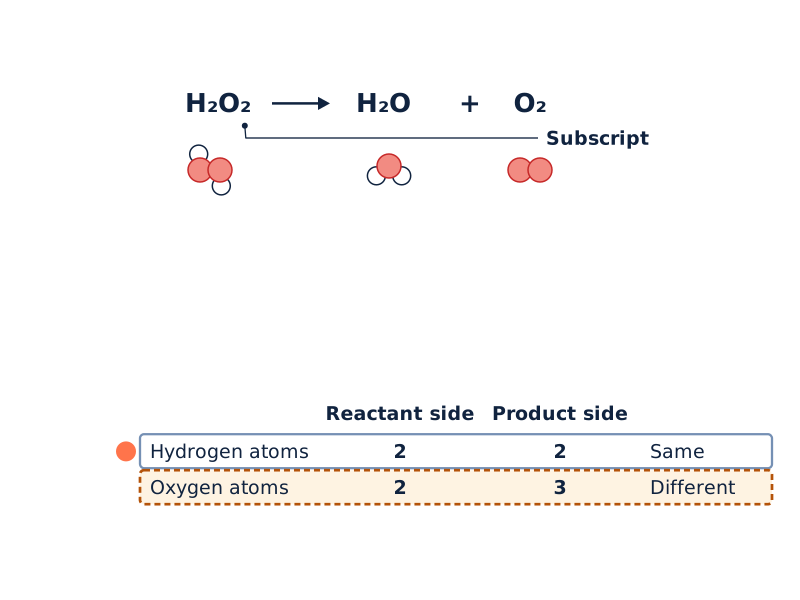
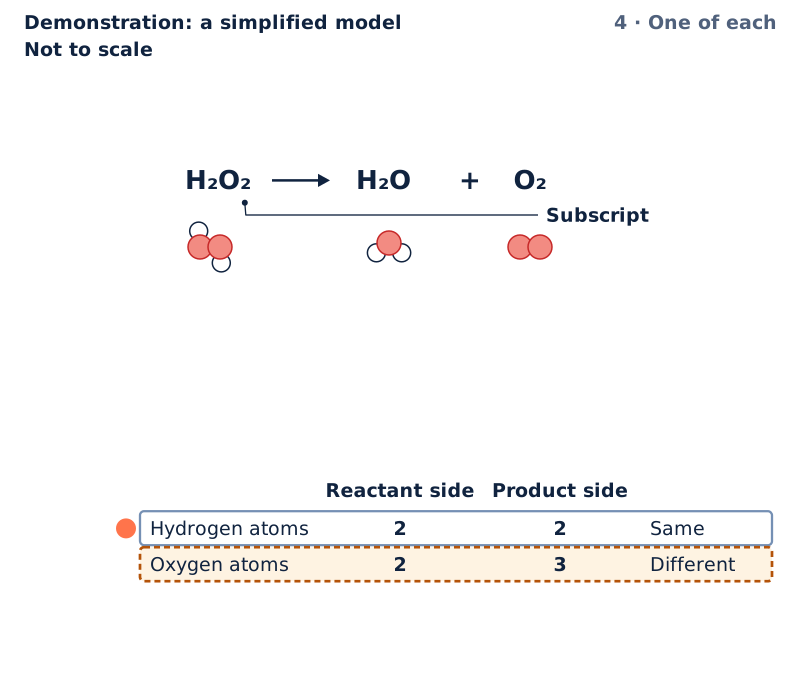
4 · One of eachWith one of each, the products have an extra oxygen atom from nowhere, so this is wrong.1 Subscript 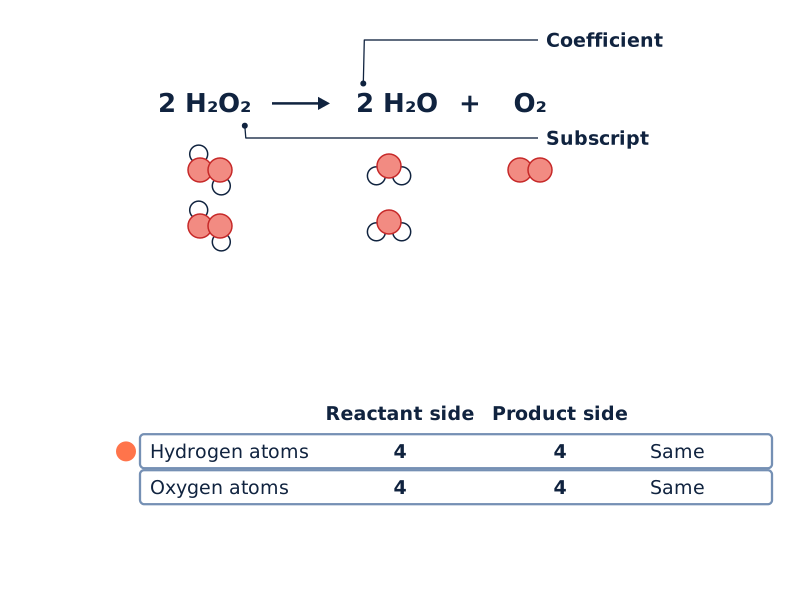
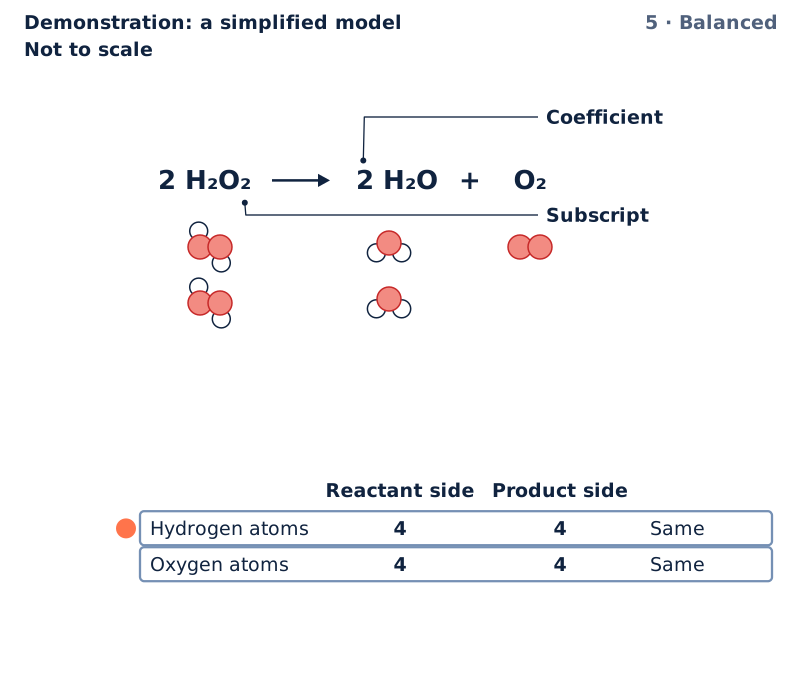
5 · BalancedTwo H₂O₂ make two H₂O and one O₂: the same atoms, but two molecules become three.1 Coefficient · 2 Subscript 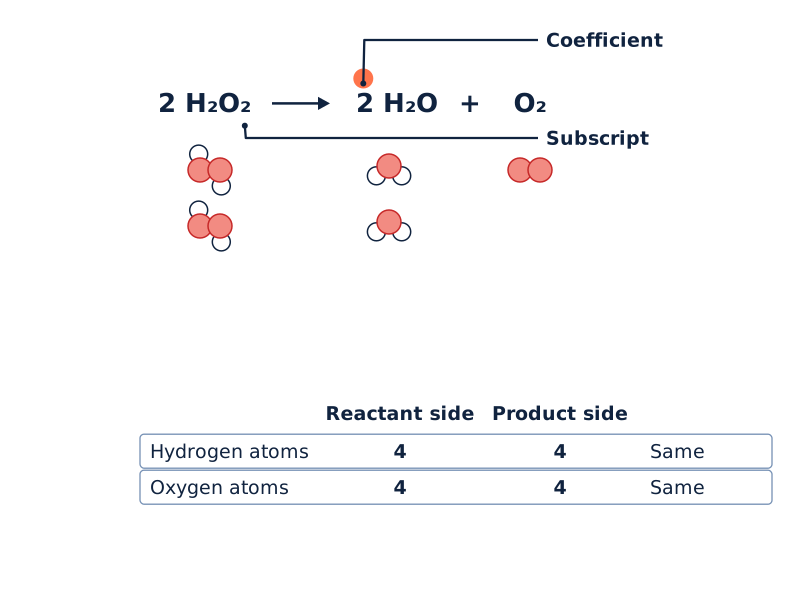
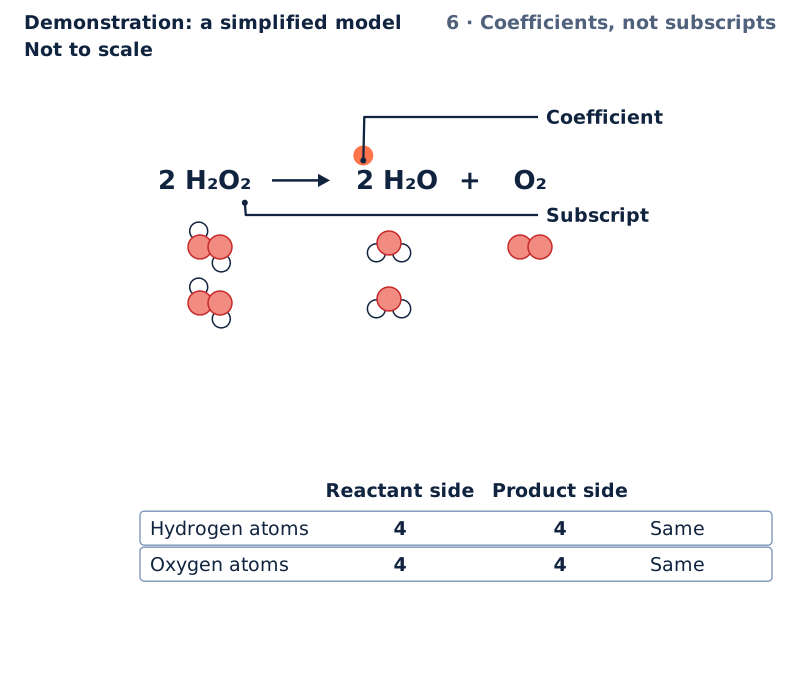
6 · Coefficients, not subscriptsA coefficient counts molecules; a subscript is part of the formula: H₂O₂ is not H₂O.1 Coefficient · 2 Subscript 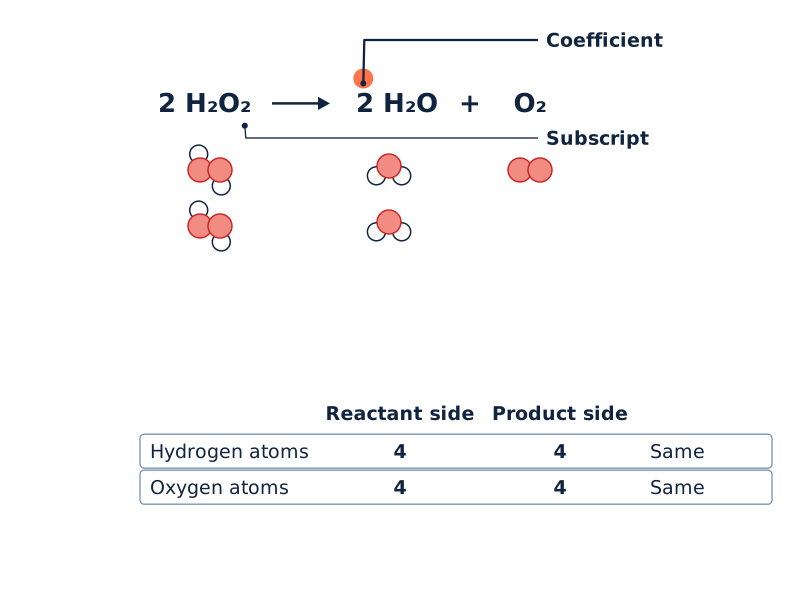
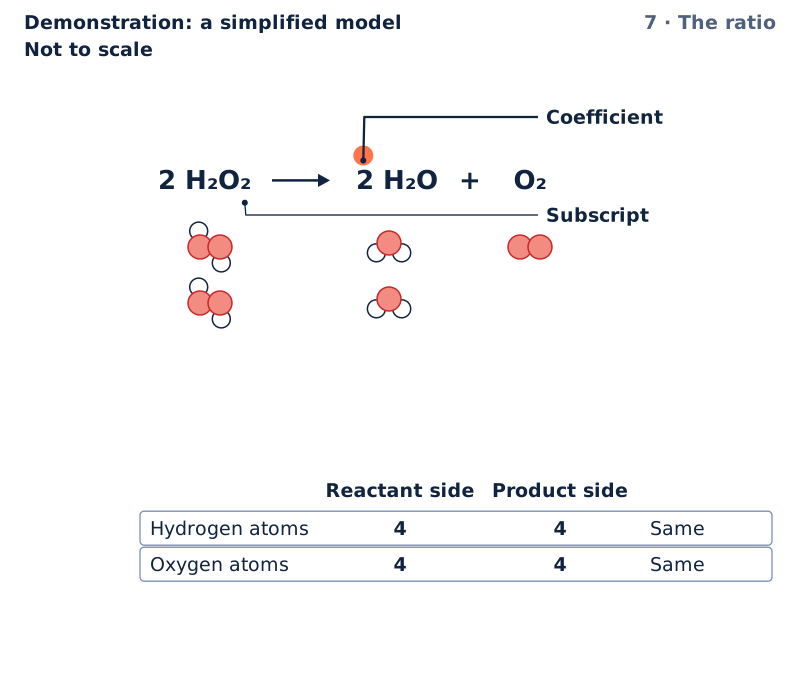
7 · The ratioThe coefficients give the ratio: two H₂O₂ make two H₂O and one O₂. No mass is lost.1 Coefficient · 2 Subscript


The bottle at each moment of the run, sealed or open as you chose
| Moment | H₂O₂ molecules drawn | H₂O molecules drawn | O₂ molecules in the bottle | O₂ molecules gone from the bottle | Balance reading (g) |
|---|---|---|---|---|---|
| At the start | 4 | 0 | 0 | 0 | 20.00 |
| First two H₂O₂ broken down | 2 | 2 | 1 | 0 | 20.00 |
| First O₂ at the top of the bottle | 2 | 2 | 1 | 0 | 20.00 |
| Last two H₂O₂ broken down | 0 | 4 | 2 | 0 | 20.00 |
| Second O₂ at the top of the bottle | 0 | 4 | 2 | 0 | 20.00 |
Try it in the Lab
Practicals with real materials, each with its safety card.
- Conservation of mass in an open flask and a sealed bottleYear 9Bench practicalLow risk
- Fizz in a sealed bottle: a new substance, and no mass lostYear 6Bench practicalMedium riskSchool laboratory, not for home
- Conservation of mass: vinegar and sodium hydrogen carbonate in an open cup and a capped bottle, and a precipitation on the balanceYear 11Bench practicalLow risk
- Collecting primary data for the law of conservation of massYear 11Bench practicalLow risk
- Burning magnesium in a crucible: the mass goes upYears 9–10Bench practicalMedium riskSchool laboratory, not for home
- Burning magnesium in a crucible: mass gain and the empirical formula of magnesium oxideYear 11Bench practicalMedium riskSchool laboratory, not for home
With a learner
Three questions to ask
- What happens to the atoms of hydrogen peroxide when it breaks down?
- What does the balance weigh, and what could change its reading?
- How can you tell whether an equation is balanced?
What to expect
Many learners think a gas has no mass, and count molecules instead of atoms when they balance an equation.
What to try next
Open a practical in Try it in the Lab, above, to test the same law with vinegar and bicarbonate of soda in a sealed bottle, or with magnesium burning in a crucible.
About this model
What is simplified
- Not to scale: the molecules are drawn many billions of times larger than real ones, and only four hydrogen peroxide molecules are drawn. Each stands for a huge number of real ones (billions of billions), and the water the hydrogen peroxide is dissolved in is not drawn.
- Atoms are drawn as circles, oxygen larger than hydrogen as it is, and further apart than in a real molecule so each can be seen. Water's bent shape is drawn at its real angle; hydrogen peroxide is drawn flat, though a real molecule is twisted.
- The balance weighs the whole bottle and its contents, never the equation. The equation's coefficients change only the equation and its count of atoms.
- The balance starts at a round reading for the model; what matters is how the reading changes. The model's bottle holds a small amount of dilute hydrogen peroxide, the strength sold in pharmacies.
- Each oxygen molecule drawn stands for half the oxygen made, so in the open bottle the reading falls in two steps. A real reading falls smoothly as the gas escapes, and a little oxygen stays dissolved.
- The run shows the order of events, not how long they take: a real bottle fizzes for minutes. The catalyst, manganese dioxide powder, speeds up the breakdown and is not used up, so it is not in the equation.
- A sealed plastic bottle can bulge a little as the gas builds up; the model's bottle keeps its shape, so the air it pushes aside, and the reading, stay the same.
Numbers and their sources
- 1.008 The standard atomic weight of hydrogen, abridged. An atomic weight has no unit: one mole of hydrogen atoms has a mass of this many grams. Source: IUPAC Commission on Isotopic Abundances and Atomic Weights (CIAAW), Abridged Standard Atomic Weights (2024): hydrogen, 1.0080 ± 0.0002, read 26 September 2026.
- 15.999 The standard atomic weight of oxygen, abridged. One mole of oxygen atoms has a mass of this many grams. Source: IUPAC Commission on Isotopic Abundances and Atomic Weights (CIAAW), Abridged Standard Atomic Weights (2024): oxygen, 15.999 ± 0.001, read 26 September 2026.
Review
Demonstration: a simplified model. Checked against its written sources, 26 September 2026. Not reviewed by a qualified teacher.
Curriculum references
SC5-RXN-01SC5-WS-06CH11-9CH11-10CH-11-02CH-11-03INS11-11AC9S9U07AC9S10U07
Reference, not a verified alignment.